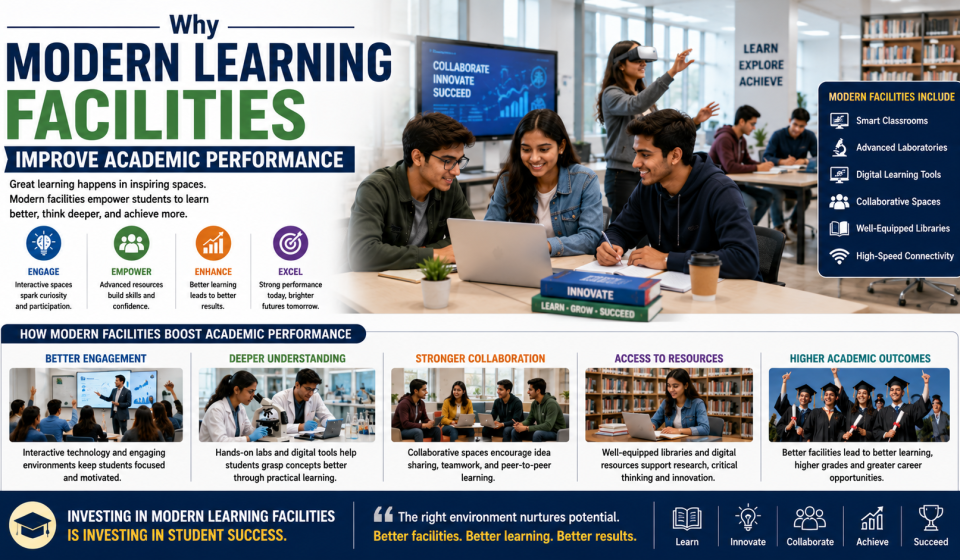
Why Modern Learning Facilities Improve Academic Performance: The Complete Guide to Smarter Education, Student Success, and Future-Ready Skills

The quality of a college education depends not only on experienced faculty and a well-designed curriculum but also on the learning environment that supports students throughout their academic journey. Modern learning facilities.
As industries continue evolving through digital transformation, automation, artificial intelligence, and emerging technologies, educational institutions must provide learning environments that prepare students for future challenges. Modern learning facilities support personalized education, experiential learning, interdisciplinary collaboration, and continuous skill development. They make education more interactive, accessible, and relevant by integrating technology with traditional teaching methods. Students who learn in well-equipped environments often demonstrate higher motivation, stronger academic performance, improved problem-solving abilities, and greater confidence in applying their knowledge to real-world situations. This comprehensive guide explains how modern learning facilities contribute to better academic outcomes and why they are essential for quality higher education.
What Are Modern Learning Facilities?
Modern learning facilities are educational resources, technologies, and physical spaces designed to improve teaching, learning, research, and student engagement.
Examples include:
- Smart classrooms
- Digital libraries
- Computer laboratories
- Research centers
- Innovation labs
- Simulation laboratories
- Collaborative learning spaces
- High-speed campus internet
- Multimedia learning rooms
- Virtual learning platforms
These facilities create a dynamic learning environment.
Why Learning Facilities Matter
An effective learning environment positively influences student achievement.
Modern facilities help students:
- Understand concepts better
- Stay engaged in class
- Improve practical skills
- Collaborate effectively
- Access quality learning resources
- Prepare for future careers
A supportive environment enhances educational outcomes.
Smart Classrooms Improve Learning
Technology-enabled classrooms make teaching more interactive.
Features often include:
- Interactive smart boards
- Digital presentations
- Multimedia content
- Real-time assessments
- Online collaboration tools
Interactive learning increases student participation.
Digital Libraries Expand Learning Opportunities
Modern libraries provide access to thousands of digital resources.
Students can access:
- E-books
- Academic journals
- Research databases
- Digital archives
- Educational videos
Digital resources support independent learning.
Advanced Laboratories Build Practical Skills
Laboratories allow students to apply theoretical concepts through hands-on experiences.
Examples include:
- Engineering laboratories
- Science labs
- Computer programming labs
- Healthcare simulation centers
- Robotics laboratories
Practical learning improves knowledge retention.
Innovation and Research Centers
Innovation centers encourage creativity and problem-solving.
Students participate in:
- Product development
- Research projects
- Startup incubation
- Design thinking
- Technology innovation
Research experiences improve career readiness.
Collaborative Learning Spaces
Modern campuses provide flexible spaces where students work together on academic projects.
Benefits include:
- Teamwork
- Communication
- Peer learning
- Critical thinking
- Project-based learning
Collaboration strengthens academic understanding.
Technology Supports Personalized Learning
Educational technology allows students to learn according to their individual needs.
Technology includes:
- Learning Management Systems (LMS)
- Artificial Intelligence learning tools
- Recorded lectures
- Online assessments
- Adaptive learning platforms
Personalized education improves learning efficiency.
Supporting Hybrid and Online Education
Modern infrastructure enables flexible education.
Students benefit from:
- Virtual classrooms
- Online discussions
- Cloud-based collaboration
- Digital assignments
- Remote learning opportunities
Flexible education increases accessibility.
Preparing Students for Modern Careers
Industry demands graduates who are comfortable using advanced technologies.
Modern facilities help students develop:
- Digital literacy
- Technical expertise
- Innovation skills
- Data analysis abilities
- Professional communication
Technology-rich learning environments improve employability.
Student Well-Being and Campus Experience
Well-designed campuses also support student wellness.
Facilities may include:
- Comfortable study areas
- Recreational centers
- Wellness facilities
- Student collaboration zones
- Accessible infrastructure
Positive environments improve motivation and academic focus.
Encouraging Interdisciplinary Learning
Modern learning spaces encourage students from different disciplines to collaborate on projects, research, and innovation. Such interactions promote creative thinking, broader perspectives, and practical solutions to complex problems.
Common Challenges
Developing modern learning infrastructure requires significant investment, regular maintenance, faculty training, and continuous technology upgrades. Institutions must also ensure equal access to digital resources so that all students can benefit from advanced learning facilities regardless of their background.
The Future of Learning Facilities
Artificial intelligence, virtual reality, augmented reality, smart campuses, digital twins, immersive simulation laboratories, cloud computing, robotics, sustainable campus design, and personalized learning technologies are shaping the future of higher education. Colleges that embrace these innovations will provide students with richer educational experiences and stronger preparation for tomorrow’s workforce.
Source
https://www.unesco.org
https://www.oecd.org
https://www.educause.edu
https://www.weforum.org
Conclusion
Modern learning facilities play a fundamental role in improving academic performance by creating engaging, technology-enabled, and student-centered educational environments. Through smart classrooms, advanced laboratories, digital libraries, collaborative learning spaces, research centers, and innovative technologies, students gain practical knowledge, strengthen critical thinking, improve communication, and develop career-ready skills. These facilities not only enhance classroom learning but also foster creativity, innovation, and lifelong learning. As higher education continues adapting to technological advancements and evolving workforce demands, colleges that invest in modern learning infrastructure will be better positioned to prepare students for academic excellence, professional success, and meaningful contributions to society.
FAQ
1. What are modern learning facilities?
Modern learning facilities include smart classrooms, digital libraries, advanced laboratories, innovation centers, collaborative learning spaces, virtual learning platforms, and technology-enabled educational resources that improve teaching and learning.
2. How do modern learning facilities improve academic performance?
They increase student engagement, support practical learning, improve concept understanding, encourage collaboration, provide access to quality educational resources, and strengthen problem-solving skills.
3. Why are smart classrooms important?
Smart classrooms use digital technology, interactive displays, multimedia content, and online tools to make learning more engaging, interactive, and effective for students.
4. How do research and innovation centers benefit students?
These centers provide opportunities for hands-on research, product development, innovation projects, startup incubation, and interdisciplinary collaboration, enhancing both academic and career outcomes.
5. What role does technology play in modern education?
Technology supports personalized learning, online education, digital assessments, virtual collaboration, artificial intelligence tools, and flexible learning experiences that improve educational accessibility and effectiveness.
6. Why should students consider learning facilities when choosing a college?
Strong learning infrastructure enhances academic experiences, provides access to advanced technologies, improves practical skills, supports research opportunities, and better prepares students for future careers.