Why Internship Support Should Be a Priority While Choosing a College: The Ultimate Guide to Building a Successful Career in 2026

Choosing the right college is one of the most important decisions in a student’s academic journey. While factors such as rankings, infrastructure, faculty, tuition fees, and campus facilities often receive the most attention, one critical aspect is frequently overlooked—internship support.
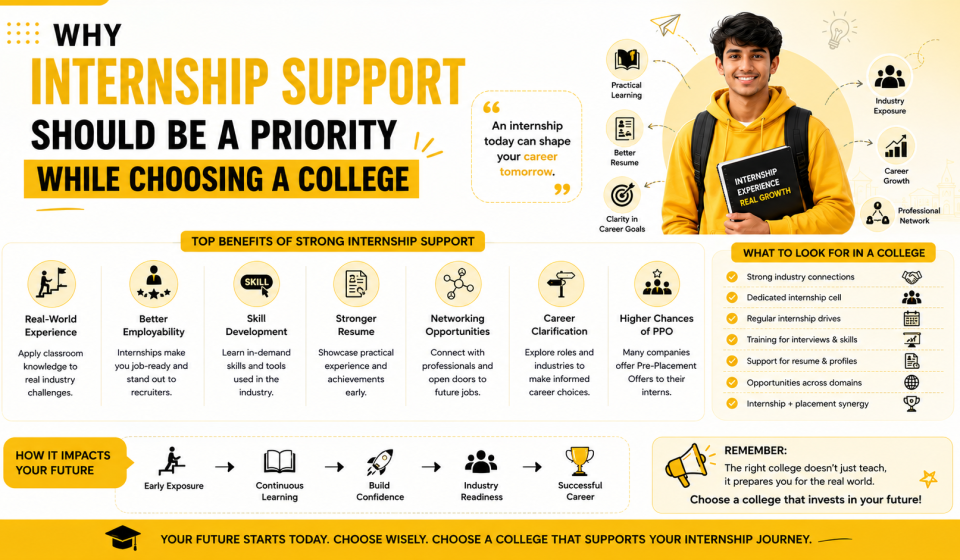
Internships bridge the gap between classroom learning and real-world work experience. They allow students to apply theoretical concepts in professional environments, develop industry-specific skills, build valuable networks, and gain firsthand exposure to workplace expectations. Whether paid or unpaid, virtual or on-site, internships provide experiences that cannot be fully replicated through textbooks or classroom projects.
What Is Internship Support?
Internship support refers to the services and resources provided by colleges to help students secure practical work experience.
These services may include:
- Internship placement assistance
- Career counseling
- Resume reviews
- Interview preparation
- Industry partnerships
- Employer networking
- Skill development workshops
Strong internship support improves career readiness.
Why Internships Matter
Internships provide valuable workplace exposure before graduation.
Students gain:
- Practical experience
- Industry knowledge
- Professional confidence
- Workplace communication skills
- Problem-solving abilities
- Career clarity
These experiences strengthen both resumes and professional skills.
Bridge the Gap Between Theory and Practice
Classroom learning builds academic knowledge, while internships demonstrate how that knowledge is applied in real workplaces.
Students learn:
- Business processes
- Industry standards
- Workplace ethics
- Team collaboration
- Project execution
Practical learning enhances academic understanding.
Improve Employability
Employers often prefer graduates who already possess workplace experience.
Internships demonstrate:
- Job readiness
- Initiative
- Adaptability
- Professional responsibility
- Real-world problem-solving
Relevant experience increases hiring potential.
Build Professional Networks
Internships introduce students to professionals including:
- Managers
- Mentors
- Recruiters
- Team leaders
- Industry experts
- Fellow interns
Networking often leads to future internships, referrals, and job opportunities.
Discover Career Interests
Many students remain uncertain about their career paths.
Internships help them:
- Explore industries
- Understand job roles
- Identify strengths
- Recognize personal interests
- Make informed career decisions
Early exposure reduces career uncertainty.
Develop Workplace Skills
Professional environments teach valuable transferable skills.
Students improve:
- Communication
- Teamwork
- Leadership
- Time management
- Critical thinking
- Adaptability
These competencies are valued across industries.
Enhance Resume Strength
Internship experience makes resumes more competitive.
Students can showcase:
- Professional projects
- Technical skills
- Business achievements
- Industry tools
- Team contributions
- Measurable results
Employers appreciate candidates with practical experience.
Gain Industry Knowledge
Internships help students understand:
- Market trends
- Customer expectations
- Business operations
- Emerging technologies
- Professional standards
Industry awareness improves long-term career planning.
Learn Professional Ethics
Students experience workplace expectations such as:
- Accountability
- Integrity
- Confidentiality
- Professional conduct
- Respect
- Responsibility
Professional ethics build trust and credibility.
Build Confidence
Working in real organizations helps students become more confident.
Internships encourage:
- Independent decision-making
- Professional communication
- Client interaction
- Problem-solving
- Project ownership
Confidence supports interview performance and career growth.
Access Better Placement Opportunities
Many companies recruit interns for full-time positions.
Strong internship programs often lead to:
- Pre-placement offers
- Graduate trainee positions
- Campus recruitment opportunities
- Long-term professional relationships
Internships can become direct pathways to employment.
Evaluate a College’s Internship Support
Before choosing a college, research:
- Internship placement records
- Industry partnerships
- Corporate collaborations
- Placement cell performance
- Alumni success stories
- Career guidance services
A proactive career support system benefits students throughout their academic journey.
Importance of Industry Collaboration
Colleges with strong industry relationships offer:
- Guest lectures
- Industrial visits
- Live projects
- Corporate mentoring
- Workshops
- Internship opportunities
Industry engagement enhances practical learning.
Virtual Internship Opportunities
Remote internships have become increasingly popular.
Benefits include:
- Flexible schedules
- Global exposure
- Digital collaboration
- Reduced travel costs
- Access to international companies
Virtual internships provide valuable professional experience.
Common Mistakes Students Make
Avoid:
- Choosing colleges based only on rankings.
- Ignoring internship opportunities.
- Waiting until the final year to seek experience.
- Failing to build professional networks.
- Neglecting resume preparation.
- Rejecting unpaid internships without evaluating learning value.
Early preparation creates stronger career outcomes.
Tips for Maximizing Internship Benefits
Students should:
- Apply early.
- Build strong resumes.
- Develop technical skills.
- Improve communication.
- Network with mentors.
- Seek regular feedback.
- Document achievements.
- Update portfolios after every internship.
Continuous improvement strengthens employability.
Source
https://www.naceweb.org
https://www.indeed.com/career-advice
https://www.linkedin.com
https://www.coursera.org
https://www.forbes.com
Conclusion
Internship support should be one of the most important factors students consider when choosing a college because it directly influences career readiness, employability, and professional development. Colleges that maintain strong relationships with industry partners, provide career counseling, organize internships, and prepare students for the workplace offer a significant advantage in today’s competitive job market. Internships help students bridge the gap between academic learning and practical experience, build professional networks, strengthen resumes, develop workplace skills, and gain confidence before graduation. By selecting a college with excellent internship support and actively participating in internship opportunities throughout their academic journey, students can significantly improve their chances of securing rewarding careers and achieving long-term professional success.
FAQ
1. Why is internship support important when choosing a college?
Internship support helps students gain practical work experience, build professional skills, strengthen resumes, expand industry networks, and improve their chances of securing employment after graduation.
2. How do internships improve employability?
Internships provide real-world experience, develop workplace competencies, demonstrate job readiness, and allow students to apply academic knowledge in professional environments, making them more attractive to employers.
3. What should students look for in a college’s internship program?
Students should evaluate industry partnerships, placement cell performance, internship records, employer collaborations, career counseling services, alumni success, and opportunities for practical learning.
4. Can internships help students choose the right career?
Yes. Internships expose students to different industries and job roles, helping them understand their interests, strengths, and long-term career goals before graduation.
5. Are virtual internships valuable?
Absolutely. Virtual internships provide professional experience, digital collaboration skills, flexible learning opportunities, and exposure to organizations across different locations and industries.
6. Should first-year students start preparing for internships?
Yes. Students should begin developing technical skills, communication abilities, resumes, professional networks, and portfolios early so they are ready for internship opportunities as soon as they become eligible.
7. Can internships lead to full-time jobs?
Yes. Many organizations hire successful interns for full-time roles through pre-placement offers, graduate trainee programs, or direct recruitment after graduation.
8. How can students maximize the benefits of internships?
Students should perform professionally, seek feedback, build relationships with mentors, document achievements, improve technical and soft skills, update their resumes, and reflect on their learning after every internship experience.