Why Industry-Integrated Learning Is Becoming Essential: The Complete Guide to Career-Ready Education and Future Workforce Success

The world of education is undergoing a major transformation as employers increasingly seek graduates who possess both academic knowledge and practical workplace skills. Traditional classroom learning alone is no longer enough to prepare students for today’s competitive job market.
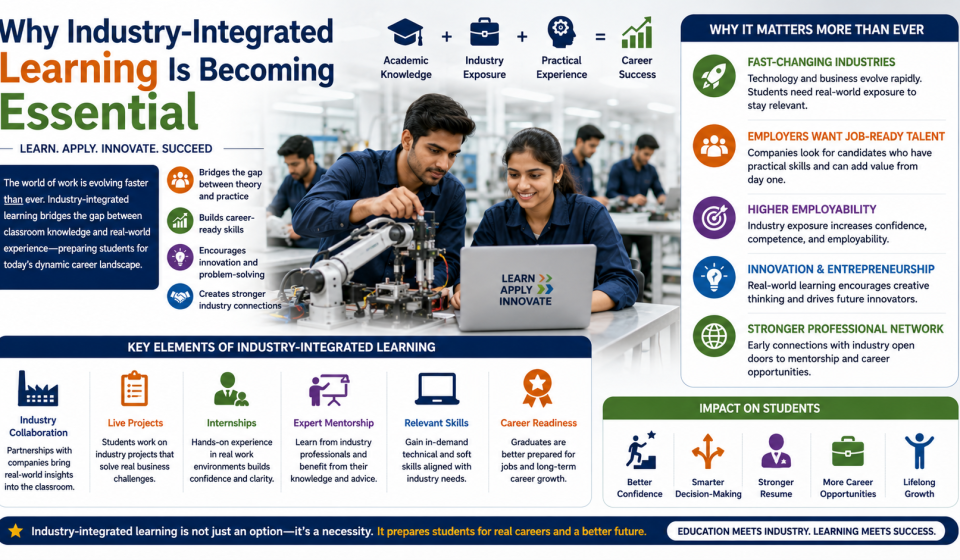
Industry-integrated learning bridges the gap between education and employment by creating stronger partnerships between educational institutions and businesses. Students gain hands-on experience, interact with industry experts, work on real business challenges, and develop technical, interpersonal, and professional skills before graduation. Employers also benefit by gaining access to a talent pool that is better prepared for workplace expectations. As industries continue evolving at an unprecedented pace, educational institutions must equip students with adaptable skills, lifelong learning habits, and industry-relevant knowledge. This comprehensive guide explores why industry-integrated learning has become essential, how it benefits students and employers, and why it represents the future of higher education.
What Is Industry-Integrated Learning?
Industry-integrated learning is an educational approach that combines academic instruction with practical workplace experiences through collaboration between educational institutions and industry partners.
Common components include:
- Internships
- Apprenticeships
- Live industry projects
- Industrial visits
- Industry mentoring
- Professional certifications
- Research collaborations
- Guest lectures
The objective is to prepare students for successful careers by connecting classroom learning with real-world applications.
Why Industry-Integrated Learning Matters
Modern industries require graduates who can contribute from the beginning of their careers.
Industry-integrated learning helps students:
- Apply theoretical knowledge
- Develop practical skills
- Understand workplace expectations
- Improve employability
- Build professional confidence
- Prepare for evolving careers
It creates stronger connections between education and employment.
Bridging the Skills Gap
Many employers report that graduates possess academic knowledge but need additional practical experience.
Industry-integrated learning helps bridge this gap by providing:
- Hands-on training
- Workplace exposure
- Practical problem-solving
- Industry-relevant skills
- Professional communication experience
Graduates become more job-ready.
Learning Through Real-World Experience
Students gain valuable insights by working on actual business challenges.
Practical experiences may include:
- Product development
- Market research
- Software development
- Engineering design
- Business analysis
- Healthcare observations
Experiential learning strengthens understanding.
Improving Employability
Employers often value candidates with relevant practical experience.
Industry-integrated learning supports:
- Stronger resumes
- Better interview performance
- Professional confidence
- Career readiness
- Competitive job applications
Practical experience complements academic achievement.
Building Technical Skills
Students develop industry-specific technical competencies through:
- Laboratory work
- Industry software
- Equipment training
- Professional tools
- Digital technologies
- Technical certifications
Technical expertise supports career growth.
Developing Soft Skills
Workplace success depends on more than technical knowledge.
Industry-integrated learning improves:
- Communication
- Teamwork
- Leadership
- Adaptability
- Time management
- Critical thinking
- Professional ethics
These transferable skills are valuable across industries.
Exposure to Workplace Culture
Students learn how professional organizations operate.
Important workplace experiences include:
- Organizational structure
- Professional communication
- Team collaboration
- Meeting participation
- Business etiquette
- Workplace responsibilities
Understanding workplace culture eases career transitions.
Encouraging Innovation
Industry collaboration exposes students to emerging technologies and current industry challenges.
Students may contribute to:
- Research projects
- Product innovation
- Process improvement
- Digital transformation initiatives
- Startup development
Innovation strengthens career opportunities.
Learning from Industry Experts
Industry professionals provide valuable guidance through:
- Guest lectures
- Workshops
- Mentoring
- Career counseling
- Technical training
Expert insights help students understand current industry expectations.
Strengthening Academic Learning
Industry experiences reinforce classroom concepts.
Students understand:
- Practical applications
- Industry standards
- Real-world decision-making
- Business operations
- Technical implementation
Applied learning improves academic understanding.
Internship Opportunities
Internships remain one of the most effective forms of industry-integrated learning.
Benefits include:
- Practical experience
- Professional networking
- Workplace confidence
- Career exploration
- Resume enhancement
Internships often lead to employment opportunities.
Professional Networking
Students build valuable relationships with:
- Industry mentors
- Managers
- Colleagues
- Alumni
- Recruiters
- Professional associations
Networking supports long-term career development.
Supporting Entrepreneurship
Industry exposure encourages entrepreneurial thinking.
Students learn about:
- Business models
- Customer needs
- Market analysis
- Innovation
- Product development
- Startup ecosystems
Entrepreneurial knowledge creates diverse career opportunities.
Technology and Industry Integration
Digital transformation has expanded opportunities for collaboration through:
- Virtual internships
- Online industry projects
- Artificial intelligence tools
- Cloud collaboration platforms
- Digital simulations
- Remote mentoring
Technology makes industry engagement more accessible.
Benefits for Educational Institutions
Industry partnerships help colleges:
- Update curricula
- Improve graduate employability
- Strengthen research collaborations
- Enhance placement opportunities
- Build stronger industry relationships
Institutions become more responsive to workforce needs.
Benefits for Employers
Organizations also benefit from industry-integrated learning by gaining access to emerging talent, participating in curriculum development, identifying future employees, encouraging innovation, and strengthening relationships with educational institutions. These partnerships contribute to workforce development while supporting business growth.
Challenges and Future Opportunities
Implementing industry-integrated learning requires strong collaboration between colleges, employers, faculty members, and students. Challenges may include limited internship availability, resource constraints, scheduling conflicts, and varying industry expectations. However, advances in technology, virtual internships, artificial intelligence, simulation-based learning, and digital collaboration platforms continue expanding opportunities for meaningful industry engagement.
The Future of Industry-Integrated Learning
The future of higher education increasingly emphasizes experiential learning, interdisciplinary education, competency-based assessment, personalized career pathways, and close collaboration with industry. As automation, artificial intelligence, sustainability, and digital transformation reshape global industries, graduates who possess practical experience alongside academic excellence will be better prepared for lifelong career success.
Source
https://www.aicte-india.org
https://www.ugc.gov.in
https://www.education.gov.in
https://www.weforum.org
Conclusion
Industry-integrated learning has become an essential component of modern higher education because it prepares students for the realities of today’s workforce. By combining academic knowledge with internships, live projects, industry mentoring, professional certifications, workplace exposure, and real-world problem-solving, students develop the technical expertise, professional skills, and confidence needed for successful careers. Educational institutions, employers, and students all benefit from stronger collaboration that aligns learning with industry expectations. As the future of work continues evolving, industry-integrated learning will remain one of the most effective ways to create career-ready graduates capable of adapting, innovating, and succeeding in an increasingly competitive global economy.
FAQ
1. What is industry-integrated learning?
Industry-integrated learning is an educational approach that combines classroom education with practical industry experiences such as internships, live projects, industrial visits, mentoring, and professional certifications.
2. Why is industry-integrated learning becoming important?
It helps students gain practical experience, develop job-ready skills, understand workplace expectations, and improve employability in today’s competitive job market.
3. How does industry-integrated learning improve career readiness?
Students apply theoretical knowledge to real business challenges, strengthen technical and soft skills, build professional networks, and gain valuable workplace experience before graduation.
4. What are the benefits of internships in industry-integrated learning?
Internships provide practical exposure, improve resumes, strengthen communication and teamwork skills, increase professional confidence, and often create employment opportunities.
5. Which industries support industry-integrated learning?
Many sectors participate, including information technology, engineering, healthcare, manufacturing, finance, business, marketing, education, biotechnology, hospitality, and media.
6. How can students make the most of industry-integrated learning?
Students should actively participate in internships, seek mentorship, complete industry certifications, work on live projects, develop professional networks, and continuously update their technical and interpersonal skills.