
The gap between classroom learning and real-world employment has become one of the biggest challenges facing students today. While colleges provide essential academic knowledge.
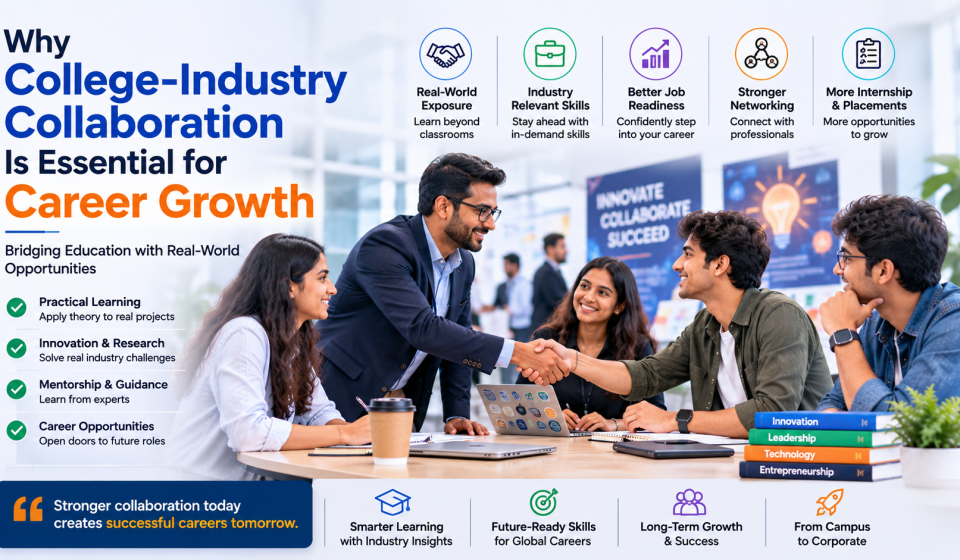
As industries continue to evolve with advancements in artificial intelligence, automation, data analytics, cloud computing, renewable energy, healthcare, and digital technologies, educational institutions must continuously adapt their teaching methods to meet changing workforce demands. College-industry collaboration ensures that students develop future-ready skills, understand workplace expectations, and build professional networks before graduation. Rather than viewing education and employment as separate stages, this collaborative approach creates a seamless transition from the classroom to the workplace, improving career opportunities, employability, and long-term professional success.
What Is College-Industry Collaboration?
College-industry collaboration is a partnership between educational institutions and businesses that aims to bridge the gap between academic learning and industry requirements. These partnerships provide students with practical exposure while enabling companies to contribute to curriculum development, skill training, research, and innovation.
Common forms of collaboration include:
- Internship programmes
- Industrial training
- Campus recruitment
- Industry-sponsored projects
- Guest lectures
- Research partnerships
- Skill development workshops
- Certification programmes
- Hackathons and innovation challenges
- Mentorship programmes
The objective is to prepare students with the knowledge, skills, and experience required in today’s competitive job market.
Why College-Industry Collaboration Matters
Modern employers seek graduates who can contribute immediately in professional environments. Academic knowledge alone is often insufficient without practical application.
College-industry collaboration helps students:
- Apply classroom knowledge
- Develop workplace skills
- Understand industry expectations
- Gain practical experience
- Improve confidence
- Increase employability
- Build professional networks
This partnership benefits students, educational institutions, and employers alike.
Bridges the Gap Between Theory and Practice
Traditional education focuses primarily on theoretical concepts.
Industry collaboration allows students to apply these concepts through:
- Live business projects
- Laboratory work
- Product development
- Software development
- Market research
- Case study analysis
Practical learning strengthens understanding and prepares students for workplace challenges.
Improves Employability
Employers increasingly prioritise candidates who possess both academic qualifications and practical experience.
Industry collaboration improves employability by helping students gain:
- Internship experience
- Technical expertise
- Workplace communication skills
- Team collaboration
- Professional ethics
- Problem-solving abilities
Graduates with industry exposure often stand out during recruitment.
Helps Students Learn Industry-Relevant Skills
Technology changes rapidly, making continuous curriculum updates essential.
Industry experts help students learn in-demand skills such as:
- Artificial Intelligence
- Machine Learning
- Data Analytics
- Cybersecurity
- Cloud Computing
- Digital Marketing
- Business Intelligence
- Automation
- Project Management
- UI/UX Design
Learning these skills increases career opportunities across multiple industries.
Provides Real-World Experience Through Internships
Internships are one of the most valuable outcomes of industry partnerships.
Students gain opportunities to:
- Work with professionals
- Solve practical problems
- Understand workplace culture
- Learn business processes
- Improve technical competence
- Build confidence
Internships often lead to full-time employment offers after graduation.
Encourages Innovation and Research
Colleges and industries often collaborate on research projects that address real-world challenges.
Students may participate in:
- Product development
- Software innovation
- Engineering research
- Healthcare research
- Sustainable technology projects
- Artificial intelligence applications
These experiences develop creativity and analytical thinking.
Strengthens Soft Skills
Professional success depends on more than technical knowledge.
Industry collaboration helps students improve:
- Communication
- Leadership
- Teamwork
- Adaptability
- Time management
- Critical thinking
- Professional behaviour
These transferable skills remain valuable throughout every career.
Enhances Curriculum Relevance
Industries provide valuable feedback regarding changing workforce needs.
Educational institutions can update curricula by including:
- Emerging technologies
- Modern software tools
- Industry case studies
- Practical assignments
- Business simulations
- Professional certifications
Updated curricula better prepare students for current job markets.
Increases Campus Placement Opportunities
Companies that actively collaborate with colleges often participate in campus recruitment drives.
Benefits include:
- Graduate recruitment
- Internship hiring
- Pre-placement offers
- Industry assessments
- Technical interviews
Students gain direct access to potential employers before graduation.
Builds Professional Networks
Networking plays a major role in career growth.
Students develop connections with:
- Industry experts
- Recruiters
- Company managers
- Entrepreneurs
- Alumni
- Mentors
Professional relationships often lead to future career opportunities.
Encourages Entrepreneurial Development
Industry collaboration also benefits aspiring entrepreneurs.
Students gain exposure to:
- Business strategy
- Product development
- Customer needs
- Market analysis
- Startup ecosystems
- Investment opportunities
Mentorship from experienced professionals encourages innovation and business creation.
Supports Career Guidance
Industry professionals provide valuable career advice.
Students learn about:
- Career pathways
- Required qualifications
- Salary expectations
- Industry trends
- Future job opportunities
- Professional certifications
This guidance helps students make informed career decisions.
Develops Future-Ready Graduates
Today’s workplace values adaptability and continuous learning.
Industry collaboration helps students develop:
- Digital literacy
- Remote collaboration
- AI awareness
- Analytical thinking
- Creative problem-solving
- Innovation mindset
These competencies prepare graduates for long-term success.
Benefits for Educational Institutions
Colleges also benefit from industry partnerships through:
- Updated curriculum
- Improved placement records
- Enhanced institutional reputation
- Faculty development programmes
- Sponsored research
- Better laboratory facilities
These improvements strengthen the overall quality of education.
Benefits for Industry
Companies benefit by:
- Recruiting skilled graduates
- Reducing training costs
- Accessing fresh ideas
- Collaborating on research
- Building employer branding
- Supporting innovation
Industry partnerships create a reliable pipeline of future talent.
The Role of Technology in Collaboration
Technology enables stronger partnerships through:
- Virtual internships
- Online workshops
- Learning Management Systems
- AI-powered learning platforms
- Cloud collaboration tools
- Remote mentoring
- Digital project management
Technology makes collaboration more accessible for students worldwide.
Challenges in College-Industry Collaboration
Some common challenges include:
- Outdated curricula
- Limited internship availability
- Weak communication between institutions and employers
- Resource constraints
- Rapid technological change
- Skill mismatches
Addressing these issues requires continuous cooperation between academia and industry.
How Students Can Benefit the Most
Students should actively participate by:
- Applying for internships
- Attending industry seminars
- Completing certifications
- Networking with professionals
- Building portfolios
- Participating in competitions
- Working on real-world projects
- Seeking mentorship
Proactive students gain the greatest advantages from collaboration opportunities.
The Future of College-Industry Collaboration
As technology transforms education and employment, collaboration will become even more important.
Future developments may include:
- AI-assisted learning
- Virtual reality training
- Industry-designed courses
- Global internships
- Digital credentialing
- Cross-disciplinary innovation labs
- Micro-certifications
- Continuous upskilling programmes
These innovations will create stronger connections between education and employment.
Long-Term Career Benefits
Students who benefit from college-industry collaboration often experience:
- Better employment opportunities
- Stronger resumes
- Higher confidence
- Practical experience
- Faster career growth
- Improved technical skills
- Better communication abilities
- Expanded professional networks
- Increased adaptability
- Greater long-term career success
These advantages help graduates remain competitive throughout their professional lives.
Source
https://www.weforum.org
https://www.unesco.org
https://www.oecd.org
https://www.naceweb.org
Conclusion
College-industry collaboration is no longer an optional enhancement to education—it is an essential component of preparing students for successful careers in a rapidly changing global economy. By combining academic learning with practical industry experience, these partnerships help students develop technical expertise, strengthen soft skills, gain real-world exposure, and understand workplace expectations before graduation. Through internships, industry projects, mentorship, guest lectures, and collaborative research, students become more confident, adaptable, and job-ready while educational institutions remain aligned with evolving industry needs.
As employers increasingly seek graduates who can contribute from their first day at work, strong collaboration between colleges and industries creates lasting benefits for everyone involved. Students enjoy improved employability and career opportunities, colleges enhance the quality and relevance of their programmes, and businesses gain access to skilled, future-ready professionals. Investing in meaningful college-industry partnerships today is one of the most effective ways to build a workforce that is innovative, competitive, and prepared for the careers of tomorrow.
FAQ
1. What is college-industry collaboration?
College-industry collaboration is a partnership between educational institutions and businesses that provides students with practical learning experiences, internships, industry projects, and career development opportunities while helping employers access skilled graduates.
2. Why is college-industry collaboration important?
It bridges the gap between academic education and workplace requirements by providing practical experience, industry-relevant skills, professional networking opportunities, and improved career readiness.
3. How does college-industry collaboration improve employability?
Students gain hands-on experience, develop technical and soft skills, build professional portfolios, understand workplace expectations, and often secure internships or campus placements that enhance their employability.
4. What are the common forms of college-industry collaboration?
Examples include internships, industrial training, live projects, guest lectures, research partnerships, mentorship programmes, campus recruitment, certification courses, workshops, and innovation competitions.
5. How do companies benefit from collaborating with colleges?
Businesses gain access to talented graduates, reduce recruitment and training costs, participate in research and innovation, strengthen employer branding, and build a pipeline of future employees.
6. Can college-industry collaboration support entrepreneurship?
Yes. Students receive mentorship, business insights, market exposure, networking opportunities, and practical experience that help them develop innovative ideas and launch successful startups.
7. What skills do students develop through industry collaboration?
Students build technical expertise, communication, teamwork, leadership, critical thinking, problem-solving, adaptability, project management, and professional ethics.
8. What is the biggest benefit of college-industry collaboration for students?
The greatest benefit is graduating with practical experience, industry-relevant skills, professional connections, and the confidence to transition successfully from college to a rewarding career.