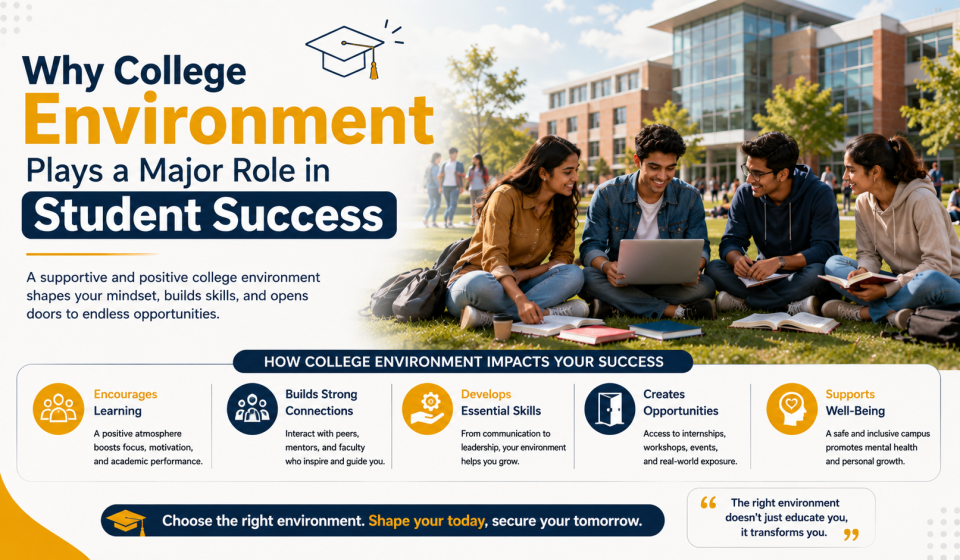
Why College Environment Plays a Major Role in Student Success: The Complete 2026 Guide to Choosing a Campus That Helps You Thrive

Choosing a college is one of the most important decisions in a student’s academic journey. While factors such as rankings, tuition fees, placement records, and course offerings often receive the most attention, one aspect that is equally important—but frequently overlooked—is the college environment.
In 2026, higher education is no longer limited to classroom lectures and examinations. Colleges are becoming dynamic ecosystems where students engage in collaborative learning, research, innovation, internships, entrepreneurship, cultural activities, sports, mentorship programs, and industry interactions. The overall campus environment significantly affects student motivation, academic performance, emotional well-being, and career readiness.
A Positive Learning Atmosphere Encourages Academic Excellence
An engaging academic environment promotes:
- Active classroom participation
- Critical thinking
- Curiosity
- Better concentration
- Collaborative learning
Students perform better when they feel encouraged to learn.
Supportive Faculty Make a Difference
Experienced and approachable faculty members:
- Guide academic progress
- Offer mentorship
- Encourage research
- Provide career advice
- Inspire lifelong learning
Strong faculty support improves student confidence.
Peer Learning Enhances Growth
Learning alongside motivated classmates helps students:
- Exchange ideas
- Improve teamwork
- Build communication skills
- Develop problem-solving abilities
- Learn from different perspectives
Peer interactions enrich the educational experience.
Modern Campus Infrastructure
Quality infrastructure includes:
- Smart classrooms
- Advanced laboratories
- Digital libraries
- Innovation centers
- Comfortable study spaces
A well-equipped campus supports effective learning.
Student Support Services
A healthy college environment provides:
- Academic counseling
- Career guidance
- Placement support
- Mental wellness programs
- Mentorship initiatives
Support services help students overcome academic and personal challenges.
Opportunities Beyond the Classroom
Students benefit from participating in:
- Student clubs
- Technical societies
- Cultural festivals
- Sports events
- Volunteer programs
- Leadership activities
These experiences build well-rounded personalities.
Industry Exposure
Career-focused colleges organize:
- Guest lectures
- Corporate visits
- Internship programs
- Live industry projects
- Professional networking events
Industry engagement prepares students for employment.
Research and Innovation Culture
Colleges that encourage research help students:
- Think creatively
- Solve real-world problems
- Develop analytical skills
- Explore innovation
- Build academic credibility
Research contributes to future career opportunities.
Technology-Driven Learning
Modern campuses integrate:
- AI-powered educational tools
- Learning management systems
- Virtual laboratories
- Digital collaboration platforms
- Online learning resources
Technology enhances flexibility and accessibility.
Inclusive and Diverse Campus Culture
A welcoming environment promotes:
- Respect
- Diversity
- Equal opportunities
- Collaboration
- Cultural understanding
Inclusive campuses help students grow personally and socially.
Entrepreneurship and Innovation
Many colleges encourage entrepreneurial thinking through:
- Startup incubation centers
- Innovation labs
- Business competitions
- Mentorship programs
- Funding support
Students gain confidence to create their own career opportunities.
Leadership Development
Campus activities allow students to develop:
- Leadership
- Decision-making
- Responsibility
- Public speaking
- Event management
Leadership experiences improve employability.
Strong Alumni Network
Successful alumni contribute through:
- Career mentoring
- Internship referrals
- Industry insights
- Professional networking
- Placement support
An active alumni network creates valuable career connections.
Signs of a Healthy College Environment
Before selecting a college, evaluate whether it offers:
- Student-centered teaching
- Accessible faculty
- Career development programs
- Active campus life
- Research opportunities
- Industry collaboration
- Safe and inclusive campus culture
These factors indicate a strong learning environment.
Source
https://www.education.gov.in
https://www.ugc.gov.in
https://www.aicte-india.org
https://www.naac.gov.in
https://www.abc.gov.in
Conclusion
The college environment plays a fundamental role in shaping a student’s academic journey, personal development, and professional future. Beyond classrooms, a supportive campus provides opportunities for leadership, research, internships, mentorship, innovation, networking, and holistic growth. Students who study in positive, inclusive, and career-oriented environments are more likely to develop confidence, practical skills, emotional resilience, and the adaptability needed to succeed in today’s competitive workforce. As higher education continues to evolve under the vision of NEP 2020 and changing global industry expectations, selecting a college with a strong learning culture and comprehensive support system becomes just as important as choosing the right course. A healthy college environment not only enhances academic performance but also lays the foundation for lifelong success and continuous personal growth.
FAQ
1. Why is the college environment important for student success?
A positive college environment supports academic learning, personal growth, emotional well-being, leadership development, practical skill building, and career readiness, helping students achieve long-term success.
2. How does campus culture affect learning?
A supportive campus culture encourages collaboration, curiosity, participation, creativity, and confidence, making students more engaged and motivated in their studies.
3. What role do faculty members play in creating a good college environment?
Faculty members provide academic guidance, mentorship, career advice, research opportunities, constructive feedback, and encouragement that significantly influence student development.
4. Why are extracurricular activities important in college?
Extracurricular activities develop communication, leadership, teamwork, organizational skills, creativity, and confidence while helping students build strong professional profiles.
5. How does industry exposure improve student success?
Industry visits, internships, guest lectures, and live projects help students understand workplace expectations, apply academic knowledge, and improve employability.
6. Why should students evaluate campus infrastructure before admission?
Modern classrooms, laboratories, libraries, innovation centers, and digital learning facilities enhance educational quality and create better learning experiences.
7. Does NEP 2020 encourage holistic college environments?
Yes. NEP 2020 promotes multidisciplinary learning, experiential education, student-centered teaching, research, innovation, flexibility, and comprehensive student development.
8. How can students identify a positive college environment?
Students should assess faculty support, student services, campus safety, academic culture, extracurricular opportunities, research facilities, industry partnerships, infrastructure, and feedback from current students and alumni before making an admission decision.