Why Choosing a College With Strong Industry Collaboration Matters: The Complete Guide to Better Career Opportunities and Real-World Learning

Selecting the right college is one of the most important decisions in a student’s academic journey. While factors such as rankings, infrastructure, faculty, and placement records are important, one aspect that deserves equal attention is the college’s industry collaboration.
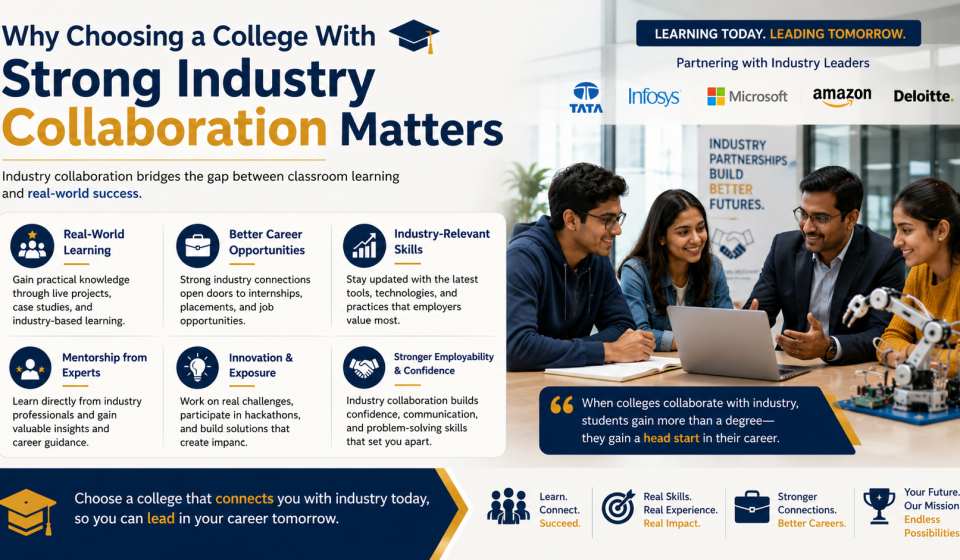
The modern job market is evolving rapidly due to technological advancements, digital transformation, and changing business needs. Employers increasingly seek graduates who can solve real-world problems, work in teams, communicate effectively, adapt to new technologies, and contribute from the very beginning of their careers. Colleges that actively collaborate with industries help students develop these competencies through guest lectures, industrial visits, certification programs, mentorship, startup incubation, research partnerships, and campus recruitment initiatives. Evaluating a college’s industry connections before admission enables students to choose an institution that prepares them for long-term career success rather than simply awarding a degree. This comprehensive guide explains why choosing a college with strong industry collaboration matters and how it positively impacts academic learning, employability, and professional growth.
What Is Industry Collaboration?
Industry collaboration refers to partnerships between educational institutions and businesses, organizations, or professional bodies to enhance student learning and career development.
Industry collaboration may include:
- Internship programs
- Industrial visits
- Live industry projects
- Guest lectures
- Campus recruitment
- Corporate training
- Research partnerships
- Skill development programs
- Startup incubation
- Professional certifications
These initiatives help students gain practical knowledge.
Why Industry Collaboration Is Important
Academic learning becomes more meaningful when combined with practical experience.
Industry collaboration helps students:
- Understand workplace expectations
- Develop job-ready skills
- Improve employability
- Build professional confidence
- Gain real-world exposure
- Prepare for future careers
Practical learning complements classroom education.
Internship Opportunities
Internships provide hands-on experience before graduation.
Benefits include:
- Workplace exposure
- Professional networking
- Skill development
- Resume building
- Career exploration
- Increased employment opportunities
Quality internships improve career readiness.
Live Projects Enhance Practical Learning
Working on real industry projects allows students to apply theoretical concepts.
Live projects help develop:
- Problem-solving abilities
- Teamwork
- Project management
- Analytical thinking
- Communication skills
Practical projects strengthen academic understanding.
Guest Lectures From Industry Experts
Professionals share current industry knowledge and career insights.
Guest lectures provide:
- Market trends
- Career guidance
- Technology updates
- Professional expectations
- Networking opportunities
Industry interaction broadens student perspectives.
Skill Development Programs
Industry collaboration supports continuous skill enhancement.
Popular training areas include:
- Digital technologies
- Artificial intelligence
- Data analytics
- Business communication
- Leadership
- Project management
Skill development improves employability.
Corporate Certifications
Many colleges partner with industry leaders to offer professional certifications.
Certifications help students:
- Validate technical skills
- Improve resumes
- Meet employer expectations
- Gain competitive advantages
Industry-recognized certifications add value to academic qualifications.
Research and Innovation
Industry partnerships encourage innovation and applied research.
Students may participate in:
- Sponsored research
- Product development
- Innovation challenges
- Technology competitions
- Patent development
Research improves academic and professional growth.
Entrepreneurship Support
Industry collaboration also benefits aspiring entrepreneurs.
Look for colleges offering:
- Startup incubation centers
- Business mentoring
- Investor networking
- Innovation labs
- Entrepreneurship workshops
These programs encourage business creation and innovation.
Placement and Recruitment Opportunities
Strong corporate relationships often improve placement activities.
Evaluate:
- Campus recruitment drives
- Placement statistics
- Company partnerships
- Average salary packages
- Internship-to-job conversion rates
Industry collaboration supports successful placements.
Faculty Development Through Industry Exposure
Faculty members also benefit from industry partnerships.
Advantages include:
- Updated technical knowledge
- Collaborative research
- Industry training
- Curriculum improvements
- Practical teaching approaches
Experienced faculty enhance student learning.
Curriculum Aligned With Industry Needs
Modern colleges regularly update their curriculum based on employer expectations.
Industry collaboration helps ensure that students learn:
- Current technologies
- Emerging business practices
- Professional standards
- Future-ready skills
Relevant education increases career readiness.
Questions to Ask Before Admission
Prospective students should ask:
- Which companies collaborate with the college?
- Are internships mandatory?
- How many students complete internships each year?
- Does the college offer industry certifications?
- What live project opportunities are available?
- Which organizations regularly recruit from campus?
These questions help evaluate practical learning opportunities.
Common Mistakes Students Make
Many students choose colleges based only on rankings, tuition fees, or campus infrastructure while overlooking industry collaboration. Ignoring internship opportunities, employer partnerships, research programs, and practical learning experiences may reduce career readiness. Evaluating industry collaboration helps students choose institutions that provide stronger professional development opportunities.
The Future of Industry Collaboration
Artificial intelligence, digital transformation, remote internships, virtual industry projects, interdisciplinary education, startup ecosystems, innovation hubs, international partnerships, work-integrated learning, and industry-sponsored research will continue strengthening collaboration between colleges and employers.
Source
https://www.ugc.gov.in
https://www.aicte-india.org
https://www.education.gov.in
https://www.naac.gov.in
Conclusion
Choosing a college with strong industry collaboration is essential for students who want to build successful and future-ready careers. Partnerships with industries provide valuable opportunities for internships, live projects, certifications, research, mentorship, entrepreneurship, and campus recruitment. These experiences help students develop practical skills, professional confidence, and workplace readiness while complementing academic learning. Before taking admission, students should carefully evaluate a college’s corporate partnerships, placement support, curriculum relevance, and experiential learning opportunities. A college that actively collaborates with industries prepares graduates not only to secure employment but also to adapt, innovate, and succeed in an increasingly competitive global workforce.
FAQ
1. What is industry collaboration in higher education?
Industry collaboration refers to partnerships between colleges and businesses that provide students with internships, live projects, research opportunities, certifications, guest lectures, and placement support.
2. Why is industry collaboration important for students?
It helps students gain practical experience, develop job-ready skills, understand workplace expectations, build professional networks, and improve employability.
3. How can students evaluate a college’s industry partnerships?
Students should review internship opportunities, placement records, corporate collaborations, certification programs, industry-sponsored projects, company visits, and employer engagement activities.
4. Do industry collaborations improve placement opportunities?
Yes. Colleges with strong employer relationships often provide better internship opportunities, campus recruitment drives, career mentoring, and higher placement success rates.
5. Can industry collaboration benefit entrepreneurship?
Absolutely. Many colleges offer startup incubation centers, innovation labs, business mentoring, investor networking, and entrepreneurship development programs through industry partnerships.
6. Should industry collaboration be considered before choosing a college?
Yes. Along with academic quality, faculty, infrastructure, and rankings, evaluating industry collaboration helps students choose a college that offers practical learning, career preparation, and stronger employment opportunities.