Why Career Planning Should Start Before College: The Smart Student’s Roadmap to Future Success

In today’s competitive and rapidly evolving world, choosing a career is one of the most important decisions a student will ever make. However, many students begin thinking about their careers only after entering college or even after graduation. This delayed approach often leads to confusion, poor academic choices, lack of direction, and missed opportunities. Career planning should not start at the end of a college journey—it should begin long before college admission.
Early career planning allows students to align their interests, strengths, educational choices, and long-term goals. It helps them make informed decisions about college programs, skill development, internships, and future employment opportunities. Students who start planning early are often more confident, focused, and prepared to succeed in both academics and professional life.
This article explores why career planning should start before college, the benefits of early career preparation, and practical strategies students can use to create a successful future.
What Is Career Planning?
Career planning is the process of identifying career goals and creating a roadmap to achieve them. It involves understanding personal interests, skills, values, educational requirements, industry trends, and employment opportunities.
Career planning helps students answer important questions such as:
- What career suits my interests and strengths?
- Which college course should I choose?
- What skills will I need in the future?
- What industries offer strong growth opportunities?
- How can I prepare for my desired profession?
By answering these questions early, students can make better educational and career decisions.
Why Early Career Planning Matters
The modern workforce is changing faster than ever before. New industries are emerging, technology is transforming workplaces, and employers increasingly seek candidates with specialized skills and practical experience.
Without proper career planning, students may:
- Choose unsuitable college programs
- Spend years pursuing careers they do not enjoy
- Graduate without marketable skills
- Face difficulty finding employment
- Experience career dissatisfaction
Starting career planning before college helps students avoid these challenges and build a clear path toward success.
Helps Students Choose the Right College and Course
One of the biggest advantages of early career planning is making informed educational decisions.
Many students select colleges based solely on reputation, location, or peer influence without considering how specific programs align with their career goals.
For example:
- A student interested in software development may benefit from computer science programs.
- A future healthcare professional may pursue medical or health sciences education.
- A student interested in business leadership may choose management-related courses.
Career planning ensures that educational choices support long-term professional objectives.
Provides Clarity and Direction
Students often feel overwhelmed when faced with numerous educational and career options.
Early career planning provides clarity by helping students:
- Understand their interests
- Identify strengths and weaknesses
- Explore career possibilities
- Set meaningful goals
With a clear direction, students can focus their efforts more effectively and make decisions with confidence.
Encourages Skill Development Early
Employers increasingly value practical skills alongside academic qualifications.
Students who start career planning early can begin developing relevant skills before entering college.
Examples include:
- Communication skills
- Leadership abilities
- Coding and technology skills
- Problem-solving capabilities
- Public speaking
- Teamwork
Early skill development provides a significant competitive advantage during college and future job searches.
Improves Academic Motivation
Students who understand how their education connects to future career goals often demonstrate higher levels of academic motivation.
When students know why they are studying certain subjects, they are more likely to:
- Stay engaged in learning
- Maintain better grades
- Participate actively in class
- Pursue extracurricular opportunities
Purpose-driven education often leads to stronger academic performance.
Reduces Career-Related Stress
Many college students experience anxiety because they are uncertain about their future.
Common concerns include:
- Choosing the wrong major
- Finding employment after graduation
- Meeting industry expectations
Early career planning reduces uncertainty by providing a structured roadmap and helping students prepare proactively.
Confidence increases when students have clear goals and actionable plans.
Helps Identify Passion and Interests
Career satisfaction often depends on pursuing work that aligns with personal interests and values.
Before college, students should explore:
- Hobbies
- Academic interests
- Personal strengths
- Preferred work environments
- Long-term aspirations
Career planning encourages self-discovery and helps students identify professions that match their passions.
Increases Awareness of Industry Trends
The future job market will differ significantly from today’s workforce.
Many emerging careers involve fields such as:
- Artificial Intelligence
- Data Science
- Cybersecurity
- Renewable Energy
- Digital Marketing
- Biotechnology
Students who begin career planning early can stay informed about industry trends and prepare for future opportunities.
Understanding labor market demands helps students make strategic educational choices.
Supports Better Financial Decisions
Higher education often requires substantial financial investment.
Career planning helps students evaluate:
- Potential earnings
- Educational costs
- Return on investment
- Scholarship opportunities
- Career growth potential
This information supports smarter financial decisions and reduces the risk of pursuing costly programs with limited employment prospects.
Encourages Goal Setting
Successful individuals often achieve their objectives because they set clear goals and work consistently toward them.
Career planning promotes:
Short-Term Goals
- Selecting appropriate subjects
- Improving academic performance
- Developing specific skills
Long-Term Goals
- Earning a degree
- Securing internships
- Building a professional career
Goal-oriented students tend to remain focused and motivated.
Provides Opportunities for Career Exploration
Starting career planning before college allows students to explore multiple professions before making major decisions.
Exploration methods include:
- Career counseling
- Job shadowing
- Industry research
- Informational interviews
- Online career assessments
Exposure to different career paths helps students make informed choices and avoid costly mistakes.
Builds a Strong Professional Foundation
Career preparation does not begin after graduation—it starts much earlier.
Students who plan ahead can:
- Develop professional skills
- Build networks
- Gain volunteer experience
- Participate in internships
- Create impressive resumes
These experiences strengthen employability and improve career readiness.
Improves College Experience
Students with clear career goals often use college more strategically.
They are more likely to:
- Choose relevant electives
- Pursue meaningful internships
- Join career-related organizations
- Build industry connections
- Seek mentorship opportunities
As a result, their college experience becomes more productive and career-focused.
Enhances Employability After Graduation
Employers seek candidates who demonstrate preparation, initiative, and relevant experience.
Students who begin career planning before college often graduate with:
- Strong academic records
- Relevant skills
- Internship experience
- Professional networks
- Career clarity
These advantages significantly improve employment prospects.
Promotes Lifelong Career Development
Career planning is not a one-time activity. It is an ongoing process of growth and adaptation.
Students who learn career planning early develop habits such as:
- Continuous learning
- Goal setting
- Skill development
- Career evaluation
These habits contribute to long-term professional success and adaptability.
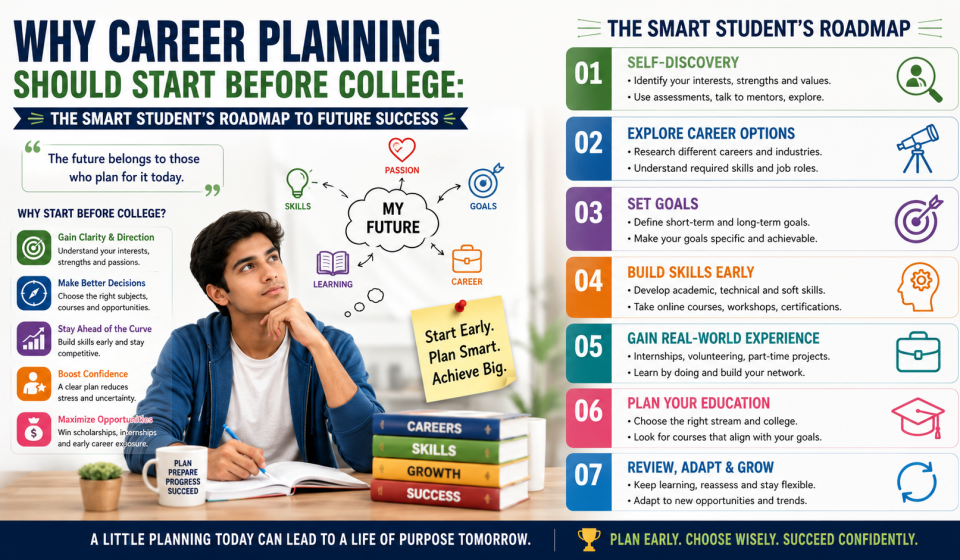
Practical Steps to Start Career Planning Before College
Students can begin career planning by:
- Identifying personal interests and strengths
- Researching potential careers
- Exploring college programs
- Seeking guidance from mentors and counselors
- Participating in extracurricular activities
- Developing relevant skills
- Setting educational and professional goals
Small actions taken today can create significant opportunities in the future.
Source Links
https://www.collegesway.com
https://www.coursera.org
https://www.weforum.org
https://www.unesco.org
https://www.oecd.org
https://www.indeed.com/career-advice
Conclusion
Career planning should begin before college because it provides clarity, direction, and purpose during one of the most important stages of a student’s life. Early planning helps students choose suitable educational pathways, develop valuable skills, understand industry trends, and prepare for future employment opportunities. By aligning academic decisions with career aspirations, students can maximize their college experience and improve long-term professional success. In an increasingly competitive world, proactive career planning is no longer optional—it is a critical step toward building a rewarding and successful future.
FAQ
1. Why should career planning start before college?
Early career planning helps students choose the right courses, develop relevant skills, and align education with future career goals.
2. What are the benefits of early career planning?
Benefits include better decision-making, improved academic focus, reduced stress, stronger employability, and greater career satisfaction.
3. How can students start career planning?
Students can assess their interests, research careers, seek guidance from counselors, and explore educational opportunities.
4. Does career planning help with college selection?
Yes, understanding career goals helps students choose colleges and programs that support their future aspirations.
5. Can career goals change over time?
Absolutely. Career planning is a flexible process that evolves as students gain new experiences and insights.
6. Why is skill development important before college?
Developing skills early provides a competitive advantage and improves readiness for college and future careers.
7. How does career planning improve employability?
It encourages students to build relevant skills, gain experience, and make informed educational choices that align with industry needs.
8. Is career planning only for high-achieving students?
No. Career planning benefits all students by helping them make informed decisions and prepare effectively for their futures.