What to Expect During Your First 100 Days in College: The Ultimate Survival and Success Guide for Freshers in 2026

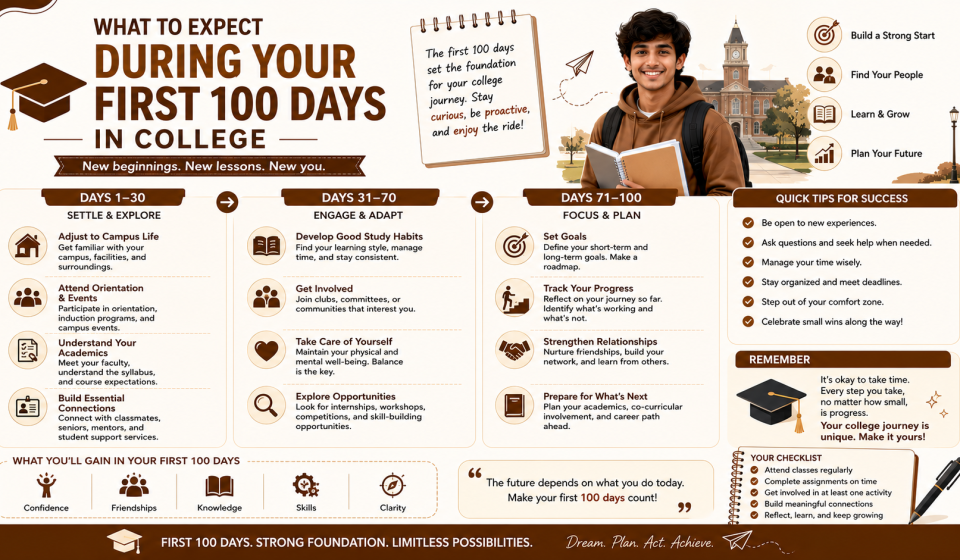
Starting college is one of the most exciting and life-changing experiences in a student’s life. The first 100 days set the foundation for your academic success, personal growth, friendships, and future career. During this period, you’ll encounter a completely new environment.
Unlike school, college requires students to take greater responsibility for managing their time, making decisions, and planning their careers. There are fewer restrictions, more flexibility, and increased expectations regarding academic performance and personal accountability. Many students initially struggle with homesickness, time management, unfamiliar teaching methods, or adapting to campus life. However, with the right mindset and preparation, these challenges become valuable learning experiences.
Adjusting to a New Environment
One of the first changes you’ll notice is a completely different learning environment.
You may experience:
- Larger campuses
- New classmates
- Different teaching styles
- Flexible schedules
- Greater independence
- Diverse cultural experiences
Give yourself time to adapt and stay open to new experiences.
Understanding Academic Expectations
College academics differ significantly from school education.
Students are expected to:
- Attend lectures regularly
- Complete assignments independently
- Participate in discussions
- Conduct research
- Meet project deadlines
- Prepare for continuous assessments
Developing disciplined study habits early is essential.
Learning Time Management
Freedom comes with responsibility.
Successful students learn to balance:
- Classes
- Self-study
- Club activities
- Exercise
- Social life
- Rest
Using planners or digital calendars can help manage priorities effectively.
Making New Friends
The first few weeks provide excellent opportunities to build meaningful friendships.
Be open to:
- Introducing yourself
- Joining conversations
- Participating in orientation events
- Collaborating on projects
- Supporting classmates
Strong friendships enhance both academic and personal life.
Exploring Student Clubs
Student organizations provide opportunities to develop:
- Leadership
- Communication
- Teamwork
- Networking
- Creativity
- Confidence
Join clubs aligned with your interests instead of trying to join too many at once.
Understanding Your Curriculum
Take time to understand:
- Course structure
- Credit requirements
- Assessment methods
- Attendance policies
- Academic calendar
- Elective options
Knowing your academic roadmap helps avoid confusion later.
Communicating with Professors
Faculty members are valuable mentors.
Students should:
- Attend office hours
- Ask thoughtful questions
- Seek academic guidance
- Discuss career interests
- Request feedback
Building positive relationships with professors can benefit future internships and recommendations.
Improving Communication Skills
College offers many opportunities to strengthen communication through:
- Classroom discussions
- Presentations
- Group projects
- Debates
- Student events
Strong communication improves academic and career success.
Developing Digital Skills
Modern college education increasingly relies on technology.
Become comfortable using:
- Learning Management Systems (LMS)
- Online research databases
- Presentation software
- Collaboration platforms
- AI productivity tools
Digital literacy is an essential career skill.
Managing Stress
The transition may sometimes feel challenging.
Healthy stress management includes:
- Regular exercise
- Adequate sleep
- Healthy eating
- Talking with friends
- Practicing mindfulness
- Seeking counseling when needed
Maintaining mental well-being supports academic performance.
Exploring Career Opportunities
Career preparation begins much earlier than graduation.
Start exploring:
- Internships
- Workshops
- Industry seminars
- Career counseling
- Professional certifications
- Networking events
Early preparation creates long-term advantages.
Building Professional Habits
Develop habits that employers value:
- Punctuality
- Responsibility
- Professional communication
- Organization
- Accountability
- Reliability
These habits contribute to future workplace success.
Learning Financial Responsibility
For many students, college is the first opportunity to manage personal finances.
Learn to:
- Create a budget
- Track expenses
- Save money
- Spend wisely
- Avoid unnecessary debt
Financial discipline reduces stress.
Exploring Campus Resources
Most colleges provide valuable support services such as:
- Libraries
- Computer labs
- Career centers
- Counseling services
- Placement cells
- Innovation centers
Use these resources throughout your academic journey.
Participating in Campus Events
Orientation programs, competitions, workshops, and cultural festivals help students:
- Build confidence
- Develop leadership
- Expand networks
- Discover interests
- Improve teamwork
Participation enriches the college experience.
Avoiding Common Mistakes
Many freshers make avoidable errors.
Avoid:
- Skipping classes
- Poor time management
- Ignoring assignments
- Isolating yourself
- Overcommitting to activities
- Waiting too long to seek help
Small habits have a lasting impact.
Building Healthy Daily Habits
Your first 100 days are the perfect time to establish routines.
Focus on:
- Regular study schedules
- Healthy sleep
- Physical activity
- Balanced nutrition
- Daily reading
- Goal setting
Positive habits support long-term success.
Preparing for the Future
College is not only about earning a degree.
Use your first semester to:
- Identify career goals
- Develop technical skills
- Build a professional network
- Participate in internships
- Create a strong resume
- Maintain a positive learning attitude
Every experience contributes to your future career.
Source
https://www.education.gov.in
https://www.ugc.gov.in
https://www.naceweb.org
https://www.indeed.com/career-advice
https://www.coursera.org
Conclusion
The first 100 days in college represent the beginning of an exciting journey filled with opportunities for learning, growth, and self-discovery. Although adjusting to a new environment, managing academics, and building new relationships may initially seem challenging, these experiences help students develop confidence, independence, and resilience. By attending classes regularly, participating in student clubs, improving communication skills, building professional habits, exploring career opportunities, and maintaining a healthy balance between academics and personal life, students can create a strong foundation for long-term success. The habits, friendships, and experiences developed during these first 100 days often shape the rest of the college experience and play a significant role in future academic achievements and career growth.
FAQ
1. Why are the first 100 days in college so important?
The first 100 days help students adjust to campus life, build study habits, develop friendships, understand academic expectations, explore extracurricular activities, and establish a strong foundation for future success.
2. How can I adjust quickly to college life?
Attend orientation programs, participate in campus events, communicate with classmates and professors, stay organized, maintain a study schedule, and remain open to new experiences.
3. Should I join student clubs during my first semester?
Yes. Joining clubs helps develop leadership, communication, teamwork, networking, and confidence while making it easier to meet students with similar interests.
4. What is the biggest challenge for first-year college students?
Common challenges include time management, academic adjustment, homesickness, balancing responsibilities, building friendships, and adapting to greater independence.
5. How can I improve my academic performance in college?
Attend classes consistently, complete assignments on time, participate actively, ask professors for guidance, review course material regularly, and avoid procrastination.
6. When should students start preparing for internships and careers?
Career preparation should begin during the first year by developing technical skills, attending workshops, building resumes, networking with professionals, and exploring internship opportunities.
7. How important is time management in college?
Time management is essential because students must balance academics, extracurricular activities, personal responsibilities, social life, and career development simultaneously.
8. What daily habits contribute to college success?
Regular studying, healthy eating, sufficient sleep, physical exercise, goal setting, effective communication, consistent attendance, and maintaining a positive attitude are key habits that support long-term academic and professional success.