What Makes a College Future-Focused in 2026 and Beyond? The Ultimate Guide to Choosing a Career-Ready Institution for Long-Term Success

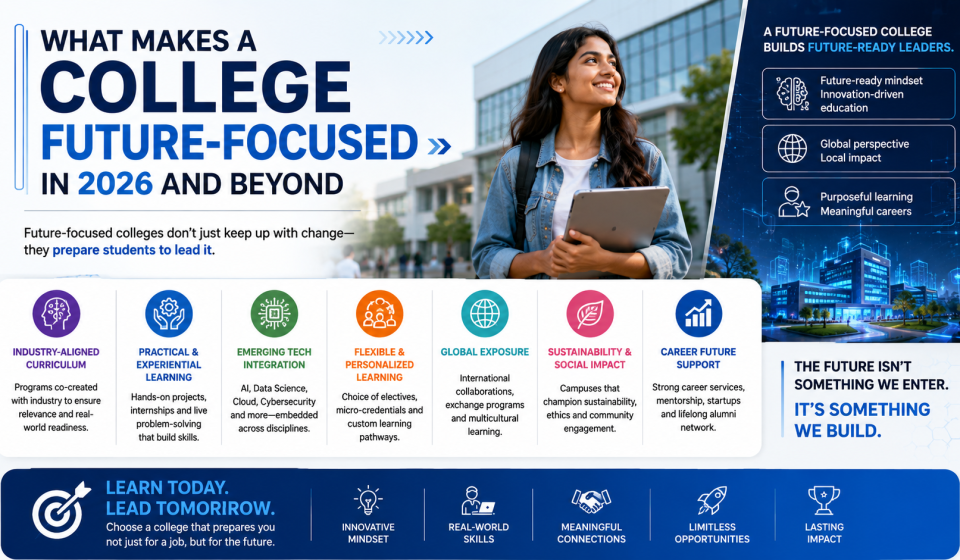
Higher education is changing faster than ever before. Rapid advancements in artificial intelligence, automation, digital transformation, sustainability, global collaboration, and Industry 5.0 are reshaping the skills students need to succeed. As a result, the definition of a great college has evolved.
Today’s employers are looking beyond academic degrees. They seek graduates who possess technical expertise, critical thinking, creativity, adaptability, leadership, communication skills, digital literacy, and the ability to solve complex real-world problems. Future-focused colleges recognize these expectations and redesign their academic programs to equip students with both technical knowledge and transferable skills that remain valuable throughout their careers.
Updated and Industry-Relevant Curriculum
Future-focused colleges regularly revise academic programs to include:
- Artificial intelligence
- Data analytics
- Cybersecurity
- Cloud computing
- Sustainability
- Digital transformation
- Emerging technologies
Current curricula improve career readiness.
Student-Centered Learning
Modern institutions encourage:
- Project-based learning
- Collaborative learning
- Practical assignments
- Case studies
- Independent research
Students actively participate in the learning process.
Integration of Technology
Technology-enhanced campuses provide:
- Smart classrooms
- Learning management systems
- Virtual laboratories
- Digital libraries
- AI-powered learning tools
Technology improves accessibility and learning outcomes.
Strong Industry Partnerships
Future-focused colleges collaborate with employers through:
- Internships
- Industry projects
- Guest lectures
- Campus recruitment
- Professional certifications
Industry engagement bridges education and employment.
Innovation and Entrepreneurship
Students benefit from:
- Startup incubators
- Innovation centers
- Maker spaces
- Entrepreneurship workshops
- Business competitions
Innovation prepares graduates for multiple career paths.
Research Opportunities
Research initiatives encourage students to:
- Solve practical problems
- Develop critical thinking
- Explore emerging technologies
- Publish academic work
- Collaborate across disciplines
Research strengthens lifelong learning.
Career Development Services
Comprehensive career support includes:
- Career counseling
- Resume guidance
- Interview preparation
- Placement assistance
- Professional networking
Career services improve graduate employability.
Focus on Transferable Skills
Modern colleges help students develop:
- Communication
- Leadership
- Teamwork
- Creativity
- Adaptability
- Emotional intelligence
- Critical thinking
These skills remain valuable across industries.
Sustainability and Social Responsibility
Future-focused institutions promote:
- Environmental awareness
- Ethical innovation
- Community engagement
- Sustainable development
- Responsible leadership
Graduates become socially responsible professionals.
Global Learning Opportunities
Many colleges encourage international exposure through:
- Student exchange programs
- Global collaborations
- International research
- Online global classrooms
- Cross-cultural learning
Global experiences broaden career opportunities.
Student Support Systems
Successful institutions provide:
- Academic advising
- Mentorship
- Mental health services
- Learning assistance
- Student success programs
Supportive environments improve educational outcomes.
Lifelong Learning Culture
Future-focused colleges encourage:
- Continuous skill development
- Professional certifications
- Online learning
- Research participation
- Alumni engagement
Graduates remain adaptable throughout their careers.
How to Identify a Future-Focused College
Before taking admission, evaluate:
- Updated curriculum
- Faculty expertise
- Industry partnerships
- Innovation ecosystem
- Research facilities
- Career services
- Student support programs
- Graduate outcomes
Comprehensive evaluation leads to better educational decisions.
Source
https://www.ugc.gov.in
https://www.aicte-india.org
https://www.education.gov.in
https://www.nirfindia.org
https://www.worldeconomicforum.org
Conclusion
A future-focused college prepares students not only for today’s careers but also for the opportunities and challenges of tomorrow. Through updated curricula, technology-enabled learning, industry collaborations, research opportunities, innovation ecosystems, entrepreneurship support, practical education, career development services, and holistic student support, these institutions equip graduates with the knowledge, skills, adaptability, and confidence required in a rapidly changing world. As technology, industries, and workforce expectations continue to evolve beyond 2026, choosing a college that embraces continuous improvement and lifelong learning becomes one of the most important decisions students can make for lasting academic and professional success.
FAQ
1. What is a future-focused college?
A future-focused college continuously updates its academic programs, integrates emerging technologies, promotes innovation, and prepares students for evolving career opportunities and lifelong learning.
2. Why is an updated curriculum important?
An updated curriculum ensures students learn relevant knowledge, practical skills, and emerging technologies that align with current industry requirements.
3. How do industry partnerships benefit students?
Industry collaborations provide internships, live projects, guest lectures, networking opportunities, professional certifications, and improved employment prospects.
4. What role does technology play in future-focused education?
Technology supports smart classrooms, virtual laboratories, digital learning platforms, AI-assisted education, and flexible learning experiences that improve educational quality.
5. Why are innovation and entrepreneurship important in modern colleges?
Innovation programs encourage creativity, problem-solving, startup development, research, and entrepreneurial thinking, preparing students for diverse career paths.
6. How do career development services support student success?
Career centers provide career counseling, resume assistance, interview preparation, placement support, networking opportunities, and professional skill development.
7. What transferable skills should future-focused colleges develop?
Students should develop communication, leadership, teamwork, adaptability, critical thinking, creativity, emotional intelligence, and digital literacy.
8. How can students identify a future-focused college before admission?
Students should evaluate curriculum quality, faculty expertise, research opportunities, industry partnerships, innovation facilities, student support services, career development programs, and graduate outcomes before making a final decision.