What Makes a College Academically Future-Ready? The Complete Guide to Choosing a University That Prepares Students for Tomorrow

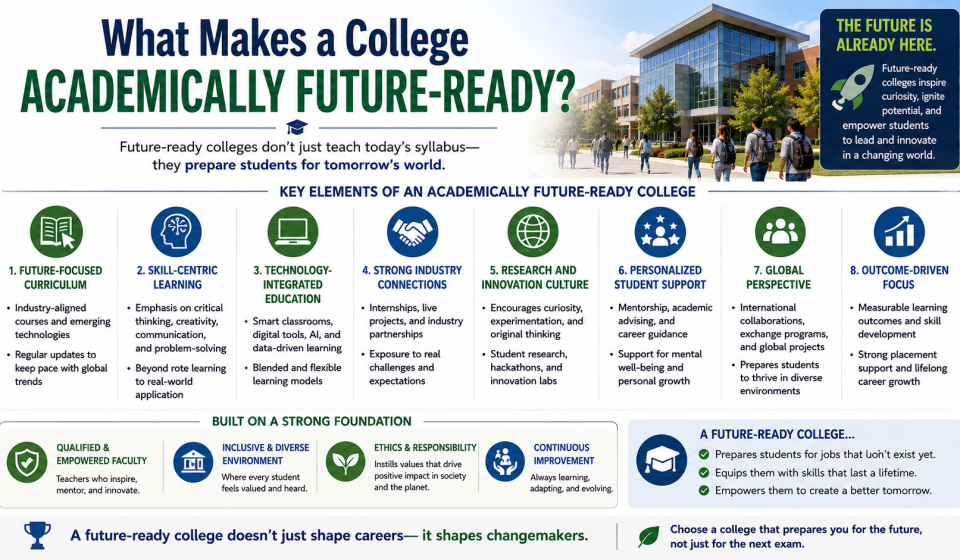
Choosing the right college is one of the most important decisions a student makes, and in today’s rapidly evolving world, academic excellence alone is no longer enough. A future-ready college is one that prepares students not only with strong subject knowledge but also with the skills.
Modern higher education is shifting from traditional classroom instruction toward experiential learning, interdisciplinary education, research, entrepreneurship, industry collaboration, and digital innovation. Students and parents evaluating colleges should therefore look beyond rankings and infrastructure to understand whether an institution truly equips graduates for long-term academic and professional success. A future-ready college fosters creativity, practical learning, leadership, ethical decision-making, and lifelong learning while supporting students through modern facilities, experienced faculty, career services, and global exposure. This comprehensive guide explores the characteristics of academically future-ready colleges and explains how students can identify institutions that provide a strong foundation for lifelong success.
What Is a Future-Ready College?
A future-ready college is an institution that continuously adapts its academic programs, teaching methods, technology, and student support systems to meet the changing needs of students, employers, and society.
Such colleges focus on:
- Academic excellence
- Skill development
- Innovation
- Research
- Industry collaboration
- Career readiness
- Lifelong learning
These institutions prepare graduates for both current and future careers.
Why Future-Readiness Matters
The workplace continues changing because of:
- Artificial Intelligence
- Automation
- Digital transformation
- Globalization
- Sustainability initiatives
- Emerging industries
Students need education that prepares them for careers that may not even exist today.
Modern and Flexible Curriculum
A future-ready college regularly updates its curriculum.
Modern programs include:
- Emerging technologies
- Industry-relevant subjects
- Practical applications
- Multidisciplinary learning
- Elective choices
Flexible curricula allow students to explore diverse interests.
Experienced and Supportive Faculty
Faculty members play a central role in student development.
Future-ready colleges invest in instructors who:
- Continuously update their knowledge
- Conduct research
- Mentor students
- Encourage innovation
- Use modern teaching strategies
Faculty accessibility improves the overall learning experience.
Experiential Learning Opportunities
Learning becomes more meaningful through practical experience.
Examples include:
- Laboratory work
- Field visits
- Industry projects
- Case studies
- Simulations
- Capstone projects
Experiential learning bridges theory and practice.
Research and Innovation
Strong research culture encourages students to:
- Investigate real-world problems
- Develop innovative solutions
- Publish research
- Participate in conferences
- Collaborate with faculty
Research develops analytical and critical thinking skills.
Interdisciplinary Education
Future challenges require knowledge from multiple disciplines.
Many colleges now combine fields such as:
- Artificial Intelligence and Healthcare
- Business and Data Analytics
- Engineering and Sustainability
- Psychology and Technology
Interdisciplinary education encourages creativity and innovation.
Technology-Enabled Learning
Technology enhances education through:
- Smart classrooms
- Learning management systems
- Virtual laboratories
- Artificial Intelligence tools
- Digital libraries
- Online collaboration
Technology supports flexible and personalized learning.
Industry Collaboration
Partnerships with employers improve career preparation.
Industry collaboration includes:
- Internship programs
- Guest lectures
- Live projects
- Industrial visits
- Corporate mentoring
Students gain practical exposure before graduation.
Strong Career Development Services
Career support should include:
- Career counseling
- Resume development
- Interview preparation
- Internship assistance
- Placement support
- Skill workshops
Effective career services improve graduate employability.
Entrepreneurship Support
Many future-ready colleges encourage entrepreneurship through:
- Startup incubation centers
- Innovation labs
- Business mentoring
- Funding guidance
- Entrepreneurship competitions
Students gain opportunities to transform ideas into successful ventures.
Global Learning Opportunities
International exposure strengthens academic development.
Examples include:
- Student exchange programs
- Collaborative research
- International internships
- Global classrooms
- Virtual exchange initiatives
Global learning prepares students for international careers.
Skill Development Beyond Academics
Future-ready colleges emphasize transferable skills such as:
- Communication
- Leadership
- Teamwork
- Problem-solving
- Critical thinking
- Emotional intelligence
- Adaptability
These competencies are valued across all industries.
Personalized Student Support
Student success depends on comprehensive support services.
Examples include:
- Academic advising
- Faculty mentoring
- Mental wellness resources
- Peer tutoring
- Learning support centers
- Accessibility services
Strong support systems improve student outcomes.
Digital Literacy
Every graduate should possess digital competence.
Students should learn:
- Data literacy
- Cybersecurity awareness
- Online collaboration
- Digital communication
- Information evaluation
Digital literacy supports lifelong employability.
Continuous Assessment
Modern colleges increasingly use diverse assessment methods rather than relying solely on final examinations.
Assessment may include:
- Projects
- Presentations
- Practical assignments
- Research reports
- Case studies
- Group work
Continuous evaluation encourages deeper learning.
Sustainability Education
Future-ready institutions promote environmental responsibility.
Students learn about:
- Climate change
- Renewable energy
- Sustainable development
- Resource conservation
- Social responsibility
Sustainability education prepares responsible global citizens.
Campus Innovation Ecosystem
Innovation ecosystems provide opportunities through:
- Research centers
- Makerspaces
- AI laboratories
- Startup incubators
- Innovation competitions
Students gain valuable practical experience.
Alumni and Industry Networks
Strong alumni networks provide:
- Career mentoring
- Internship referrals
- Professional networking
- Industry insights
- Employment opportunities
Successful alumni contribute significantly to institutional strength.
Accreditation and Quality Assurance
Students should verify whether a college has recognized accreditation and quality certifications. Accreditation reflects adherence to established academic standards and often indicates continuous improvement in teaching, curriculum, governance, and student outcomes. Institutions recognized by bodies such as the University Grants Commission (UGC), National Assessment and Accreditation Council (NAAC), and relevant professional councils provide additional assurance regarding educational quality.
Future Skills for the Modern Workforce
Future-ready colleges actively prepare students for emerging careers by integrating artificial intelligence, data analytics, digital technologies, innovation, ethical decision-making, communication, collaboration, and lifelong learning into academic programs. Graduates equipped with these competencies are better prepared to adapt to changing industries and contribute meaningfully to economic and social development.
The Role of NEP 2020
India’s National Education Policy (NEP) 2020 encourages multidisciplinary education, flexible learning pathways, academic credit systems, research, innovation, skill development, and holistic student growth. Colleges implementing these reforms create more dynamic learning environments that align with global education trends while preparing students for future academic and professional challenges.
How Students Can Evaluate a Future-Ready College
Before choosing a college, students should examine curriculum flexibility, faculty qualifications, research opportunities, internship support, innovation centers, industry partnerships, placement records, digital infrastructure, accreditation status, student support services, entrepreneurship programs, international collaborations, and alumni success. Visiting the campus, attending counseling sessions, speaking with current students, and reviewing official institutional information can provide valuable insights into whether a college truly prepares students for the future.
Source
https://www.education.gov.in
https://www.ugc.gov.in
https://www.naac.gov.in
https://www.aicte-india.org
Conclusion
An academically future-ready college prepares students for far more than graduation—it equips them with the knowledge, practical experience, professional skills, adaptability, and confidence needed to succeed throughout their lives. Through modern curricula, interdisciplinary learning, research opportunities, industry collaboration, digital technologies, innovation ecosystems, career services, and comprehensive student support, these institutions create graduates who are ready for the opportunities and challenges of an ever-changing world. As higher education continues to evolve, students who carefully evaluate these factors when selecting a college will be better positioned to achieve academic excellence, meaningful careers, and lifelong personal and professional growth.
FAQ
1. What is a future-ready college?
A future-ready college is an institution that continuously updates its academic programs, teaching methods, technology, research opportunities, and student support systems to prepare graduates for evolving careers and lifelong learning.
2. Why is interdisciplinary learning important in future-ready colleges?
Interdisciplinary learning combines knowledge from multiple fields, helping students develop creativity, critical thinking, innovation, and problem-solving skills needed for complex real-world challenges.
3. How do industry partnerships benefit students?
Industry collaborations provide internships, live projects, guest lectures, mentorship, workplace exposure, and placement opportunities that improve career readiness.
4. What role does technology play in future-ready education?
Technology supports digital learning, virtual laboratories, online collaboration, artificial intelligence tools, personalized learning, and access to modern educational resources.
5. How can students identify a future-ready college before admission?
Students should evaluate accreditation, curriculum, faculty expertise, research facilities, placement support, innovation centers, digital infrastructure, career services, alumni network, and industry collaborations.
6. How does NEP 2020 encourage future-ready higher education?
NEP 2020 promotes multidisciplinary education, flexible curricula, research, innovation, skill development, experiential learning, academic mobility, and holistic student development to prepare graduates for future workforce demands.