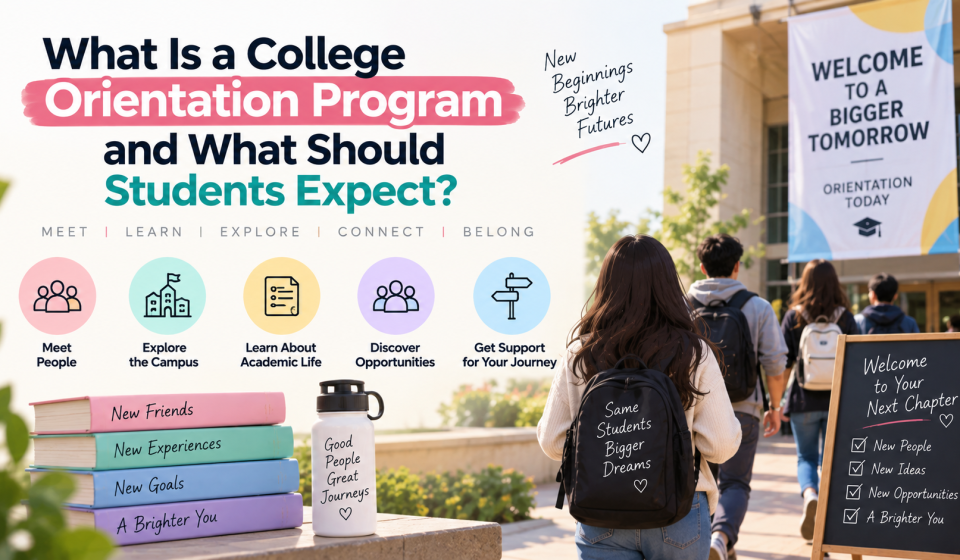
What Is a College Orientation Program and What Should Students Expect? A Complete Guide for New Students

Learn what a college orientation program is, what students can expect, how to prepare, and why orientation is important for academic, social, and personal success.
Starting college is an exciting experience, but it can also feel overwhelming. New students have to understand a new academic system, find their way around campus, meet unfamiliar people, learn about available resources, and prepare for their first semester. A college orientation program is designed to make this transition easier. It introduces students to the institution, its academic expectations, campus facilities, support services, student activities, and the people who can help them throughout their college journey.
College orientation is more than simply a welcome event. Depending on the institution, it may include academic advising, course registration, campus tours, student-resource sessions, safety information, workshops, social activities, meetings with faculty and staff, and opportunities to connect with other new students. Universities such as UCLA, UConn, and the University of Maryland describe orientation as an important part of helping students become familiar with campus life, academic planning, services, and their new student community.
What Is a College Orientation Program?
A college orientation program is an organized experience designed to help new students transition from school or another institution into college life. It usually takes place before classes begin, although some universities may continue orientation activities during the first weeks of the semester.
The exact structure differs from one college to another. Some institutions offer a one-day program, while others may have multi-day or overnight programs. Some colleges combine online preparation with an in-person orientation, while others organize orientation as part of a broader welcome or transition program.
The main purpose remains similar: to help students understand how the college works and feel prepared to begin their academic journey.
Why Is College Orientation Important?
The transition to college involves many changes. Students may have more independence, different academic expectations, new responsibilities, and a much larger campus environment.
Orientation helps students understand these changes before regular classes begin. It can introduce them to academic advisors, faculty members, student leaders, campus services, and other students.
For example, the University of Connecticut explains that orientation helps students build a foundation for academic success, learn about resources and services, meet peers, and understand university traditions.
This makes orientation an important first step toward becoming comfortable and confident in a new academic environment.
What Should Students Expect During College Orientation?
Although every college has its own schedule, students can generally expect several common activities.
1. Welcome and Introduction Sessions
Orientation usually begins with a formal welcome from university representatives, faculty, student leaders, or orientation staff.
These sessions may explain:
- The college’s mission and values
- Important academic expectations
- Campus culture
- Student responsibilities
- Important policies
- Available opportunities
- What students should know before classes begin
These introductions help students understand the larger environment they are joining.
2. Campus Tours
Many orientation programs include campus tours. These tours help students identify important locations before the semester starts.
Students may be shown:
- Classrooms
- Libraries
- Laboratories
- Cafeterias
- Student centers
- Academic offices
- Health services
- Career centers
- Recreation facilities
- Residence halls
- Student activity spaces
Knowing where important facilities are located can reduce stress during the first few weeks of college.
3. Academic Advising
Academic advising is one of the most important parts of many orientation programs.
Students may meet an academic advisor to discuss their major, degree requirements, course choices, academic goals, and first-semester schedule.
The University of Maryland notes that orientation can include dedicated academic advising where students discuss degree requirements, prior learning or transfer credits, and course registration.
Students should take advantage of this opportunity by preparing questions in advance.
4. Course Registration
At many colleges, orientation is connected with first-semester course registration.
Students may receive guidance about:
- Required courses
- Elective subjects
- Credit requirements
- Course schedules
- Prerequisites
- Academic workload
- Registration procedures
Some universities require students to complete orientation or related onboarding activities before they can register for classes.
Because policies differ, students should carefully read their college’s orientation instructions.
5. Introduction to Student Services
College campuses often provide many services that students may not discover immediately.
Orientation can introduce students to services such as:
- Academic support
- Counseling and wellbeing services
- Financial aid
- Career guidance
- Library services
- Accessibility services
- Health services
- Technology support
- Housing assistance
- International student services
Learning about these resources early makes it easier to seek help when necessary.
6. Meeting Other Students
Making friends is another important part of orientation.
Students are often placed into small groups or activities where they can meet other new students. Orientation leaders may organize discussions, games, group activities, campus exploration, or social events.
Students should not feel pressured to make close friends immediately. The goal is simply to begin building connections.
Even a short conversation can become the beginning of a useful friendship or support network.
7. Meeting Orientation Leaders
Many colleges use student orientation leaders to guide new students.
These leaders are often current students who understand the transition into college. They may answer questions about campus life, classes, activities, dining, transportation, student organizations, and everyday college experiences.
Students should feel comfortable asking orientation leaders practical questions. Sometimes a current student’s experience can provide useful information that is not covered in formal presentations.
8. Student Clubs and Activities
Orientation may also introduce students to extracurricular activities.
Colleges can offer:
- Sports clubs
- Cultural organizations
- Academic societies
- Volunteer groups
- Student associations
- Arts and creative organizations
- Technology clubs
- Entrepreneurship groups
- Leadership programs
Participating in activities can help students develop communication, teamwork, leadership, and organizational skills while building connections outside the classroom.
9. Campus Safety Information
Student safety is another topic that may be covered during orientation.
Students may learn about emergency procedures, campus security, transportation, emergency contacts, reporting systems, and other safety resources.
Understanding these systems before an emergency occurs can help students respond more confidently if they ever need assistance.
10. Technology and Online Systems
Modern colleges often depend on digital systems for academic and administrative tasks.
Orientation may introduce students to systems used for:
- Course registration
- Student email
- Learning management systems
- Digital libraries
- Assignment submission
- Campus announcements
- Academic records
- Online payments
- Student identification
Students should make sure they understand how to access their accounts and where to get technical support.
What Should Students Bring to Orientation?
What students need depends on the college and the type of orientation program. However, it can be useful to prepare a basic orientation checklist.
Students may want to bring:
- College admission or orientation confirmation
- Valid identification
- Phone and charger
- Notebook and pen
- Important academic documents
- Questions for an academic advisor
- Comfortable clothing
- Water bottle
- Required medications
- Any documents requested by the university
For overnight programs, students may also need toiletries, bedding, comfortable footwear, and other personal items. Some universities provide detailed packing lists, so students should always check their college’s official instructions.
How Should Students Prepare Before Orientation?
Preparation can make orientation much more useful.
Review Your College Information
Read the orientation email, schedule, website, and preparation instructions carefully.
Look for information about:
- Date and time
- Location
- Registration requirements
- Required documents
- Online modules
- Placement tests
- Academic advising
- Course registration
- Parking or transportation
- Accommodation
- What to bring
Some universities require students to complete online tasks before attending orientation.
Prepare Questions
Students should write down questions before arriving.
Useful questions include:
- Which courses should I take first?
- How many credits should I take?
- What are my degree requirements?
- Which academic resources are available?
- Where can I get help with difficult subjects?
- How can I join student organizations?
- What career services are available?
- Who should I contact if I have an academic problem?
Having questions ready can prevent students from forgetting important topics.
Should Students Feel Nervous About Orientation?
It is completely normal to feel nervous before orientation.
Students may worry about meeting new people, finding classrooms, talking to advisors, or understanding college procedures.
Remember that orientation is specifically designed for students who are new to the environment. Many other students will be experiencing similar feelings.
Instead of trying to know everything immediately, focus on learning one thing at a time.
How Can Students Make the Most of Orientation?
Students can make orientation more valuable by actively participating.
Listen carefully during academic sessions, ask questions, talk to other students, explore campus facilities, and take notes about important services.
Students should also pay attention to information that may seem less important at first. Knowing where to find academic support, career services, health services, or administrative assistance can become extremely valuable later.
Orientation should not be treated only as a mandatory event. It is an opportunity to understand the college environment before academic responsibilities become more demanding.
Common Mistakes Students Should Avoid
One common mistake is ignoring orientation emails and preparation instructions. Important deadlines or required tasks may be included in these communications.
Another mistake is being afraid to ask questions. If something is unclear, asking for clarification is better than making assumptions.
Students should also avoid trying to memorize everything. Colleges provide a lot of information during orientation, so students should save important links, contact details, schedules, and documents for future reference.
Finally, students should not compare their social experience with others. Some people make friends quickly, while others need more time. Both experiences are normal.
What Students Can Expect After Orientation
Orientation is usually only the beginning of the transition process.
After orientation, students may still need to complete tasks such as:
- Finalizing course schedules
- Purchasing or accessing textbooks
- Setting up digital accounts
- Completing academic requirements
- Moving into residence halls
- Attending welcome activities
- Meeting professors
- Exploring student organizations
- Preparing for the first week of classes
The goal of orientation is not to answer every question students will ever have. Instead, it helps students know where to find answers and who can provide support.
Orientation for Transfer and International Students
Transfer students may have different orientation needs from first-year students. They may need information about transferring credits, degree requirements, academic policies, and adjusting to a new institution.
International students may receive additional information about immigration procedures, cultural adjustment, academic expectations, health requirements, and campus support.
The exact programs vary by institution, so students should check the orientation information specifically designed for their student category.
Source
UCLA – New Student Orientation
University of Connecticut – New Student Orientation
University of Maryland – First Year New Student Orientation
Harvard College – Incoming Student Orientation
Conclusion
A college orientation program is an important first step in the transition to university life. It helps students understand academic expectations, explore campus facilities, meet advisors and peers, learn about student services, and prepare for their first semester. Although the exact format varies between colleges, the overall purpose is to help new students feel prepared, connected, and confident.
Students can get the most from orientation by preparing questions, completing required tasks, participating actively, exploring available resources, and connecting with other students. Most importantly, students should remember that they are not expected to understand everything immediately. College is a learning experience, and orientation provides the foundation for beginning that journey with greater confidence.
FAQ
What is a college orientation program?
A college orientation program is an organized program that helps new students transition into college by introducing them to academics, campus facilities, student services, policies, activities, and the college community.
Is college orientation mandatory?
It depends on the institution. Some colleges require orientation before students can register for classes, while others offer optional or partially required programs. Students should check their college’s official instructions.
What happens during college orientation?
Students may attend welcome sessions, campus tours, academic advising, course registration, resource presentations, student activities, safety sessions, and social events.
Do students register for classes during orientation?
At many colleges, students receive academic advising and may register for their first-semester classes during orientation. However, the process varies by institution.
Can I make friends during orientation?
Yes. Orientation often includes small-group activities and social events designed to help new students meet one another.
What should I bring to college orientation?
Students should check their college’s official checklist. Common items may include identification, confirmation details, a phone charger, notebook, pen, required documents, and comfortable clothing.
Should I prepare questions for my academic advisor?
Yes. Preparing questions about courses, degree requirements, academic support, electives, and career planning can help students make better use of their advising session.
Is orientation only for first-year students?
Not always. Many colleges also organize separate orientation programs for transfer students, international students, and other new student groups.
What if I feel nervous during orientation?
Feeling nervous is normal. Remember that many other students are also adjusting to a new environment. Orientation leaders, advisors, faculty, and staff are there to help.
Why is college orientation important?
Orientation helps students become familiar with their academic environment, campus resources, support services, student community, and college expectations before beginning regular classes.