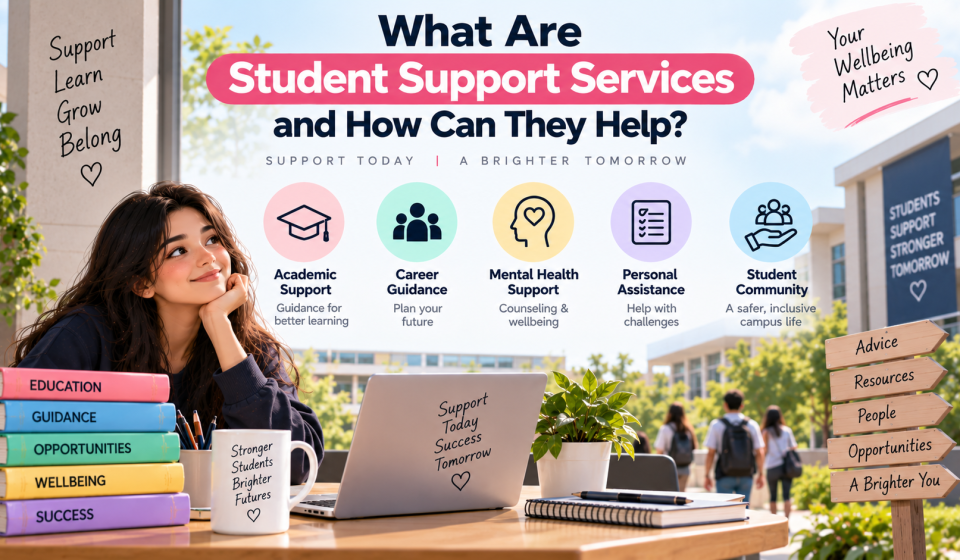
What Are Student Support Services and How Can They Help? A Complete Guide for College Students

Discover what student support services are, how they help with academics, mental health, careers, finances, and campus life, and why every college student should use them.
Starting college or university is an exciting experience, but it can also bring academic pressure, career uncertainty, financial concerns, personal challenges, and difficulties adjusting to a new environment. Students are expected to manage classes, assignments, examinations, relationships, career planning, and personal responsibilities at the same time. This is where student support services can make a meaningful difference. These services are designed to help students navigate different aspects of college life and access guidance when they need it.
Student support services are not limited to students who are struggling academically or personally. They can benefit students at every stage of their educational journey. Universities may provide academic advising, tutoring, counseling, career guidance, financial assistance, health services, disability support, mentoring, student activities, and other resources. The exact services vary between institutions, but the overall purpose is to create a supportive environment where students can learn, grow, and work toward their goals.
What Are Student Support Services?
Student support services are organized resources provided by colleges and universities to help students succeed academically, personally, socially, and professionally. They can include both direct services, such as counseling or tutoring, and guidance-based services, such as academic advising and career planning.
The goal is to help students understand their options, overcome challenges, make informed decisions, and make better use of the opportunities available on campus. For example, Ahmedabad University describes student support through areas such as new-student support, wellness, health, student activities, and counseling.
Student support is therefore broader than simply helping students with their studies. It can involve almost every part of the student experience.
Why Are Student Support Services Important?
College life involves many decisions. Students may need to select courses, manage deadlines, choose a career direction, apply for internships, prepare for examinations, handle personal stress, or adjust to a new social environment.
Without proper guidance, students may not know where to seek help. Student support services provide a structured way to access appropriate resources.
A strong support system can help students:
- Understand academic requirements
- Improve study habits
- Manage time more effectively
- Prepare for examinations
- Explore career options
- Develop professional skills
- Find internship opportunities
- Deal with personal or emotional challenges
- Adjust to campus life
- Access financial or welfare resources
- Participate in student activities
- Understand university policies and procedures
The U.S. Institute of Education Sciences also highlights the value of coordinated support that can bring together advising, academic planning, tutoring, mental health, career planning, and financial support rather than treating each need as completely separate.
1. Academic Advising and Guidance
Academic advising is one of the most common forms of student support. Advisors can help students understand their academic programs, course requirements, electives, academic goals, and progression toward graduation.
Students can approach academic advisors when they are unsure about which subjects to select or when they need help understanding degree requirements.
Academic advising can be particularly useful when:
- Choosing subjects
- Planning future semesters
- Understanding graduation requirements
- Considering a change of major
- Managing academic difficulties
- Planning further education
- Understanding academic policies
Students should not wait until they have a serious academic problem before speaking with an advisor. Regular academic planning can help prevent confusion later.
2. Tutoring and Academic Assistance
Some subjects can be difficult even when students attend classes regularly. Tutoring and academic assistance can provide additional explanations and learning opportunities.
Universities may offer subject-specific tutoring, peer tutoring, study groups, writing assistance, workshops, or academic coaching. For example, Jindal Global University lists academic advising, study skills, time management, exam preparation, workshops, and study groups among its student support services.
Tutoring does not mean that a student is weak or incapable. It can simply provide another learning environment where difficult concepts can be explained differently.
3. Counseling and Mental Health Support
College students may experience stress, homesickness, examination pressure, relationship difficulties, anxiety, uncertainty, or other personal challenges.
Student counseling services can provide a confidential environment where students can discuss concerns with trained professionals. Universities such as the University of Hyderabad provide psychological counseling aimed at supporting students’ mental health and helping them develop coping and life skills.
Students may consider seeking counseling when they:
- Feel overwhelmed by academic pressure
- Have difficulty adjusting to college
- Experience persistent stress
- Struggle with personal problems
- Feel isolated or homesick
- Have difficulty concentrating
- Need help managing emotional challenges
- Want professional guidance about a personal concern
Seeking support should not be viewed as a sign of weakness. Counseling is one of the resources designed to help students maintain their well-being.
4. Career Guidance and Placement Support
Choosing a career can be challenging because students may have many options but limited information about them.
Career services can help students explore career paths, identify relevant skills, prepare resumes, practice interviews, search for internships, and understand employment opportunities.
Jindal Global University, for example, describes career support that includes career exploration, internships, resume building, interview preparation, job placement, career fairs, networking events, and industry interactions.
Career services can be useful long before graduation. Students can begin exploring careers during their first or second year and gradually build the skills and experience required for their chosen direction.
5. Financial and Scholarship Support
Financial concerns can affect a student’s ability to focus on education. Some institutions provide information about scholarships, financial assistance, fellowships, insurance, or other welfare-related resources.
Students should check their university website and student affairs office to understand what financial support may be available.
When looking for assistance, students should check:
- Scholarship eligibility
- Application deadlines
- Required documents
- Merit-based opportunities
- Need-based assistance
- Government schemes
- Institutional scholarships
- Fellowship opportunities
Applying early is important because many financial support programs have specific deadlines.
6. Health and Wellness Services
Student support can also include physical health and general wellness services.
Universities may provide health centers, medical assistance, wellness programs, health education, or referrals to healthcare professionals. The University of Hyderabad, for example, lists health-related and psychological support within its broader student services structure.
Maintaining physical health is important because sleep, nutrition, physical activity, and general well-being can influence a student’s ability to participate effectively in academic life.
7. Disability and Accessibility Support
Students with disabilities or specific accessibility requirements may need additional academic or campus support.
Depending on the institution, services may include reasonable academic accommodations, accessible learning resources, assistive technology, examination arrangements, or accessibility guidance.
Students who require accommodations should contact the appropriate university office as early as possible. Early communication gives the institution more time to understand the student’s needs and arrange appropriate support.
8. Orientation and New Student Support
The transition into college can be easier when students understand the campus, academic system, facilities, rules, and available resources.
Orientation programs often introduce new students to departments, faculty members, libraries, student organizations, academic systems, and support services.
Ahmedabad University, for example, describes orientation as helping new students become familiar with people, courses, systems, peers, seniors, and campus facilities.
Students should pay attention during orientation because it is often the first opportunity to learn where they can seek help later.
9. Mentoring and Peer Support
Mentoring can provide students with another source of guidance. A mentor may be a faculty member, senior student, academic advisor, or trained peer mentor.
Mentors can help students understand campus culture, discuss academic concerns, set goals, and identify resources.
Peer support can be especially useful for new students because senior students may have already experienced similar challenges.
10. Student Activities and Campus Life
Student support is not only about solving problems. A healthy college experience also involves building relationships, developing interests, and participating in campus activities.
Universities may provide clubs, societies, sports, cultural activities, events, volunteering opportunities, and leadership programs.
Participation can help students develop communication, teamwork, leadership, organization, and networking skills while also making campus life more engaging.
11. Grievance and Safety Support
Students should also know where to report serious concerns involving harassment, bullying, discrimination, academic issues, safety, or other grievances.
Universities often have designated offices or committees for handling such concerns. The University of Delhi’s student welfare structure, for example, includes counseling, placement, internships, and grievance-related support.
Students should familiarize themselves with these channels rather than ignoring serious problems.
How Can Students Make Better Use of Support Services?
Having support services available is only useful when students know how to access them.
A simple approach is to explore the university website and identify important student offices during the first few weeks of college.
Students can create a personal list containing:
- Academic advisor contact
- Department office
- Counseling center
- Career or placement office
- Student welfare office
- Library
- Scholarship or financial aid office
- Disability support office
- Health center
- Grievance office
- Emergency contacts
Keeping this information available can make it easier to seek help when needed.
When Should Students Ask for Help?
Students often wait too long because they believe their problem is not serious enough. However, asking for guidance early can prevent a small issue from becoming more complicated.
For example, a student who is struggling with a subject can seek tutoring before examinations. A student who is uncertain about a career can meet a career counselor before choosing internships. A student experiencing persistent emotional stress can contact a counseling service instead of handling everything alone.
The right time to ask for help is when you recognize that you need guidance.
How Student Support Services Can Improve College Life
Effective support services can make the college experience more organized and manageable. They give students access to people and resources that can help them make informed decisions.
Academic support can improve learning strategies. Career services can help students prepare for professional opportunities. Counseling can provide a safe environment for discussing personal concerns. Student activities can encourage social connection and leadership development.
The most important benefit is that students do not have to navigate every challenge alone.
Tips for Using Student Support Services Effectively
Students can get more value from support services by following a few simple habits:
- Learn about available services early.
- Save important contact information.
- Ask questions when something is unclear.
- Attend academic advising appointments.
- Use tutoring before problems become severe.
- Explore career services before the final year.
- Seek professional counseling when needed.
- Check scholarship opportunities regularly.
- Participate in useful workshops and student activities.
- Understand university grievance and emergency procedures.
Common Mistakes Students Should Avoid
One common mistake is assuming that support services are only for students who are failing or facing major problems. In reality, these services can also help students plan ahead and make better decisions.
Another mistake is waiting until the last minute. Career planning, scholarship applications, academic planning, and counseling may all require time.
Students should also avoid relying only on friends or social media for important academic or career information. Official university offices are generally better sources for institution-specific rules and procedures.
A Simple Student Support Checklist
Before beginning or continuing college, students should ask:
- Do I know who my academic advisor is?
- Do I know where to get tutoring?
- Do I know how to contact counseling services?
- Do I know where the career or placement office is?
- Have I checked available scholarships?
- Do I know how to report a grievance?
- Do I know where to get health support?
- Have I explored student clubs and activities?
- Do I understand my academic requirements?
- Do I know whom to contact during an emergency?
Answering these questions can help students become more confident and independent.
Source
Ahmedabad University – Student Support Services
Jindal Global University – Student Support Services
University of Delhi – Dean Students’ Welfare
University of Hyderabad – Student Services
Conclusion
Student support services are an important part of the modern college experience. They can help students manage academics, understand career options, maintain well-being, access financial opportunities, adjust to campus life, and handle personal challenges. Support may come through academic advisors, tutors, counselors, career professionals, mentors, student welfare offices, health services, and other campus resources.
Students should not think of support services as something they use only when they have a serious problem. These resources can also help them plan ahead, make informed decisions, develop useful skills, and take greater responsibility for their education and future. By learning about available services and using them at the right time, students can make their college journey more organized, informed, and rewarding.
FAQ
1. What are student support services?
Student support services are resources provided by colleges and universities to help students with academic, personal, career, health, financial, social, and other aspects of student life.
2. Who can use student support services?
Generally, enrolled students can use the support services provided by their institution. Specific eligibility may vary depending on the service.
3. Can student support services help with academic problems?
Yes. Academic advisors, tutors, study groups, workshops, and academic coaching can help students understand difficult subjects, improve study strategies, and plan their academic progress.
4. Can students use counseling services for academic stress?
Yes. Academic pressure can contribute to stress and emotional difficulties, and many universities provide counseling services where students can discuss such concerns confidentially.
5. Do colleges provide career support?
Many colleges and universities provide career services such as career counseling, resume assistance, interview preparation, internships, placement support, career fairs, and networking opportunities.
6. When should a student contact a support service?
Students can contact a support service whenever they need guidance. Seeking help early can make it easier to address an issue before it becomes more difficult.
7. Are student support services only for struggling students?
No. Support services can benefit all students, including those who want help with planning, career development, academic improvement, well-being, or personal growth.
8. How can students find available support services?
Students can check their university website, student handbook, student affairs office, department office, orientation materials, or academic advisor for information about available services.
9. Can support services help students prepare for jobs?
Yes. Career and placement services may provide support with resumes, interviews, internships, job searches, networking, and career planning.
10. Why should students learn about support services early?
Knowing where to get help can save time and reduce confusion when a problem occurs. Early awareness also allows students to take advantage of academic, career, wellness, and personal development opportunities throughout college.