
College is much more than attending lectures and passing examinations. It is a transformative phase where students gain knowledge, develop professional skills, build meaningful relationships, and prepare for lifelong careers.
Modern educational institutions invest heavily in campus facilities because they recognise that student success depends on much more than academic instruction. Today’s employers value graduates who possess leadership skills, communication abilities, practical experience, adaptability, teamwork, and emotional intelligence alongside strong academic performance. Campus resources provide opportunities to develop these qualities through workshops, internships, networking events, research opportunities, extracurricular activities, and professional guidance. Students who actively engage with campus support systems often perform better academically, experience greater confidence, secure better career opportunities, and build stronger foundations for lifelong personal and professional growth. This article explores how campus resources contribute to long-term student success and why every learner should take advantage of the opportunities available within their educational institution.
Understanding Campus Resources
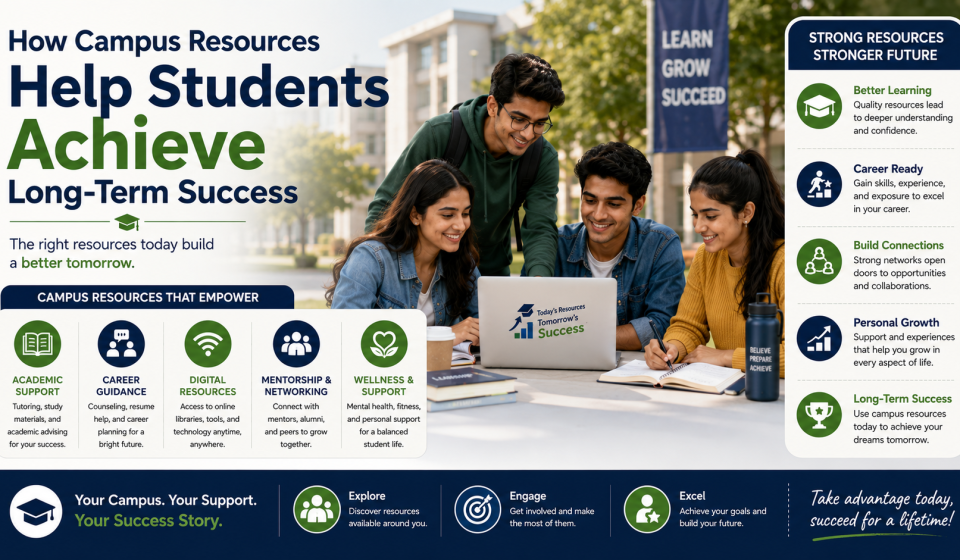
Campus resources refer to the wide range of facilities, services, programmes, and support systems provided by educational institutions to enhance student learning and overall well-being. These resources extend beyond classrooms and are designed to help students succeed academically, socially, emotionally, and professionally.
They include libraries, computer laboratories, research centres, career development offices, counselling services, health clinics, financial aid offices, mentorship programmes, student clubs, entrepreneurship centres, innovation hubs, language laboratories, writing centres, tutoring programmes, sports facilities, and alumni networks.
Together, these resources create an environment where students can grow in multiple dimensions throughout their educational journey.
Academic Support Services Improve Learning
Academic success often depends on having access to the right support.
Many colleges provide tutoring services, writing centres, mathematics support, language assistance, peer mentoring, study workshops, and academic advising.
These services help students strengthen difficult subjects, improve study habits, manage coursework, and prepare effectively for examinations.
Seeking academic assistance early often prevents small learning difficulties from becoming major academic challenges.
Students who utilise academic support services generally develop stronger confidence and achieve better educational outcomes.
Libraries Encourage Lifelong Learning
The campus library remains one of the most valuable educational resources.
Modern libraries provide access to books, journals, research databases, digital publications, multimedia materials, and collaborative learning spaces.
Students can explore subjects beyond classroom instruction while developing independent research skills.
Libraries also teach information literacy by helping students evaluate credible sources, conduct research ethically, and develop analytical thinking.
These research abilities remain valuable throughout higher education and professional careers.
Technology Resources Build Digital Skills
Digital literacy has become essential in nearly every profession.
Educational institutions increasingly provide computer laboratories, high-speed internet, specialised software, cloud computing platforms, virtual learning environments, multimedia studios, and technology support services.
Students gain practical experience using professional tools relevant to their chosen careers.
Access to modern technology encourages innovation while improving productivity and technical competence.
Digital skills developed during college significantly improve employability.
Career Development Centres Prepare Students for Employment
Career centres help students transition successfully from education to employment.
These centres often provide career counselling, resume writing assistance, interview preparation, personality assessments, internship opportunities, employer networking events, career fairs, and job placement services.
Students receive guidance in identifying career goals, exploring industries, and preparing professional application materials.
Career advisors also help students understand labour market trends and employer expectations.
Using these services early increases confidence and improves employment prospects after graduation.
Internship Programmes Provide Practical Experience
Internships allow students to apply classroom knowledge in professional environments.
Many educational institutions collaborate with companies to provide internship opportunities that expose students to workplace responsibilities, organisational culture, and industry practices.
Internships develop technical expertise, communication skills, teamwork, time management, and problem-solving abilities.
Practical experience also strengthens resumes while helping students clarify career interests.
Many internships eventually lead to full-time employment opportunities.
Mentorship Programmes Support Personal Growth
Mentors provide valuable guidance based on experience.
Faculty mentors, industry professionals, senior students, and alumni can help learners navigate academic challenges, career planning, research opportunities, and professional development.
Mentorship encourages confidence while providing practical advice that textbooks cannot offer.
Students often gain valuable insights into career paths, networking strategies, and personal growth through mentoring relationships.
Strong mentorship contributes significantly to long-term success.
Counselling Services Promote Mental Well-Being
Academic life can sometimes become stressful due to examinations, deadlines, financial concerns, family responsibilities, or personal challenges.
Campus counselling services provide confidential emotional support, stress management techniques, crisis intervention, and mental health guidance.
Seeking professional support helps students maintain emotional resilience while improving academic performance and overall well-being.
Healthy mental health forms the foundation for long-term educational and career success.
Student Organisations Develop Leadership Skills
Joining student clubs provides opportunities beyond academics.
Student organisations may focus on technology, entrepreneurship, culture, sports, social service, debate, literature, robotics, environmental awareness, innovation, or professional development.
Participation helps students develop leadership, teamwork, communication, event management, budgeting, conflict resolution, and organisational skills.
Extracurricular involvement also creates lasting friendships and expands professional networks.
Employers often appreciate candidates who demonstrate leadership outside the classroom.
Research Opportunities Foster Innovation
Research programmes encourage curiosity and analytical thinking.
Students participating in research projects learn data collection, experimentation, problem-solving, critical analysis, academic writing, and scientific methodology.
Research experience prepares students for postgraduate education while strengthening innovation and intellectual curiosity.
Many institutions also encourage participation in conferences, publications, and research competitions.
These experiences significantly enhance academic and professional profiles.
Entrepreneurship Centres Encourage Business Innovation
Many universities now support aspiring entrepreneurs through incubation centres and innovation hubs.
Students receive guidance on business planning, product development, market research, funding opportunities, intellectual property, and startup management.
Entrepreneurship programmes encourage creativity, calculated risk-taking, and innovative problem-solving.
Even students who choose traditional employment benefit from entrepreneurial thinking and business awareness.
Health Services Support Overall Wellness
Good health directly influences academic performance.
Campus health centres provide preventive care, medical consultations, vaccinations, health education, nutritional advice, and wellness programmes.
Maintaining physical health improves concentration, attendance, energy levels, and learning outcomes.
Health services also encourage students to adopt healthy lifestyle habits that continue throughout adulthood.
Financial Aid Services Reduce Educational Barriers
Financial concerns often create stress that affects learning.
Campus financial aid offices assist students with scholarships, grants, educational loans, emergency assistance, budgeting guidance, and financial planning.
Access to financial support allows students to focus more effectively on their education.
Understanding financial management also prepares students for future financial responsibilities.
Sports and Recreation Facilities Promote Balance
Physical activity contributes significantly to academic success.
Sports facilities encourage regular exercise, teamwork, discipline, resilience, and stress reduction.
Participation in athletics improves cardiovascular health, emotional well-being, leadership abilities, and social interaction.
Maintaining physical fitness supports both academic performance and lifelong health.
Networking Opportunities Open Career Doors
Educational institutions frequently organise seminars, workshops, conferences, guest lectures, alumni events, industry interactions, and professional networking sessions.
These events allow students to connect with employers, researchers, entrepreneurs, and experienced professionals.
Networking often leads to internships, research collaborations, mentorships, and employment opportunities.
Building professional relationships early provides long-term career advantages.
Developing Soft Skills Through Campus Activities
Success depends on more than technical knowledge alone.
Campus resources help students develop communication, teamwork, adaptability, emotional intelligence, public speaking, negotiation, creativity, leadership, and critical thinking.
These transferable skills remain valuable across virtually every profession.
Students who actively participate in campus activities become more confident and professionally prepared.
Building Confidence and Independence
College provides opportunities for personal growth beyond academics.
Managing schedules, participating in organisations, seeking support, solving problems independently, and interacting with diverse communities build maturity and confidence.
Campus resources encourage students to become responsible, self-motivated, and resilient individuals.
These qualities contribute to both professional achievement and personal fulfilment.
Creating a Lifelong Learning Mindset
One of the greatest benefits of campus resources is encouraging continuous learning.
Students discover that education extends beyond examinations.
Workshops, certifications, online learning platforms, research opportunities, innovation programmes, and professional development activities promote curiosity and lifelong skill development.
Continuous learning enables graduates to remain competitive in rapidly changing industries.
Making the Most of Campus Resources
Students should actively explore available services from their first year rather than waiting until graduation.
Meeting academic advisors regularly, attending workshops, joining clubs, participating in internships, seeking mentorship, using library resources, visiting career centres, and maintaining physical and mental well-being create a comprehensive educational experience.
Small, consistent engagement with campus resources often produces significant long-term benefits.
Students who fully utilise institutional support graduate with stronger academic records, broader experiences, greater confidence, and improved career readiness.
Source
https://www.unesco.org
https://www.naceweb.org
https://hbr.org
https://www.oecd.org/education
Conclusion
Campus resources are essential tools that help students achieve long-term academic, personal, and professional success. From libraries, career centres, internships, and research opportunities to counselling services, mentorship programmes, student organisations, and technology facilities, each resource contributes to building well-rounded, confident, and career-ready graduates. Students who actively engage with these opportunities gain valuable knowledge, strengthen technical and soft skills, expand professional networks, and develop lifelong learning habits that extend far beyond graduation. By making full use of campus resources throughout their educational journey, students invest not only in academic achievement but also in a successful and fulfilling future.
FAQ
1. What are campus resources?
Campus resources are facilities and support services provided by educational institutions, including libraries, career centres, counselling services, technology labs, health centres, mentoring programmes, student clubs, and academic support services.
2. Why are campus resources important for students?
They help students improve academic performance, develop professional skills, maintain mental and physical well-being, gain practical experience, and prepare for successful careers.
3. How do career centres help students?
Career centres provide resume assistance, interview preparation, internship opportunities, career counselling, networking events, and job placement support to improve employability.
4. Can campus activities improve career opportunities?
Yes. Student organisations, leadership roles, workshops, internships, and networking events help students develop valuable soft skills and professional connections that employers highly value.
5. How can students make the best use of campus resources?
Students should explore available services early, attend workshops, seek academic and career guidance, join clubs, participate in internships, use library resources, connect with mentors, and maintain a healthy balance between academics and personal well-being.