Understanding Outcome-Based Education and Its Benefits: The Complete 2026 Guide to Student-Centered Learning and Career Success

Outcome-Based Education (OBE) has become one of the most significant approaches in modern higher education, transforming the way colleges and universities design courses, deliver instruction, and evaluate student learning. Unlike traditional education systems that primarily.
In 2026, Outcome-Based Education is widely adopted by higher education institutions across the world because it aligns academic learning with industry expectations, technological advancements, and evolving workforce requirements. Employers increasingly seek graduates who possess technical expertise, communication skills, teamwork, leadership abilities, critical thinking, creativity, and adaptability. OBE helps institutions develop curricula that prepare students to meet these expectations through measurable learning outcomes and continuous improvement.
What Is Outcome-Based Education?
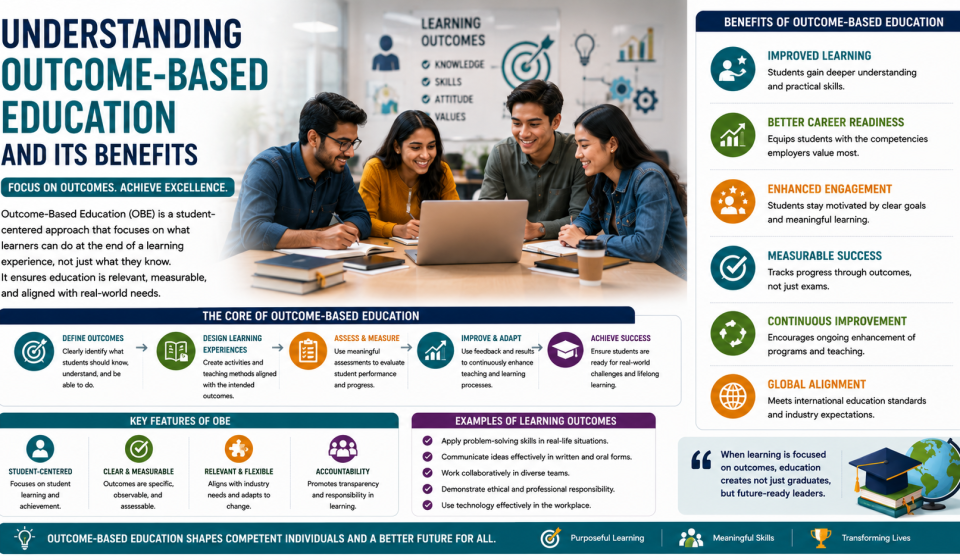
Outcome-Based Education is a learning approach that focuses on the knowledge, skills, and competencies students should demonstrate after completing a course or program.
OBE emphasizes:
- Student achievement
- Practical application
- Measurable learning outcomes
- Continuous improvement
Learning outcomes guide every aspect of education.
Core Principles of Outcome-Based Education
OBE is built upon several important principles:
- Clearly defined learning outcomes
- Student-centered teaching
- Continuous assessment
- Curriculum improvement
- Skill-based learning
These principles ensure meaningful educational experiences.
Student-Centered Learning
Instead of focusing only on teaching, OBE emphasizes:
- Active participation
- Independent learning
- Collaboration
- Critical thinking
- Problem-solving
Students become active participants in their education.
Curriculum Designed Around Outcomes
Academic programs are developed by identifying the competencies graduates should possess.
Curricula often include:
- Technical knowledge
- Practical skills
- Communication
- Leadership
- Ethical decision-making
Courses are aligned with professional expectations.
Modern Teaching Strategies
Faculty may use:
- Project-based learning
- Case studies
- Laboratory sessions
- Group discussions
- Presentations
- Internships
- Digital learning tools
These methods improve practical understanding.
Continuous Assessment
Outcome-Based Education encourages ongoing evaluation through:
- Assignments
- Quizzes
- Projects
- Practical examinations
- Presentations
- Classroom participation
Continuous feedback supports improvement.
Developing Employability Skills
OBE helps students strengthen:
- Communication
- Teamwork
- Leadership
- Critical thinking
- Adaptability
- Time management
These transferable skills are highly valued by employers.
Industry Alignment
Educational institutions regularly review programs using:
- Employer feedback
- Industry trends
- Graduate performance
- Technological advancements
This helps maintain curriculum relevance.
Benefits for Faculty
Outcome-Based Education allows educators to:
- Improve teaching effectiveness
- Monitor student progress
- Refine instructional methods
- Enhance curriculum quality
Continuous evaluation benefits both teachers and learners.
Benefits for Students
Students gain:
- Better academic understanding
- Practical experience
- Career readiness
- Increased confidence
- Stronger problem-solving abilities
OBE supports lifelong learning.
Supporting Accreditation and Quality Assurance
Outcome-Based Education aligns well with accreditation processes by demonstrating measurable educational quality and continuous institutional improvement.
Many quality assurance frameworks encourage outcome-focused education.
Choosing a College That Implements OBE
When evaluating institutions, consider:
- Clearly defined learning outcomes
- Industry-oriented curriculum
- Practical learning opportunities
- Continuous assessment methods
- Career development support
- Graduate success
Strong implementation enhances educational quality.
Long-Term Career Advantages
Graduates educated through Outcome-Based Education often demonstrate:
- Workplace readiness
- Adaptability
- Professional competence
- Continuous learning ability
- Leadership potential
These qualities support long-term career success.
Source
https://www.ugc.gov.in
https://www.aicte-india.org
https://www.naac.gov.in
https://www.education.gov.in
https://www.nirfindia.org
Conclusion
Outcome-Based Education represents a modern approach to higher education that prioritizes student achievement, practical competency, continuous assessment, and career readiness. By clearly defining learning outcomes, aligning curricula with industry expectations, encouraging active learning, and continuously improving educational quality, OBE prepares students for both professional success and lifelong learning. Colleges that effectively implement Outcome-Based Education provide learners with the knowledge, technical expertise, communication abilities, leadership qualities, and practical experience required to thrive in today’s competitive global workforce. Choosing an institution committed to outcome-focused education can significantly enhance academic performance, employability, and long-term career growth.
FAQ
1. What is Outcome-Based Education (OBE)?
Outcome-Based Education is a student-centered educational approach that focuses on the knowledge, skills, and competencies students should demonstrate after completing a course or academic program.
2. How is OBE different from traditional education?
Traditional education often emphasizes completing the syllabus, while OBE focuses on measurable learning outcomes, practical application, continuous assessment, and student achievement.
3. Why is Outcome-Based Education important?
OBE improves educational quality by aligning teaching, curriculum, assessment, and learning outcomes with industry expectations and future career requirements.
4. What skills does OBE help students develop?
Students develop technical knowledge, communication skills, teamwork, leadership, problem-solving abilities, critical thinking, adaptability, and lifelong learning habits.
5. How are students assessed in Outcome-Based Education?
Assessment may include assignments, projects, presentations, laboratory work, internships, quizzes, practical evaluations, classroom participation, and examinations.
6. How does OBE improve employability?
By focusing on practical competencies and workplace skills, OBE prepares graduates to meet employer expectations and adapt to changing professional environments.
7. Does Outcome-Based Education benefit faculty members?
Yes. OBE helps educators improve teaching methods, evaluate student progress, enhance curriculum quality, and continuously refine educational practices.
8. Should students consider OBE when selecting a college?
Absolutely. Colleges with strong Outcome-Based Education systems often provide better learning experiences, stronger career preparation, practical skill development, and improved graduate outcomes.