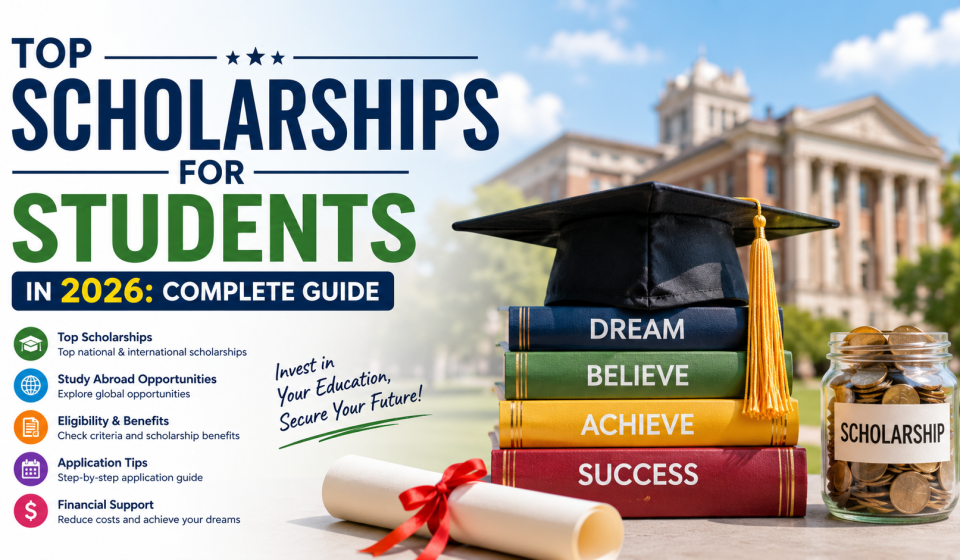

Education is one of the best investments for a successful future, but the rising cost of tuition, accommodation, books, and living expenses can make higher studies difficult for many students. Scholarships are a powerful solution because they help students reduce financial pressure and focus more on academic growth. In 2026, students have many scholarship opportunities available through governments, universities, private organizations, and international education programs.
Why Scholarships Are Important for Students
Scholarships help students continue their education without depending completely on loans or family income. For many students, financial support can make the difference between dropping a dream and achieving it. A scholarship does not only provide money; it also adds value to a student’s academic profile.
Winning a scholarship shows that a student is hardworking, talented, and motivated. It can improve confidence and open doors to better universities, internships, research programs, and career opportunities. Scholarships also help students from different backgrounds access quality education.
Types of Scholarships Available in 2026
There are different types of scholarships students can apply for in 2026. Merit-based scholarships are awarded to students with strong academic performance, leadership skills, or special talents. Need-based scholarships support students who require financial help to continue their studies.
There are also sports scholarships, women-focused scholarships, minority scholarships, STEM scholarships, government scholarships, and study abroad scholarships. Some programs are designed for undergraduate students, while others are for master’s, PhD, or research students.
Understanding the type of scholarship that matches your profile is the first step toward a successful application.
Top Government Scholarships for Students
Government scholarships are among the most trusted funding options. Many countries offer scholarships to support local and international students. These programs usually have clear eligibility rules and official application portals.
For international students, the Fulbright Foreign Student Program is one of the well-known opportunities. It allows graduate students, young professionals, and artists from more than 160 countries to study and conduct research in the United States. Around 4,000 foreign students receive Fulbright scholarships each year.
The Chevening Scholarship is another prestigious option for students who want to study in the United Kingdom. It supports outstanding emerging leaders from around the world to pursue a one-year master’s degree in the UK.
Best Fully Funded Scholarships in 2026
Fully funded scholarships are highly valuable because they cover most major education expenses. These scholarships may include tuition fees, monthly living allowance, airfare, health insurance, visa support, and research funding.
Popular fully funded scholarship options include Chevening Scholarships, Fulbright Scholarships, Erasmus Mundus Joint Masters, DAAD Scholarships in Germany, and university-funded scholarships in countries such as Canada, Australia, the UK, and the USA.
Students should remember that fully funded scholarships are very competitive. A strong academic record, clear goals, leadership experience, and a well-written application can increase the chances of selection.
University Scholarships for Undergraduate Students
Many universities offer scholarships directly to undergraduate students. These scholarships may be based on academic marks, entrance exam scores, extracurricular achievements, leadership activities, or financial need.
Undergraduate scholarships are useful for students beginning their college journey. Some universities automatically consider applicants for scholarships during admission, while others require a separate scholarship application. Students should carefully check university websites for deadlines, required documents, and eligibility criteria.
Applying early is important because many university scholarships have limited seats and strict deadlines.
Scholarships for Graduate and Postgraduate Students
Graduate and postgraduate scholarships are available for students who want to pursue master’s degrees, professional courses, PhD programs, or research projects. These scholarships often focus on academic excellence, research potential, leadership ability, and career goals.
Students applying for postgraduate scholarships usually need academic transcripts, recommendation letters, a statement of purpose, research proposal, resume, and proof of language proficiency. Some programs may also require work experience. For example, Chevening eligibility includes work experience requirements and a commitment to return to the applicant’s home country after the scholarship ends.
Study Abroad Scholarships for International Students
Study abroad scholarships are ideal for students who want global exposure and international education. These scholarships help students study at top universities without carrying the full financial burden.
Countries such as the USA, UK, Germany, Canada, Australia, Ireland, and several European nations offer scholarship programs for international students. Erasmus Mundus, Fulbright, Chevening, DAAD, and many university-specific programs are popular choices.
Students should research country-specific requirements because eligibility, deadlines, and documents may differ. The Fulbright application process, for example, varies by country, including eligibility rules and selection procedures.
Merit-Based Scholarships
Merit-based scholarships are awarded to students with excellent academic results or special achievements. These scholarships reward hard work, discipline, and consistent performance.
To qualify, students may need high grades, strong test scores, certificates, awards, or proof of leadership. Some merit scholarships also consider extracurricular activities, community service, and personal achievements.
Students should maintain a strong academic profile throughout school or college to improve their chances of receiving merit-based scholarships.
Need-Based Scholarships
Need-based scholarships are created for students who have financial difficulties. These scholarships help talented students continue their education even if they cannot afford tuition or living costs.
Applicants may need to submit income proof, family financial details, tax documents, or a financial need statement. A strong need-based scholarship application should clearly explain the student’s financial situation and educational goals.
These scholarships are especially helpful for students from low-income families or underrepresented communities.
How to Apply for Scholarships Successfully
A successful scholarship application needs planning and preparation. Students should start by making a list of scholarships that match their course, country, academic level, and eligibility.
Next, check deadlines carefully. Missing a deadline can immediately disqualify an application. Prepare all documents early, including transcripts, recommendation letters, essays, certificates, passport, and resume.
The scholarship essay or personal statement is very important. It should explain who you are, why you deserve the scholarship, your academic goals, career plans, and how the scholarship will help you. Avoid copying generic content. A personal and honest essay is more powerful.
Common Scholarship Application Mistakes to Avoid
Many students lose scholarship opportunities because of simple mistakes. Common errors include submitting incomplete documents, ignoring eligibility rules, writing weak essays, missing deadlines, and using the same application for every scholarship.
Students should proofread their applications before submission. Spelling mistakes, unclear goals, and poor formatting can reduce the quality of the application. It is also helpful to ask a teacher, mentor, or counselor to review the application.
Applying to only one scholarship is also a mistake. Students should apply to multiple scholarships to increase their chances.
Tips to Increase Your Chances of Winning a Scholarship
To improve your chances, start early and stay organized. Create a scholarship calendar with deadlines and required documents. Build a strong resume that highlights academic achievements, leadership roles, volunteer work, internships, projects, and awards.
Write a clear and powerful personal statement. Show your passion, goals, and future plans. Recommendation letters should come from teachers, professors, or employers who know your strengths well.
Most importantly, apply only to scholarships where you meet the eligibility criteria. Quality applications are better than rushed applications.
Source
https://l1nq.com/mrwbf0j
https://sl1nk.com/dxmrosg
Conclusion
Scholarships are one of the best ways for students to reduce education costs and achieve academic dreams in 2026. From government scholarships and university awards to fully funded international programs, students have many opportunities to explore.
The key to success is early research, strong preparation, and a clear application strategy. Students should choose scholarships that match their academic level, financial needs, career goals, and personal achievements. With the right planning and dedication, scholarships can open the door to better education, global exposure, and a brighter future.
FAQs
1. What are the best scholarships for students in 2026?
Some popular options include government scholarships, university scholarships, Fulbright, Chevening, Erasmus Mundus, DAAD, and need-based or merit-based scholarships.
2. Can I apply for more than one scholarship?
Yes, students can apply for multiple scholarships. Applying to several suitable scholarships increases the chance of receiving financial support.
3. Are fully funded scholarships hard to get?
Yes, fully funded scholarships are competitive, but students with strong academics, leadership skills, clear goals, and well-prepared applications have better chances.
4. What documents are needed for scholarship applications?
Common documents include academic transcripts, resume, recommendation letters, personal statement, certificates, passport, income proof, and test scores if required.
5. How early should I apply for scholarships?
Students should start researching scholarships at least 6 to 12 months before their course begins, because many scholarships have early deadlines.