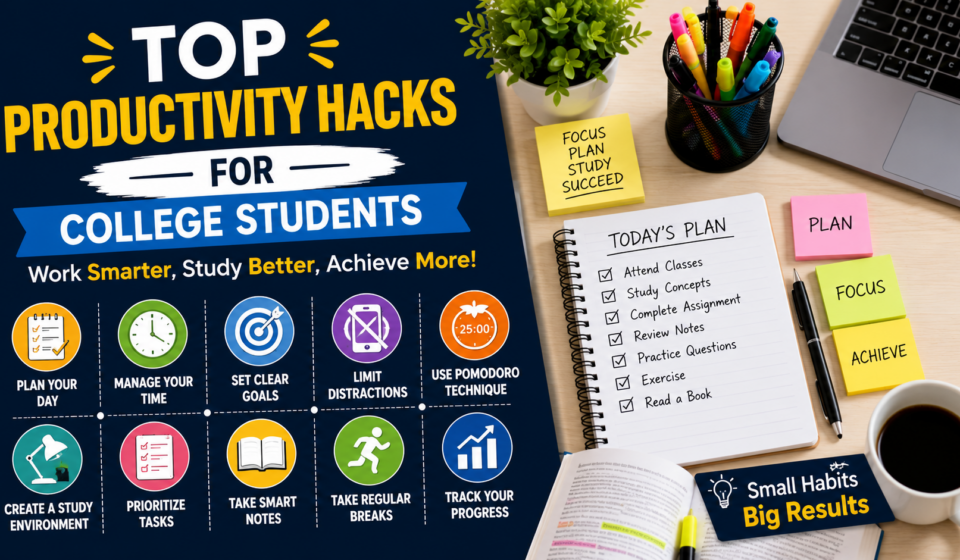

College life can be exciting, busy, and challenging at the same time. Students have to manage lectures, assignments, exams, projects, part-time jobs, social activities, and personal responsibilities. With so many things happening together, staying productive can feel difficult.
Why Productivity Matters for College Students
Productivity is important because college students often have limited time and many responsibilities. When you are productive, you can complete your assignments on time, prepare better for exams, and still have time for rest and hobbies.
Being productive also reduces last-minute pressure. Instead of rushing before deadlines, you can work consistently and feel more confident. Good productivity habits help students stay balanced and avoid burnout.
Productivity is not only useful for college life. The habits you build as a student can also help in your career, business, and personal life.
Create a Daily Study Plan
One of the best productivity hacks for college students is creating a daily study plan. Without a plan, it is easy to waste time or forget important tasks.
Start each day by writing down what you need to complete. Include classes, assignments, revision, project work, and personal tasks. Then arrange them based on priority.
Your study plan should be realistic. Do not fill every hour with work. Leave space for breaks, meals, travel, and rest. A simple plan is easier to follow than a complicated one.
You can use a notebook, planner, calendar app, or task management app to organize your day.
Use the Pomodoro Technique
The Pomodoro Technique is a popular time management method that helps students stay focused. In this method, you study for 25 minutes and then take a 5-minute break. After completing four sessions, you take a longer break of 15 to 30 minutes.
This technique works well because it breaks study time into small, manageable parts. It also prevents mental tiredness and improves concentration.
During each Pomodoro session, focus on one task only. Avoid checking your phone, social media, or messages. Short periods of deep focus can help you get more done in less time.
Prioritize Important Tasks First
Not all tasks are equally important. Some assignments or exam topics have a bigger impact on your grades than others. To become more productive, learn how to prioritize.
Start with the most important or urgent task first. This is often called “eating the frog,” which means doing the hardest task early so the rest of the day feels easier.
You can also use the priority method by dividing tasks into three categories: urgent, important, and low priority. Focus on urgent and important tasks before spending time on less important activities.
Avoid Multitasking
Many students think multitasking saves time, but it often reduces productivity. Switching between studying, texting, watching videos, and checking notifications can make your brain tired and unfocused.
Instead of multitasking, try single-tasking. Focus on one subject, one assignment, or one activity at a time. You will understand better, complete work faster, and make fewer mistakes.
For example, if you are writing an assignment, close unrelated browser tabs and keep only the required material open. This simple habit can improve your concentration.
Keep Your Study Space Organized
Your environment affects your productivity. A messy desk can make you feel distracted and stressed. A clean and organized study space helps your mind stay focused.
Keep only necessary items on your desk, such as books, notebooks, pens, laptop, and water bottle. Remove unnecessary papers, food wrappers, and distractions.
Good lighting and a comfortable chair can also improve focus. If you cannot study at home, try using a library, study room, or quiet café.
Limit Phone and Social Media Distractions
Phones are one of the biggest distractions for college students. Social media, messages, reels, games, and notifications can waste a lot of time.
To stay productive, keep your phone away while studying. You can put it on silent mode, use airplane mode, or place it in another room. If you need your phone for study purposes, use app blockers to limit distracting apps.
Set specific times to check messages or social media instead of checking them constantly. This helps you stay in control of your time.
Use Digital Tools Wisely
Technology can be a powerful productivity tool when used correctly. College students can use apps for calendars, reminders, notes, flashcards, time tracking, and project management.
Apps like Google Calendar, Notion, Todoist, Trello, Evernote, and Quizlet can help you stay organized. However, do not use too many apps at once. Choose simple tools that match your needs.
The goal is to make studying easier, not more complicated. Use digital tools to save time, organize information, and track progress.
Break Big Tasks into Smaller Steps
Large tasks often feel overwhelming. This is one reason students procrastinate. Breaking big tasks into smaller steps makes them easier to start.
For example, instead of writing “complete research paper,” divide it into smaller tasks such as choose topic, collect sources, create outline, write introduction, write main body, edit, and submit.
Small tasks feel less stressful and give you a sense of progress. This keeps you motivated and helps you complete work on time.
Follow the Two-Minute Rule
The two-minute rule is a simple productivity hack. If a task takes less than two minutes, do it immediately.
For example, replying to an important email, organizing your notes, writing a reminder, or submitting a small form can be done quickly. Completing small tasks immediately prevents them from piling up.
This method also helps you build momentum. Once you start doing small tasks, it becomes easier to continue working on bigger tasks.
Review Your Notes Regularly
Many students wait until exam week to review their notes. This leads to stress and poor memory. A better habit is to review notes regularly.
Spend 10 to 15 minutes after each class reviewing what you learned. Highlight important points, rewrite unclear ideas, and mark questions you need to ask.
Regular review makes exam preparation easier because you do not have to learn everything at the last minute. It also improves long-term memory.
Learn to Say No
College students often feel pressure to join every activity, attend every event, or help everyone. While social life is important, saying yes to everything can hurt productivity.
Learn to say no politely when your schedule is full. Protect your study time, rest time, and personal goals.
You do not have to avoid fun completely. Instead, create balance. Choose activities that matter most and avoid commitments that create unnecessary stress.
Take Care of Your Health
Productivity depends on your health. If you are tired, hungry, or stressed, you cannot perform well.
Get enough sleep, eat healthy meals, drink water, and exercise regularly. Even a short walk can improve energy and focus.
Avoid studying for long hours without rest. Breaks are not a waste of time. They help your brain recover and work better.
Mental health is equally important. Talk to friends, family, teachers, or counselors if you feel overwhelmed.
Prepare for the Next Day at Night
A simple way to become more productive is to prepare for the next day before sleeping. Pack your bag, arrange your books, check your schedule, and write a short to-do list.
This saves time in the morning and helps you start the day with clarity. When you wake up knowing what to do, you are less likely to waste time.
Night planning also reduces anxiety because your tasks are written down instead of staying in your mind.
Track Your Progress
Tracking progress helps you stay motivated. At the end of each day or week, review what you completed and what still needs attention.
You can use a habit tracker, planner, checklist, or journal. Celebrate small wins, such as finishing an assignment early or studying consistently for a week.
Progress tracking also helps you identify problems. If you notice that you waste too much time on social media or delay difficult tasks, you can make changes.
Source
https://sl1nk.com/yvfuucn
https://sl1nk.com/prpkctn
Conclusion
Productivity is one of the most valuable skills college students can develop. It helps students manage time, reduce stress, improve academic performance, and maintain a balanced lifestyle. The best productivity hacks are simple but powerful: create a daily plan, use focused study sessions, avoid distractions, prioritize important tasks, and take care of your health.
College success does not come from working nonstop. It comes from working smart, staying consistent, and building habits that support your goals. By using these productivity hacks, college students can study better, complete tasks faster, and enjoy college life with more confidence.
FAQs
1. What are the best productivity hacks for college students?
The best productivity hacks include creating a daily study plan, using the Pomodoro Technique, prioritizing important tasks, avoiding multitasking, limiting phone distractions, and reviewing notes regularly.
2. How can college students stop procrastinating?
Students can stop procrastinating by breaking big tasks into smaller steps, starting with easy tasks, using deadlines, and removing distractions. The two-minute rule can also help build momentum.
3. How many hours should college students study daily?
Most college students can benefit from two to four focused study hours daily, depending on their course and workload. Quality of study is more important than the number of hours.
4. Is multitasking good for students?
No, multitasking usually reduces focus and increases mistakes. Students are more productive when they focus on one task at a time.
5. Which productivity apps are useful for college students?
Useful productivity apps include Google Calendar, Notion, Todoist, Trello, Evernote, Forest, and Quizlet. Students should choose apps that are simple and helpful for their study routine.