The Role of Student Advisory Programs in Academic Success: The Complete Guide to Mentorship, Student Support, and Higher Education Excellence

Student success depends on much more than classroom instruction and examinations. As higher education becomes increasingly dynamic and career-focused, colleges and universities are recognizing the importance of providing structured guidance that helps students.
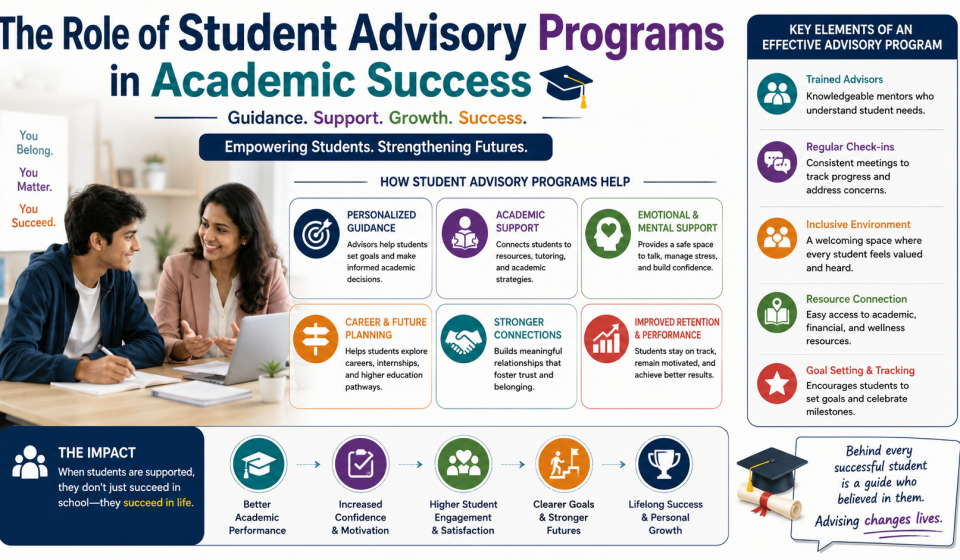
A well-designed student advisory program creates a supportive learning environment where students feel connected, motivated, and confident in achieving their educational goals. Advisors work closely with students to identify strengths, address weaknesses, develop personalized academic plans, and connect them with campus resources such as tutoring services, career centers, mental wellness support, research opportunities, and extracurricular activities. Beyond improving academic performance, advisory programs encourage leadership development, critical thinking, professional networking, and lifelong learning. This comprehensive guide explores the role of student advisory programs in academic success, explains how effective advising benefits students, and highlights why advisory systems have become a cornerstone of student-centered higher education.
What Are Student Advisory Programs?
Student advisory programs are structured support systems that connect students with academic advisors, faculty mentors, or trained professionals who provide guidance throughout their educational journey.
These programs assist students with:
- Academic planning
- Course selection
- Career guidance
- Goal setting
- Personal development
- Campus resource navigation
- Graduation planning
The objective is to help students succeed academically and professionally.
Why Student Advisory Programs Matter
College life presents many challenges, including academic workload, career uncertainty, time management, and adapting to new environments.
Student advisory programs help students:
- Make informed decisions
- Stay academically focused
- Improve confidence
- Build career readiness
- Access available support services
Consistent guidance improves the overall educational experience.
Academic Planning
Academic advisors help students create structured study plans.
They assist with:
- Selecting appropriate courses
- Understanding degree requirements
- Managing academic workload
- Planning semester schedules
- Monitoring academic progress
Proper planning reduces confusion and supports timely graduation.
Personalized Goal Setting
Every student has different strengths and aspirations.
Advisors help students establish:
- Academic goals
- Career objectives
- Skill development plans
- Internship targets
- Personal growth milestones
Personalized planning encourages continuous improvement.
Improving Study Habits
Many advisory programs provide guidance on effective learning strategies.
Students may receive support in:
- Time management
- Note-taking
- Exam preparation
- Study scheduling
- Productivity techniques
Strong study habits improve academic performance.
Career Development Support
Career advising is an important component of student success.
Advisors may recommend:
- Internship opportunities
- Career assessments
- Resume development
- Interview preparation
- Industry networking
- Professional certifications
Early career planning increases employability.
Connecting Students with Campus Resources
Many students are unaware of available support services.
Advisors connect students with:
- Libraries
- Tutoring centers
- Writing labs
- Research opportunities
- Career services
- Counseling resources
- Student organizations
Effective referrals maximize student success.
Faculty Mentorship
Faculty advisors provide discipline-specific guidance.
They help students:
- Explore research interests
- Select electives
- Understand academic expectations
- Prepare for graduate education
- Develop professional relationships
Mentorship supports long-term academic growth.
Supporting First-Year Students
Transitioning into college can be challenging.
Advisory programs help first-year students:
- Adapt to college life
- Understand campus systems
- Build confidence
- Develop effective learning habits
- Become active members of the campus community
Early support improves student retention.
Encouraging Student Engagement
Students who actively participate in campus activities often experience stronger academic and personal growth.
Advisors encourage involvement in:
- Student clubs
- Leadership programs
- Volunteer activities
- Academic competitions
- Cultural events
- Innovation initiatives
Engagement strengthens learning beyond the classroom.
Developing Leadership Skills
Advisory programs often encourage leadership development through:
- Student government
- Peer mentoring
- Project management
- Event organization
- Community service
Leadership experiences prepare students for future careers.
Promoting Lifelong Learning
Advisors encourage students to embrace continuous learning.
This includes:
- Professional certifications
- Online courses
- Workshops
- Conferences
- Industry seminars
Lifelong learning remains essential in today’s changing workforce.
Supporting Mental Well-Being
Academic success is closely connected to emotional well-being.
Advisors may encourage students to:
- Manage stress effectively
- Maintain healthy routines
- Seek professional support when appropriate
- Balance academics and personal responsibilities
Well-being supports learning and academic achievement.
Monitoring Academic Progress
Regular meetings allow advisors to review:
- Grades
- Attendance
- Academic goals
- Skill development
- Graduation progress
Continuous monitoring helps identify challenges early.
Encouraging Research and Innovation
Advisors often introduce students to:
- Faculty research projects
- Innovation centers
- Startup incubators
- Undergraduate research opportunities
- Academic conferences
Research participation strengthens critical thinking and problem-solving.
Supporting Diverse Student Needs
Effective advisory programs recognize that students have different backgrounds, learning styles, and career goals.
Personalized guidance helps ensure:
- Equal access to opportunities
- Inclusive learning environments
- Individualized academic support
- Better student engagement
Inclusive advising contributes to student success.
Technology in Student Advising
Modern advisory programs increasingly use digital tools such as:
- Student information systems
- Online appointment scheduling
- Academic planning software
- Virtual advising sessions
- Progress tracking dashboards
Technology improves accessibility and communication.
Building Professional Networks
Advisors often connect students with:
- Alumni
- Industry professionals
- Employers
- Professional associations
- Internship supervisors
Networking supports career development and lifelong professional relationships.
Characteristics of an Effective Student Advisor
An excellent advisor demonstrates:
- Active listening
- Empathy
- Strong communication
- Professional knowledge
- Ethical guidance
- Encouragement
- Commitment to student success
Positive advisor-student relationships improve educational outcomes.
The Future of Student Advisory Programs
Higher education continues evolving through artificial intelligence, personalized learning, digital advising platforms, predictive analytics, and integrated student success systems. Future advisory programs will increasingly use technology to identify students who may need additional support while maintaining the personal relationships that remain essential for effective mentorship. Combining digital innovation with human guidance will help institutions provide more personalized, proactive, and accessible student support.
How Students Can Make the Most of Advisory Programs
Students should actively participate in advisory meetings by preparing questions, discussing academic goals, seeking feedback, exploring career opportunities, reviewing progress regularly, and following through on recommended actions. Building a strong relationship with an advisor allows students to gain valuable guidance throughout their educational journey while making informed decisions about academics, internships, research, leadership, and future careers.
Source
https://www.education.gov.in
https://www.ugc.gov.in
https://www.aicte-india.org
https://www.naac.gov.in
https://www.naceweb.org
https://www.unesco.org
https://www.oecd.org
https://www.coursera.org
Conclusion
Student advisory programs play a vital role in helping students achieve academic excellence, career readiness, and personal growth. By providing personalized guidance, academic planning, mentorship, career counseling, and connections to valuable campus resources, advisors help students navigate the complexities of higher education with greater confidence and purpose. Effective advisory programs foster stronger academic performance, improve student engagement, encourage lifelong learning, and prepare graduates for successful careers in an ever-changing world. As colleges continue embracing student-centered education, advisory systems will remain one of the most valuable investments institutions can make in supporting student achievement and long-term success.
FAQ
1. What is a student advisory program?
A student advisory program is a structured support system that provides academic guidance, career counseling, mentorship, and access to campus resources to help students succeed throughout their college education.
2. How do student advisory programs improve academic success?
They help students with course planning, goal setting, study strategies, academic monitoring, problem-solving, and connecting with tutoring and other support services.
3. Can academic advisors help with career planning?
Yes. Advisors often assist with internship planning, resume development, career exploration, networking opportunities, graduate education preparation, and professional skill development.
4. Are student advisory programs only for first-year students?
No. Advisory programs benefit students at every stage of college, from admission through graduation, by providing continuous academic and career guidance.
5. How often should students meet with their academic advisor?
Students should meet their advisor at least once each semester or more frequently whenever they need assistance with academics, career planning, or personal development.
6. What qualities make a good academic advisor?
Effective advisors are knowledgeable, approachable, supportive, ethical, organized, excellent communicators, and committed to helping students achieve their academic and professional goals.