The Role of Career Readiness Programs in Higher Education: A Complete Guide to Preparing Students for Future Success

In today’s competitive job market, earning a college degree alone is no longer enough to guarantee career success. Employers are looking for graduates who possess a combination of technical expertise, practical experience, communication skills.
As industries continue evolving through technological advancements, automation, and globalization, students must continuously develop new competencies that align with employer expectations. Career readiness programs bridge the gap between classroom education and real-world employment by integrating practical learning experiences into academic journeys. Through mentorship, entrepreneurship support, certification programs, career workshops, industry collaborations, and placement assistance, students gain the confidence and practical knowledge required to excel after graduation. Choosing a college with strong career readiness programs ensures that students receive holistic development, making them more competitive in the global workforce. This comprehensive guide explains the role of career readiness programs in higher education and how they contribute to long-term academic, professional, and personal success.
What Are Career Readiness Programs?
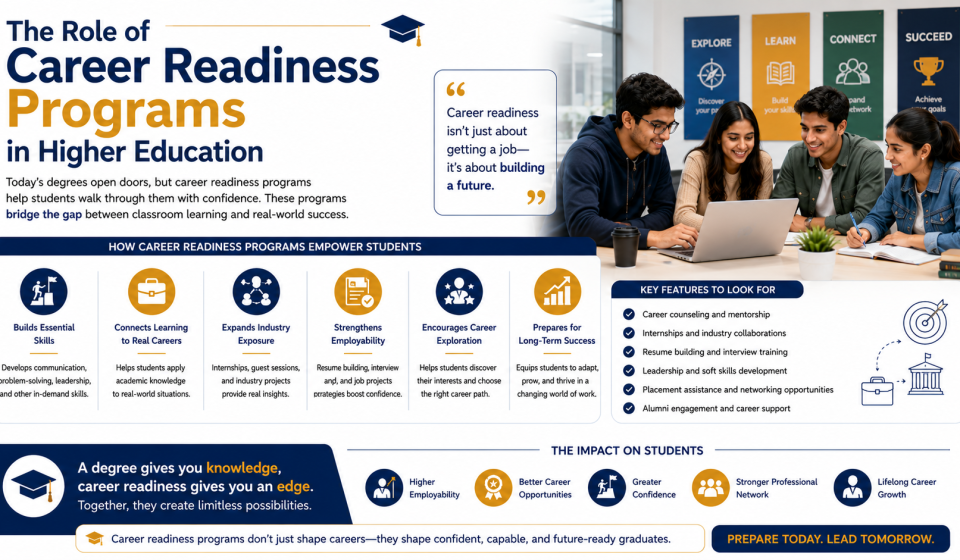
Career readiness programs are structured initiatives that prepare students for successful careers by developing professional, technical, and interpersonal skills.
These programs commonly include:
- Career counseling
- Resume writing workshops
- Interview preparation
- Internship opportunities
- Industry certifications
- Leadership training
- Communication skills development
- Networking events
- Entrepreneurship support
- Placement assistance
These initiatives help students become workplace-ready before graduation.
Why Career Readiness Matters
Modern employers seek graduates who can contribute immediately to organizational success.
Career readiness programs help students:
- Improve employability
- Build professional confidence
- Develop workplace skills
- Gain practical experience
- Explore career options
- Prepare for lifelong learning
Career preparation enhances long-term success.
Career Counseling and Guidance
Professional career advisors help students make informed career decisions.
Career counseling includes:
- Career assessments
- Goal setting
- Industry guidance
- Graduate education planning
- Career pathway exploration
Personalized guidance improves career planning.
Internship Opportunities
Internships allow students to gain valuable workplace experience.
Benefits include:
- Real-world exposure
- Professional networking
- Skill development
- Resume enhancement
- Employment opportunities
Internships improve career readiness.
Resume and Interview Preparation
Strong application materials increase employment opportunities.
Career centers often provide:
- Resume reviews
- Cover letter guidance
- LinkedIn profile optimization
- Mock interviews
- Personal branding workshops
Professional preparation improves job search success.
Skill Development Programs
Career readiness extends beyond technical education.
Essential workplace skills include:
- Communication
- Teamwork
- Leadership
- Time management
- Critical thinking
- Emotional intelligence
Soft skills complement academic qualifications.
Industry Collaboration
Partnerships with employers provide valuable learning experiences.
Industry collaboration includes:
- Guest lectures
- Corporate mentoring
- Live projects
- Industrial visits
- Recruitment drives
Industry exposure strengthens employability.
Professional Certifications
Many colleges offer industry-recognized certification programs.
Popular certification areas include:
- Data analytics
- Artificial intelligence
- Cloud computing
- Digital marketing
- Project management
- Business analytics
Certifications improve career competitiveness.
Entrepreneurship Development
Career readiness also supports aspiring entrepreneurs.
Entrepreneurship programs offer:
- Startup incubation
- Business mentoring
- Innovation challenges
- Funding opportunities
- Business planning workshops
Entrepreneurship expands career options.
Networking Opportunities
Professional relationships often influence career growth.
Networking opportunities include:
- Alumni interactions
- Industry conferences
- Career fairs
- Employer meetups
- Professional associations
Networking creates valuable career connections.
Experiential Learning
Practical education reinforces classroom learning.
Examples include:
- Capstone projects
- Case study competitions
- Community engagement
- Research projects
- Consulting assignments
Experiential learning builds confidence.
Placement Support Services
Career centers coordinate employment opportunities for students.
Placement support may include:
- Campus recruitment
- Employer partnerships
- Job portals
- Placement training
- Career coaching
Effective placement services improve graduate outcomes.
Questions to Ask Before Admission
Before choosing a college, students should ask:
- What career readiness programs are available?
- Are internships mandatory?
- Which companies recruit on campus?
- Does the college provide career counseling?
- What certification programs are offered?
- How successful are recent graduates?
These questions help evaluate career support.
Common Mistakes Students Make
Some students focus only on academic grades while ignoring career preparation. Others postpone internships, networking, resume development, or skill-building until graduation. Choosing a college without evaluating career readiness programs may reduce employment opportunities. Active participation in these programs significantly improves professional success.
The Future of Career Readiness
Artificial intelligence, digital recruitment platforms, virtual internships, competency-based education, micro-credentials, personalized career coaching, lifelong learning platforms, global industry collaborations, digital portfolios, and workforce analytics will continue shaping career readiness in higher education.
Source
https://www.ugc.gov.in
https://www.aicte-india.org
https://www.education.gov.in
https://www.naac.gov.in
Conclusion
Career readiness programs have become one of the most valuable components of modern higher education. They prepare students for successful careers by combining academic learning with practical experience, professional skill development, internships, industry collaboration, networking, certifications, and placement support. Colleges that invest in comprehensive career readiness initiatives help graduates become confident, adaptable, and highly employable professionals capable of succeeding in rapidly changing industries. Before selecting a college, students should carefully evaluate the institution’s career development services, employer partnerships, internship opportunities, and placement support to ensure they receive an education that prepares them for lifelong success.
FAQ
1. What are career readiness programs?
Career readiness programs are structured college initiatives that prepare students for employment through career counseling, internships, skill development, certifications, resume building, interview preparation, networking, and placement support.
2. Why are career readiness programs important?
These programs help students develop workplace skills, gain practical experience, improve employability, build professional confidence, and successfully transition from college to their careers.
3. What skills do career readiness programs develop?
Students develop communication, leadership, teamwork, critical thinking, adaptability, time management, emotional intelligence, problem-solving, and digital literacy skills.
4. How can students evaluate a college’s career readiness programs?
Students should review internship opportunities, placement statistics, employer partnerships, career counseling services, certification programs, alumni success, industry collaborations, and campus recruitment activities.
5. Do career readiness programs improve placement opportunities?
Yes. Students who actively participate in internships, skill development workshops, networking events, certifications, and placement preparation generally have stronger employment prospects.
6. Should career readiness programs influence college selection?
Absolutely. Along with academic quality, infrastructure, faculty expertise, and research opportunities, career readiness programs play a crucial role in preparing students for long-term professional success and should be carefully evaluated before admission.