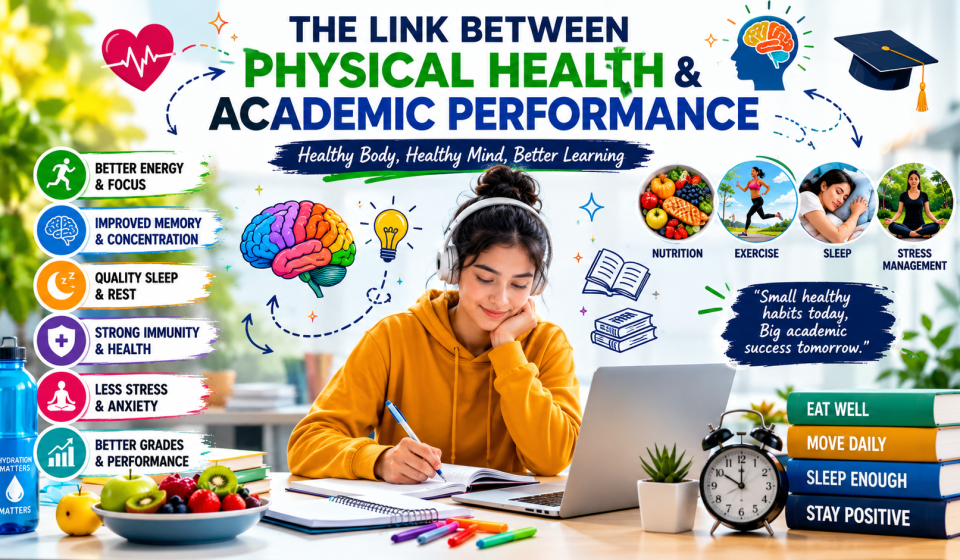

Physical health plays a major role in academic performance. Many students focus only on study hours, notes, exams, and assignments, but they often forget that the body and mind work together. A healthy body supports better concentration, memory, energy, mood, and overall learning ability.
Why Physical Health Matters for Students
Physical health affects almost every part of student life. A student who feels tired, sick, weak, or stressed may struggle to attend classes, complete assignments, or prepare for exams. Even small health problems can affect daily learning.
Good physical health helps students maintain regular attendance, stay active during lectures, participate in activities, and manage academic pressure. It also supports emotional balance, which is important during exams and deadlines.
When students feel physically strong, they are more likely to stay disciplined. They can wake up on time, follow a study routine, and remain focused for longer periods.
The Connection Between Body and Brain
The brain needs oxygen, nutrients, hydration, and rest to work properly. Physical health directly affects brain function. For example, nutritious food gives the brain energy, exercise improves blood flow, and sleep helps memory formation.
If the body is unhealthy, the brain cannot perform at its best. Students may experience poor concentration, slow thinking, irritability, forgetfulness, and low motivation. This can directly affect grades and academic confidence.
A healthy lifestyle improves mental clarity. It helps students understand concepts faster, remember information better, and stay calm during exams.
Role of Nutrition in Academic Performance
Nutrition is one of the strongest links between health and learning. Students need balanced meals that include proteins, whole grains, fruits, vegetables, healthy fats, and enough water.
Skipping breakfast or eating too much junk food can lead to low energy, mood swings, and reduced concentration. Sugary snacks may give quick energy, but they often cause energy crashes later.
Healthy foods support brain development and memory. Foods like eggs, nuts, fruits, vegetables, milk, yogurt, beans, and whole grains can help students stay energetic throughout the day.
Students should avoid depending too much on fast food, packaged snacks, sugary drinks, and excessive caffeine. A simple balanced diet can make a big difference in study performance.
Importance of Sleep for Better Learning
Sleep is essential for academic success. Many students stay awake late at night to study, but poor sleep can harm memory, attention, and problem-solving ability.
During sleep, the brain processes information learned during the day. This means students who sleep well may remember lessons better. Lack of sleep can make students feel tired, distracted, and less productive.
Good sleep also improves mood and reduces stress. Students should aim for a consistent sleep schedule, especially during exams. Studying all night may seem useful, but proper rest often leads to better results.
How Exercise Improves Academic Performance
Physical activity is not only good for fitness; it also helps the brain. Exercise improves blood circulation, increases oxygen flow to the brain, and supports better mood.
Students who exercise regularly may experience better focus, stronger memory, and reduced anxiety. Exercise does not always mean going to a gym. Walking, cycling, yoga, stretching, dancing, sports, or simple home workouts can help.
Even 20 to 30 minutes of daily movement can improve energy levels. Active students often feel more alert during classes and more motivated while studying.
Impact of Stress on Student Health and Grades
Stress is common among students, but too much stress can damage both health and academic performance. Exams, assignments, competition, family pressure, and future career worries can create mental and physical strain.
Stress can cause headaches, sleep problems, stomach issues, fatigue, and lack of concentration. It can also make students feel anxious or overwhelmed.
Managing stress is important for better performance. Students can reduce stress through exercise, deep breathing, meditation, hobbies, proper planning, and talking to trusted friends or teachers.
Hydration and Brain Function
Water is often ignored, but it is very important for learning. Dehydration can cause tiredness, headaches, poor focus, and low energy.
Students should drink enough water throughout the day, especially during long classes or study sessions. Replacing too much water with soft drinks, tea, coffee, or energy drinks is not a healthy habit.
Keeping a water bottle nearby while studying can help students stay hydrated and alert.
Physical Illness and Academic Challenges
Frequent illness can affect attendance and learning. Students who often suffer from colds, infections, stomach problems, or weakness may miss classes and fall behind.
Preventive health habits such as washing hands, eating nutritious food, sleeping well, and regular medical checkups can help reduce illness.
Students should not ignore health problems. Early treatment can prevent small issues from becoming bigger problems that affect studies.
Mental Health and Physical Health Are Connected
Physical health and mental health are closely linked. Poor physical health can increase stress and anxiety, while mental stress can create physical symptoms.
For example, a student who sleeps poorly may feel anxious. A student who is stressed may eat badly or stop exercising. This cycle can affect academic performance.
A balanced lifestyle supports both body and mind. Students should build habits that improve overall well-being instead of focusing only on marks.
Healthy Habits That Support Academic Success
Students can improve academic performance by making simple lifestyle changes. They should eat balanced meals, sleep on time, stay physically active, drink enough water, and take breaks during study sessions.
Creating a daily routine can help. A good routine includes study time, meal time, exercise time, rest time, and sleep time.
Students should also reduce screen time before bed, avoid excessive caffeine, and spend some time outdoors. These small habits can improve both health and learning ability.
Role of Schools and Colleges
Schools and colleges also play an important role in student health. Educational institutions should encourage sports, provide clean drinking water, promote healthy food, support mental health awareness, and create balanced academic schedules.
Health education should be part of student life. When students understand the value of physical health, they are more likely to make better lifestyle choices.
Colleges can also organize fitness programs, wellness workshops, health checkups, and counseling sessions to support students.
Why Parents Should Focus on Student Health
Parents often focus on grades, but they should also pay attention to health habits. Encouraging children to sleep properly, eat healthy meals, exercise, and manage stress can improve academic results naturally.
Parents should avoid putting too much pressure on students. Support, motivation, and healthy communication are important for both academic and personal growth.
A student who feels supported at home is more likely to stay confident and perform better.
Source
https://l1nq.com/qbaqwge
https://l1nq.com/4bn09tf
Conclusion
The link between physical health and academic performance is strong. Healthy students are more likely to focus better, remember more, attend classes regularly, manage stress, and perform well in exams.
Academic success is not only achieved through long study hours. It also depends on sleep, nutrition, exercise, hydration, and emotional balance. Students who take care of their bodies are also taking care of their minds.
By building healthy daily habits, students can improve both their academic performance and overall quality of life.
FAQs
1. How does physical health affect academic performance?
Physical health affects energy, concentration, memory, attendance, mood, and learning ability. Healthy students are more likely to perform better academically.
2. Does exercise help students study better?
Yes, regular exercise improves blood flow, reduces stress, boosts mood, and helps students focus better while studying.
3. Why is sleep important for students?
Sleep helps the brain store information, improve memory, and restore energy. Poor sleep can reduce concentration and academic performance.
4. Can unhealthy food affect grades?
Yes, unhealthy food can cause low energy, poor focus, and mood changes. A balanced diet supports better brain function.
5. How can students improve physical health?
Students can improve health by eating nutritious meals, sleeping well, exercising regularly, drinking enough water, and managing stress.