The Importance of Student Wellness Services on Campus: A Complete Guide to Better Health, Academic Success, and Personal Development

Student success in higher education depends on much more than classroom learning and academic performance. Physical health, mental well-being, emotional resilience, social connections, and access to supportive campus resources all play a significant role in helping students.
Today’s colleges and universities increasingly recognize that healthy students are more engaged, motivated, and capable of achieving long-term success. Comprehensive wellness services help students develop healthy habits, improve resilience, manage stress effectively, maintain work-life balance, and seek timely support when needed. Beyond improving individual well-being, wellness initiatives contribute to higher student retention, stronger campus communities, improved academic outcomes, and greater career readiness. Whether students are adjusting to college life, preparing for examinations, participating in extracurricular activities, or planning future careers, campus wellness services provide valuable resources that support every stage of their educational journey. This comprehensive guide explains the importance of student wellness services and how they contribute to lifelong health and academic success.
What Are Student Wellness Services?
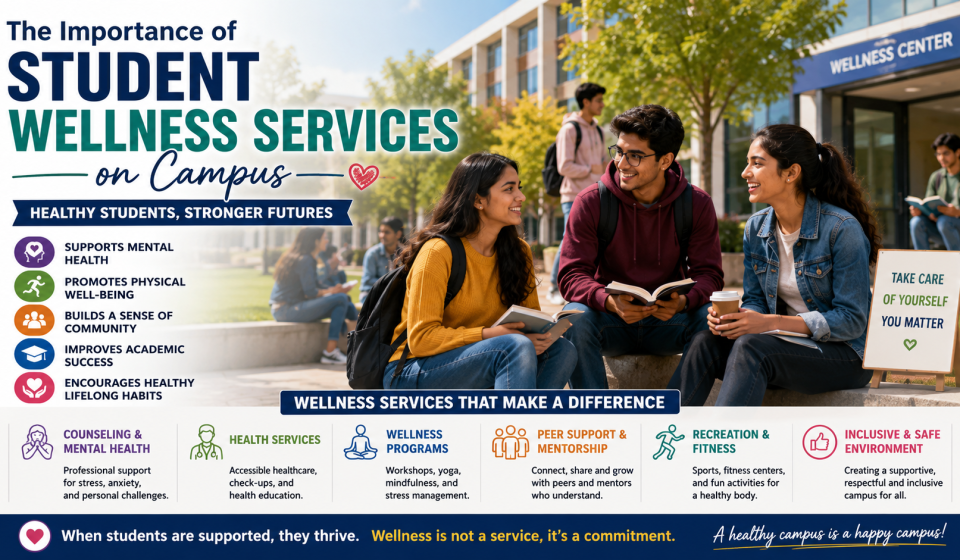
Student wellness services are programs and resources designed to support students’ physical, mental, emotional, and social well-being throughout their college experience.
Common services include:
- Health clinics
- Mental health counseling
- Fitness centers
- Nutrition guidance
- Wellness education
- Stress management workshops
- Disability support services
- Health screenings
- Peer support programs
- Emergency assistance
These services promote overall student well-being.
Why Student Wellness Matters
Healthy students are better prepared to succeed academically and professionally.
Wellness services help students:
- Improve concentration
- Reduce stress
- Build resilience
- Maintain healthy lifestyles
- Increase confidence
- Support academic achievement
Well-being contributes to long-term success.
Supporting Physical Health
Physical wellness is essential for effective learning.
Campus health services often provide:
- Routine medical care
- Vaccinations
- Health assessments
- Preventive care
- Health education
Good physical health supports better academic performance.
Promoting Mental Well-Being
Mental wellness is equally important.
Counseling services may help students manage:
- Academic pressure
- Anxiety
- Stress
- Emotional challenges
- Personal concerns
- Life transitions
Early support encourages healthy coping strategies.
Encouraging Healthy Lifestyle Habits
Colleges promote wellness through education and healthy campus environments.
Students learn about:
- Balanced nutrition
- Regular exercise
- Sleep hygiene
- Hydration
- Time management
- Healthy daily routines
Healthy habits benefit lifelong well-being.
Reducing Academic Stress
Academic responsibilities can become overwhelming.
Stress management programs teach students:
- Relaxation techniques
- Goal setting
- Study planning
- Mindfulness practices
- Productivity strategies
Managing stress improves learning outcomes.
Building Social Connections
Strong social relationships contribute to student success.
Campus wellness initiatives encourage:
- Peer mentoring
- Student organizations
- Volunteer activities
- Recreational programs
- Community engagement
Social support reduces feelings of isolation.
Improving Academic Performance
Students who maintain good health often demonstrate:
- Better attendance
- Greater concentration
- Improved memory
- Higher motivation
- Stronger academic performance
Wellness supports effective learning.
Career Readiness and Professional Growth
Healthy graduates are better prepared for professional life.
Wellness programs strengthen:
- Emotional intelligence
- Communication
- Adaptability
- Leadership
- Work-life balance
These skills support career success.
Inclusive Student Support
Modern wellness services promote inclusivity by supporting students from diverse backgrounds.
Support may include:
- Accessibility services
- International student assistance
- Cultural wellness programs
- Financial wellness education
- Health awareness campaigns
Inclusive environments improve student experiences.
Technology and Digital Wellness
Many colleges now offer digital wellness resources.
Examples include:
- Telehealth appointments
- Online counseling
- Wellness mobile applications
- Virtual fitness sessions
- Mental health education platforms
Technology increases accessibility.
Common Challenges
Despite the availability of wellness services, some students hesitate to seek support because of lack of awareness, busy schedules, misconceptions, or concerns about privacy. Colleges can improve participation by increasing awareness campaigns, offering flexible service hours, integrating wellness education into orientation programs, and encouraging students to view wellness as an important part of academic success.
The Future of Student Wellness Services
Artificial intelligence, wearable health technology, personalized wellness programs, digital counseling, telemedicine, wellness analytics, hybrid learning environments, and preventive health education are transforming student wellness services. Colleges that invest in comprehensive wellness ecosystems will continue creating healthier, more resilient, and career-ready graduates.
Source
https://www.who.int
https://www.unesco.org
https://www.oecd.org
https://www.naceweb.org
Conclusion
Student wellness services are a vital component of modern higher education because they support physical health, mental well-being, emotional resilience, and overall student success. By providing access to healthcare, counseling, fitness programs, nutrition education, stress management resources, and inclusive support services, colleges create environments where students can achieve their full academic and personal potential. Wellness initiatives not only improve educational outcomes but also prepare graduates with the resilience, healthy habits, and life skills needed for long-term career success. As higher education continues to evolve, comprehensive student wellness services will remain essential for fostering healthier campuses and empowering students to succeed throughout their lives.
FAQ
1. What are student wellness services?
Student wellness services are campus programs that support physical, mental, emotional, and social well-being through healthcare, counseling, fitness, nutrition, wellness education, and related resources.
2. Why are wellness services important for college students?
They help students manage stress, maintain good health, improve academic performance, build resilience, and develop healthy habits that contribute to long-term success.
3. What types of wellness services do colleges typically provide?
Common services include campus health clinics, counseling centers, fitness facilities, nutrition guidance, stress management workshops, disability support, health screenings, peer mentoring, and telehealth services.
4. How do wellness services improve academic performance?
Healthy students often demonstrate better concentration, improved attendance, stronger motivation, effective time management, and greater ability to handle academic challenges.
5. Can wellness services support career readiness?
Yes. Wellness programs help students develop emotional intelligence, resilience, communication skills, adaptability, leadership qualities, and healthy work-life balance, all of which contribute to career success.
6. How can students make the most of campus wellness services?
Students should participate in health awareness programs, schedule regular health checkups, attend counseling or wellness workshops when needed, engage in fitness activities, and use available campus resources proactively.