The Importance of Student Support Services in Higher Education: The Ultimate 2026 Guide to Academic and Career Success

Higher education is much more than attending lectures, completing assignments, and earning a degree. College is a transformative phase where students develop academically, professionally, socially, and personally. However, the transition to college life often brings new challenges.
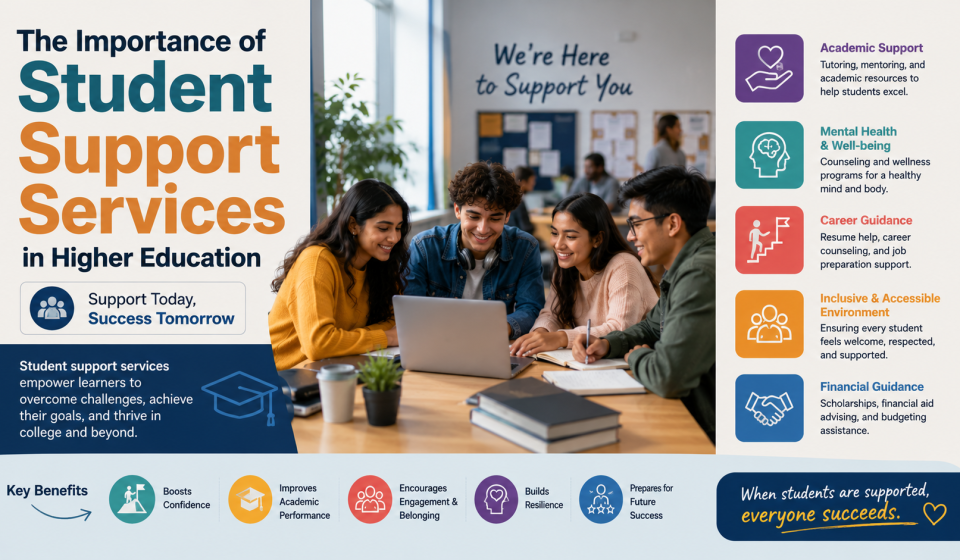
In 2026, higher education institutions are placing greater emphasis on holistic student development. Universities and colleges are increasingly recognizing that academic excellence alone is not enough to prepare graduates for today’s competitive and rapidly changing job market. Employers seek graduates who possess strong communication skills, leadership abilities, emotional intelligence, problem-solving capabilities, adaptability, and practical experience. Student support services help bridge the gap between classroom learning and career readiness by offering academic counseling, career guidance, mentoring, wellness programs, internship assistance, skill development workshops, and placement support.
What Are Student Support Services?
Student support services include programs that assist students in their:
- Academic development
- Career planning
- Personal growth
- Emotional well-being
- Financial guidance
- Professional preparation
These services create a supportive educational environment.
Academic Counseling
Academic advisors help students:
- Select courses
- Plan semesters
- Improve study strategies
- Manage academic challenges
- Stay on track for graduation
Guidance improves academic performance and confidence.
Career Guidance Services
Career support includes:
- Career counseling
- Resume building
- Interview preparation
- Internship assistance
- Placement training
Early career planning increases employability.
Internship and Placement Support
Strong placement cells provide:
- Internship opportunities
- Industry partnerships
- Campus recruitment
- Employer networking
- Career workshops
Practical experience strengthens career readiness.
Mentorship Programs
Faculty and industry mentors help students:
- Set career goals
- Develop professional skills
- Build confidence
- Make informed decisions
- Expand professional networks
Mentorship accelerates personal and professional growth.
Mental Health and Wellness Support
Student wellness services may include:
- Counseling
- Stress management workshops
- Emotional support
- Wellness programs
- Crisis intervention
Healthy students perform better academically.
Skill Development Programs
Many colleges offer workshops on:
- Communication skills
- Leadership
- Public speaking
- Teamwork
- Critical thinking
- Time management
Transferable skills improve workplace success.
Technology and Digital Learning Support
Modern institutions provide:
- Smart classrooms
- Online learning platforms
- Digital libraries
- Virtual laboratories
- Learning management systems
Technology enhances learning flexibility.
Financial Guidance
Support services may assist students with:
- Scholarships
- Financial aid
- Education loans
- Budget planning
- Government schemes
Financial support helps students continue their education.
Student Clubs and Extracurricular Activities
Participation develops:
- Leadership
- Creativity
- Networking
- Teamwork
- Event management
Holistic development extends beyond academics.
Industry Exposure
Top institutions organize:
- Guest lectures
- Industry visits
- Corporate interactions
- Professional seminars
- Live projects
Exposure prepares students for real workplaces.
Inclusive Learning Support
Support services often include assistance for:
- Students with disabilities
- First-generation learners
- International students
- Language support
- Academic tutoring
Inclusive education improves equal opportunities.
How Student Support Services Improve Career Success
Students who use support services often:
- Build stronger resumes
- Gain practical experience
- Improve communication
- Increase confidence
- Secure better placements
- Develop lifelong professional skills
Comprehensive support enhances employability.
Common Mistakes Students Make
Avoid:
- Ignoring career counseling
- Missing internship opportunities
- Avoiding mentorship
- Neglecting wellness programs
- Waiting until final year for placement preparation
- Not participating in workshops
Using available resources creates long-term advantages.
Source
https://www.education.gov.in
https://www.ugc.gov.in
https://www.aicte-india.org
https://www.ncs.gov.in
https://www.abc.gov.in
Conclusion
Student support services play a vital role in transforming higher education into a meaningful and successful learning experience. Beyond classroom instruction, these services provide academic guidance, career planning, emotional support, practical skill development, mentorship, financial assistance, and professional preparation that help students overcome challenges and achieve their full potential. As higher education continues to evolve under the vision of NEP 2020 and the demands of a rapidly changing global workforce, colleges with strong student support systems offer significant advantages in both academic success and career readiness. By actively utilizing these resources throughout college, students can build confidence, develop essential workplace skills, make informed career decisions, and prepare themselves for long-term personal and professional success.
FAQ
1. What are student support services in higher education?
Student support services are programs that help students with academics, career planning, counseling, mentoring, internships, financial guidance, wellness, and overall personal development throughout college.
2. Why are student support services important?
These services improve academic performance, reduce stress, enhance career readiness, provide guidance during challenges, and help students make informed educational and professional decisions.
3. How do career guidance services benefit students?
Career guidance helps students identify career goals, build resumes, prepare for interviews, explore internships, improve employability, and connect with job opportunities.
4. Are mentorship programs valuable during college?
Yes. Mentors provide career advice, professional guidance, academic support, networking opportunities, and encouragement that help students grow personally and professionally.
5. How do student support services improve placement opportunities?
Placement cells organize internships, recruiter interactions, resume workshops, interview preparation, aptitude training, and campus recruitment activities that improve employment outcomes.
6. Why is mental health support important in higher education?
Mental wellness services help students manage stress, improve emotional resilience, maintain academic focus, and achieve a healthy balance between studies and personal life.
7. What role do extracurricular activities play in student development?
Clubs, competitions, leadership roles, volunteer work, and cultural activities help students build communication, teamwork, leadership, creativity, and organizational skills valued by employers.
8. How should students evaluate student support services before choosing a college?
Students should review academic advising, career guidance, placement records, mentorship programs, internship opportunities, counseling services, technology resources, financial aid options, and extracurricular opportunities before making an admission decision.