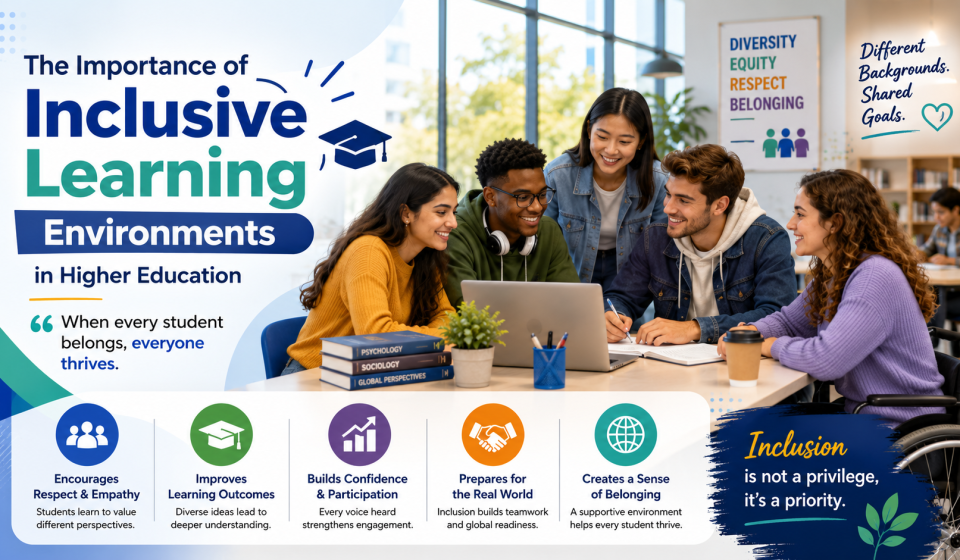
The Importance of Inclusive Learning Environments in Higher Education: A Complete Guide to Student Success, Equity, and Academic Excellence

Higher education has evolved beyond simply delivering academic knowledge. Today’s colleges and universities are expected to create learning environments where every student, regardless of their background, abilities, culture, gender, language, socioeconomic status, or learning style, has equal opportunities to succeed.
As classrooms become increasingly diverse, educational institutions are adopting inclusive teaching practices that encourage active participation, accessible learning resources, flexible instructional methods, collaborative projects, and student-centered learning experiences. Inclusive learning environments help remove barriers that may prevent students from reaching their full potential while fostering empathy, critical thinking, communication, and cultural awareness. These qualities prepare graduates to work successfully in diverse global workplaces where collaboration, adaptability, and mutual respect are essential. This comprehensive guide explores the importance of inclusive learning environments in higher education, their benefits for students and institutions, and practical strategies for creating a more equitable and engaging educational experience.
What Is an Inclusive Learning Environment?
An inclusive learning environment is an educational setting where every student has equal access to learning opportunities, feels respected, and is encouraged to participate regardless of personal background or individual differences.
Inclusive learning promotes:
- Equal opportunity
- Accessibility
- Diversity
- Respect
- Collaboration
- Student engagement
- Fair participation
- Belonging
- Academic support
- Lifelong learning
Every learner is given the opportunity to succeed.
Why Inclusive Learning Matters
Inclusive education improves both academic achievement and student well-being.
Major benefits include:
- Higher student engagement
- Better academic performance
- Increased confidence
- Stronger collaboration
- Greater creativity
- Improved learning outcomes
Inclusive classrooms benefit all students.
Encouraging Equal Learning Opportunities
Every student deserves access to quality education.
Inclusive institutions provide:
- Accessible learning materials
- Flexible teaching methods
- Academic support services
- Equal classroom participation
- Fair assessment practices
Equal opportunities improve educational outcomes.
Promoting Student Engagement
Students learn more effectively when they feel included.
Inclusive classrooms encourage:
- Active discussions
- Collaborative learning
- Peer interaction
- Respectful communication
- Classroom participation
Engaged students are more motivated to learn.
Supporting Diverse Learning Styles
Students learn in different ways.
Inclusive teaching accommodates:
- Visual learners
- Auditory learners
- Reading and writing preferences
- Practical learning
- Collaborative learning
- Independent study
Flexible instruction improves understanding.
Building Respect and Cultural Awareness
Higher education brings together students from diverse backgrounds.
Inclusive environments promote:
- Mutual respect
- Cultural understanding
- Global perspectives
- Open-mindedness
- Empathy
Cultural awareness prepares students for international workplaces.
Improving Academic Performance
Students perform better when they feel supported.
Inclusive education contributes to:
- Better concentration
- Increased participation
- Stronger confidence
- Higher retention
- Improved graduation rates
Supportive environments encourage academic success.
Developing Communication Skills
Inclusive classrooms encourage meaningful communication.
Students improve:
- Active listening
- Public speaking
- Team discussions
- Professional communication
- Interpersonal relationships
Communication skills are valuable throughout every career.
Encouraging Collaboration
Team-based learning benefits from diverse perspectives.
Collaborative activities help students:
- Solve problems together
- Respect different viewpoints
- Share knowledge
- Build teamwork skills
- Improve leadership abilities
Collaboration reflects modern workplace expectations.
Supporting Students with Different Abilities
Inclusive education ensures accessibility for students with varying physical, sensory, and learning needs.
Support may include:
- Accessible classrooms
- Assistive technologies
- Flexible assessments
- Academic accommodations
- Learning support services
Accessibility allows every student to participate fully.
Technology and Inclusive Learning
Educational technology improves accessibility.
Examples include:
- Learning management systems
- Captioned educational videos
- Screen readers
- Speech-to-text software
- Virtual classrooms
- Digital learning resources
Technology expands educational opportunities.
The Role of Faculty
Faculty members play a central role in creating inclusive classrooms.
Effective educators:
- Encourage participation
- Respect diverse opinions
- Provide constructive feedback
- Use inclusive teaching methods
- Foster supportive learning environments
Positive faculty interactions improve student confidence.
Student Support Services
Comprehensive support services strengthen inclusion.
Examples include:
- Academic advising
- Counseling services
- Tutoring
- Career guidance
- Peer mentoring
- Disability support services
Support services improve student success.
Preparing Students for Global Careers
Modern employers value graduates who can work effectively with diverse teams.
Inclusive education develops:
- Cross-cultural communication
- Adaptability
- Teamwork
- Emotional intelligence
- Professional ethics
These competencies improve employability.
Common Challenges
Educational institutions may face challenges such as unequal access to technology, unconscious bias, limited accessibility, language barriers, and differences in learning needs. Continuous faculty training, inclusive policies, student support programs, and accessible learning technologies help address these challenges while creating equitable educational experiences.
The Future of Inclusive Higher Education
Future higher education will continue emphasizing accessibility, digital inclusion, personalized learning, universal design for learning, artificial intelligence-supported education, flexible teaching methods, competency-based learning, and global collaboration. Inclusive learning environments will remain essential for promoting educational equity, innovation, student well-being, and workforce readiness in increasingly diverse societies.
Source
https://www.unesco.org
https://www.unicef.org
https://www.ugc.gov.in
https://www.aicte-india.org
Conclusion
Inclusive learning environments are fundamental to the success of modern higher education. By promoting equal opportunities, accessibility, respect, collaboration, and student engagement, colleges and universities create educational experiences that benefit every learner. Inclusive education not only improves academic performance but also develops communication, teamwork, cultural awareness, adaptability, and lifelong learning skills that prepare graduates for success in diverse workplaces. As higher education continues to evolve, fostering inclusive learning environments will remain essential for achieving educational excellence, supporting student well-being, and building a more equitable future.
FAQ
1. What is an inclusive learning environment in higher education?
An inclusive learning environment is a classroom or educational setting where every student has equal opportunities to participate, learn, and succeed regardless of background, abilities, culture, language, or learning style.
2. Why are inclusive learning environments important?
Inclusive learning environments improve student engagement, academic performance, confidence, collaboration, accessibility, and overall educational quality while preparing students for diverse workplaces.
3. How do colleges create inclusive classrooms?
Colleges promote inclusion through accessible learning resources, flexible teaching methods, academic support services, assistive technologies, respectful classroom practices, and equal participation opportunities.
4. How does inclusive education benefit student success?
Students in inclusive environments often experience better academic outcomes, stronger communication skills, improved teamwork, increased confidence, and greater motivation to learn.
5. What role does technology play in inclusive learning?
Technology supports inclusion through digital learning platforms, captioned videos, screen readers, virtual classrooms, assistive technologies, online learning resources, and accessible educational materials.
6. Why do employers value graduates from inclusive learning environments?
Graduates develop communication, teamwork, cultural awareness, adaptability, emotional intelligence, and collaborative problem-solving skills that are highly valued in modern global workplaces.