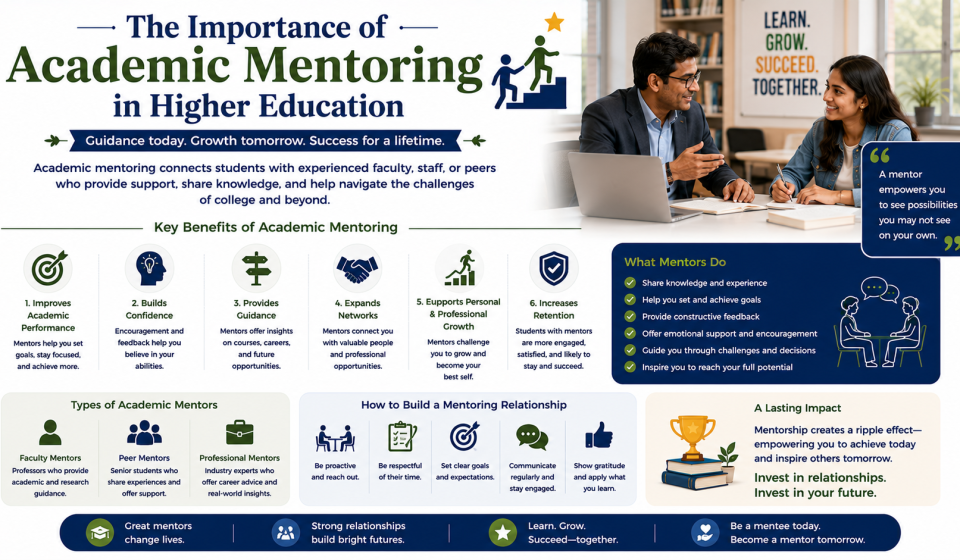
The Importance of Academic Mentoring in Higher Education: A Complete Guide to Student Success, Career Growth, and Lifelong Learning

Higher education is about much more than attending lectures and passing examinations. College is a transformative stage where students develop academic knowledge, career goals, professional skills, and personal confidence. While classrooms provide subject-specific education.
As colleges continue to emphasize student-centered learning, academic mentoring plays an increasingly important role in improving student engagement, retention, academic performance, and career readiness. Mentors help students identify strengths, overcome challenges, develop effective study habits, explore research opportunities, and make informed educational and career decisions. Whether mentoring occurs through faculty advisors, senior students, alumni, research supervisors, or professional mentors, these relationships contribute significantly to academic achievement and lifelong learning. This comprehensive guide explains the importance of academic mentoring in higher education, explores its benefits for students, and highlights how mentoring supports both academic excellence and professional success.
What Is Academic Mentoring?
Academic mentoring is a supportive relationship in which an experienced individual guides a student through academic, professional, and personal development.
Mentors may include:
- Faculty members
- Academic advisors
- Research supervisors
- Alumni
- Senior students
- Industry professionals
Mentoring focuses on helping students achieve educational and career goals.
Why Academic Mentoring Matters
Academic mentoring provides personalized guidance that complements classroom learning.
Key benefits include:
- Better academic performance
- Increased confidence
- Career planning
- Skill development
- Personal growth
- Professional networking
Students often gain valuable insights through regular mentoring conversations.
Supporting Academic Success
Mentors help students develop effective learning strategies.
They may provide guidance on:
- Study techniques
- Time management
- Examination preparation
- Assignment planning
- Goal setting
These strategies support consistent academic progress.
Encouraging Personal Development
Mentoring extends beyond academics.
Students often develop:
- Self-confidence
- Responsibility
- Resilience
- Adaptability
- Decision-making skills
Personal growth contributes to long-term success.
Career Guidance
Many students enter college without a clear understanding of career opportunities.
Mentors help students:
- Explore career options
- Identify strengths
- Understand industry expectations
- Prepare for interviews
- Plan future education
Career guidance supports informed decision-making.
Improving Research Skills
Research mentoring encourages students to participate in scholarly activities.
Mentors may assist with:
- Research methodology
- Literature reviews
- Academic writing
- Conference participation
- Publication opportunities
Research experience strengthens academic profiles.
Building Professional Skills
Mentoring helps students develop workplace competencies.
Important skills include:
- Communication
- Leadership
- Teamwork
- Problem-solving
- Professional ethics
These abilities improve career readiness.
Enhancing Motivation
Students sometimes face academic pressure or uncertainty during college.
Mentors can provide:
- Encouragement
- Constructive feedback
- Positive reinforcement
- Goal-oriented guidance
Motivation helps students remain focused on long-term objectives.
Strengthening Decision-Making
Academic life involves many important decisions.
Mentors can help students evaluate:
- Course selections
- Research opportunities
- Internship choices
- Career pathways
- Higher education options
Thoughtful guidance supports informed decisions.
Expanding Professional Networks
Mentors often introduce students to valuable academic and professional connections.
Networking opportunities may include:
- Faculty collaborations
- Alumni interactions
- Industry professionals
- Academic conferences
- Professional organizations
Strong networks support future career growth.
Supporting Leadership Development
Mentors encourage students to participate in leadership opportunities.
Examples include:
- Student organizations
- Research teams
- Academic competitions
- Community service
- Campus initiatives
Leadership experiences enhance personal and professional development.
Encouraging Lifelong Learning
Mentors inspire students to continue learning beyond graduation.
Continuous learning may involve:
- Professional certifications
- Graduate education
- Skill development
- Industry workshops
- Independent learning
Lifelong learning supports career adaptability.
Technology and Academic Mentoring
Digital technology has expanded mentoring opportunities.
Students and mentors can connect through:
- Video conferencing
- Learning management systems
- Email communication
- Online mentoring platforms
- Professional networking websites
Technology makes mentoring more accessible.
Characteristics of an Effective Mentor
Successful mentors often demonstrate:
- Experience
- Patience
- Active listening
- Constructive communication
- Professional integrity
- Genuine interest in student development
Strong mentoring relationships are built on trust and mutual respect.
How Students Can Benefit From Mentoring
Students maximize mentoring relationships by:
- Setting clear goals
- Preparing questions
- Accepting constructive feedback
- Following through on recommendations
- Maintaining regular communication
Active participation leads to better outcomes.
Common Challenges
Mentoring relationships may encounter challenges such as limited meeting time, unclear expectations, communication gaps, or differing goals. Establishing clear objectives, maintaining open communication, and respecting professional boundaries help create productive mentoring experiences.
The Future of Academic Mentoring
Higher education continues to embrace personalized learning, digital mentoring platforms, artificial intelligence, interdisciplinary education, industry partnerships, and global academic collaboration. Academic mentoring will remain an essential element of student success by helping learners adapt to changing educational and workplace environments while supporting continuous personal and professional growth.
Source
https://www.ugc.gov.in
https://www.aicte-india.org
https://www.education.gov.in
https://www.unesco.org
Conclusion
Academic mentoring is one of the most valuable resources available to students in higher education. Through personalized guidance, career planning, research support, skill development, leadership opportunities, and continuous encouragement, mentors help students achieve academic excellence while preparing for future careers. Strong mentoring relationships foster confidence, resilience, critical thinking, and lifelong learning. By actively engaging with mentors and taking advantage of available guidance throughout college, students can build stronger academic profiles, make informed decisions, and create a solid foundation for long-term personal and professional success.
FAQ
1. What is academic mentoring?
Academic mentoring is a supportive relationship in which an experienced mentor provides guidance to help students achieve academic, personal, and professional goals.
2. Why is academic mentoring important in higher education?
Academic mentoring improves academic performance, career planning, confidence, research skills, leadership development, and overall student success.
3. Who can serve as an academic mentor?
Faculty members, academic advisors, research supervisors, alumni, senior students, and qualified industry professionals can all serve as mentors.
4. How does mentoring help with career development?
Mentors provide career advice, help students explore opportunities, prepare for interviews, identify strengths, build professional networks, and plan future education.
5. Can mentoring improve academic performance?
Yes. Mentors help students develop effective study habits, manage time, set goals, overcome challenges, and make informed academic decisions that contribute to stronger performance.
6. How can students build a successful mentoring relationship?
Students should communicate regularly, establish clear goals, prepare for meetings, seek constructive feedback, respect their mentor’s time, and actively apply the guidance they receive.