The Importance of Academic Advising in Student Success: A Complete Guide to Smarter College Planning and Career Growth

Academic success is rarely achieved through classroom learning alone. Behind every successful student is a support system that provides guidance, direction, and encouragement throughout their educational journey.
In today’s competitive educational environment, students face numerous choices regarding academic programs, specialization options, extracurricular activities, internships, research opportunities, and career planning. Without proper guidance, these decisions can become overwhelming and may lead to delays in graduation or missed opportunities for professional development. Academic advisors serve as trusted mentors who help students understand degree requirements, identify strengths, improve academic performance, and connect with campus resources. Modern advising goes beyond scheduling classes—it focuses on holistic student development by supporting academic achievement, emotional well-being, leadership growth, and career readiness. This comprehensive guide explains why academic advising is essential for student success and how it contributes to long-term educational and career outcomes.
What Is Academic Advising?
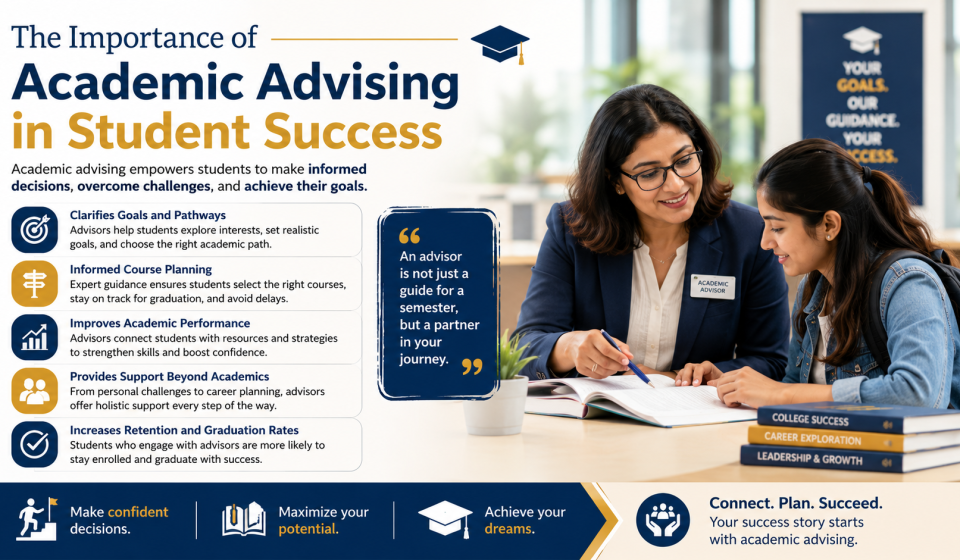
Academic advising is a structured process in which trained advisors help students make informed educational and career decisions throughout their college journey.
Academic advising includes:
- Course planning
- Degree requirements
- Career guidance
- Academic goal setting
- Skill development
- Internship planning
- Study strategies
- Campus resource guidance
- Graduate education planning
- Personal development support
Academic advisors help students make confident and informed decisions.
Why Academic Advising Matters
Students often face important decisions during college.
Academic advising helps students:
- Stay on track for graduation
- Improve academic performance
- Make informed course selections
- Build confidence
- Develop career plans
- Reduce academic stress
Guidance improves educational outcomes.
Personalized Academic Planning
Every student’s educational journey is unique.
Academic advisors help with:
- Semester planning
- Credit management
- Elective selection
- Major and minor decisions
- Graduation timelines
Personalized planning supports long-term success.
Course Selection Made Easier
Choosing the right courses affects academic progress.
Academic advisors assist students by:
- Explaining prerequisite requirements
- Balancing course workloads
- Selecting appropriate electives
- Planning future semesters
Strategic planning reduces academic difficulties.
Career Planning and Goal Setting
Academic advising connects education with career aspirations.
Career planning may include:
- Career assessments
- Industry guidance
- Internship recommendations
- Professional certifications
- Graduate school planning
Early career planning improves future opportunities.
Improving Academic Performance
Students experiencing academic challenges benefit from professional guidance.
Advisors may recommend:
- Tutoring services
- Study skill workshops
- Time management strategies
- Learning support centers
- Faculty consultation
Early intervention improves student success.
Developing Essential Skills
Academic advising supports personal and professional growth.
Students develop:
- Communication skills
- Critical thinking
- Leadership
- Problem-solving
- Decision-making
- Goal-setting abilities
These skills prepare students for future careers.
Internship and Experiential Learning Guidance
Practical learning enhances classroom education.
Academic advisors help students find:
- Internships
- Cooperative education programs
- Industry projects
- Research opportunities
- Volunteer experiences
Real-world learning improves employability.
Supporting Student Well-Being
Student success includes emotional and personal wellness.
Academic advisors often connect students with:
- Counseling services
- Wellness programs
- Financial aid offices
- Student support services
- Peer mentoring programs
Holistic support strengthens academic achievement.
Encouraging Student Engagement
Students who actively participate in campus life often experience greater personal growth.
Academic advisors encourage involvement in:
- Student organizations
- Leadership programs
- Community service
- Academic clubs
- Cultural activities
Campus engagement enhances learning experiences.
Helping Students Adapt to College Life
The transition to college can be challenging.
Academic advisors help students:
- Understand academic expectations
- Develop independent learning habits
- Build confidence
- Manage responsibilities
- Access campus resources
Strong support encourages successful adjustment.
Academic Advising and Graduation Success
Consistent advising helps students remain focused on long-term goals.
Benefits include:
- Timely graduation
- Better academic planning
- Fewer scheduling mistakes
- Increased retention
- Greater career readiness
Effective advising supports successful degree completion.
Questions Students Should Ask Their Academic Advisor
Students should regularly discuss:
- Which courses should I take next semester?
- How can I improve my academic performance?
- What internship opportunities are available?
- Which certifications complement my degree?
- How can I prepare for graduate studies?
- What campus resources can support my goals?
Regular communication improves decision-making.
Common Mistakes Students Should Avoid
Many students meet their academic advisor only during course registration. Others delay seeking guidance until academic problems become serious. Ignoring degree requirements, failing to plan future semesters, overlooking internships, and not using campus support services can affect academic and career progress. Meeting with an academic advisor regularly helps students avoid these challenges.
The Future of Academic Advising
Artificial intelligence, predictive analytics, personalized learning platforms, virtual advising, career planning software, digital degree audits, student success dashboards, and data-driven advising systems are transforming academic advising. These innovations help institutions provide more personalized support while enabling students to make informed educational and career decisions.
Source
https://www.ugc.gov.in
https://www.aicte-india.org
https://www.education.gov.in
https://www.naac.gov.in
Conclusion
Academic advising is one of the most valuable resources available to college students. It provides personalized guidance that helps students make informed academic decisions, develop professional skills, prepare for future careers, and successfully navigate college life. From selecting courses and planning internships to accessing student support services and setting long-term career goals, academic advisors play a vital role in student development. Students who actively engage with academic advising are often better prepared for graduation, employment, and lifelong learning. Choosing a college with a strong academic advising system can significantly enhance both educational success and future career opportunities.
FAQ
1. What is academic advising?
Academic advising is a guidance process in which advisors help students plan their education, choose courses, understand degree requirements, prepare for careers, and achieve academic goals.
2. Why is academic advising important for college students?
It helps students make informed decisions, improve academic performance, stay on track for graduation, explore career opportunities, and access campus support services.
3. How often should students meet with an academic advisor?
Students should meet their academic advisor at least once every semester and whenever they are making important academic, career, or graduation-related decisions.
4. Can academic advisors help with career planning?
Yes. Academic advisors often provide career guidance, internship recommendations, graduate study advice, certification planning, and referrals to career development services.
5. Does academic advising improve graduation rates?
Many colleges report that effective academic advising improves student retention, academic performance, timely graduation, and overall student success by helping learners make better educational decisions.
6. What should students prepare before meeting an academic advisor?
Students should review their academic progress, prepare questions about courses, internships, career goals, graduation requirements, and bring any relevant academic records or degree plans to make the advising session more productive.