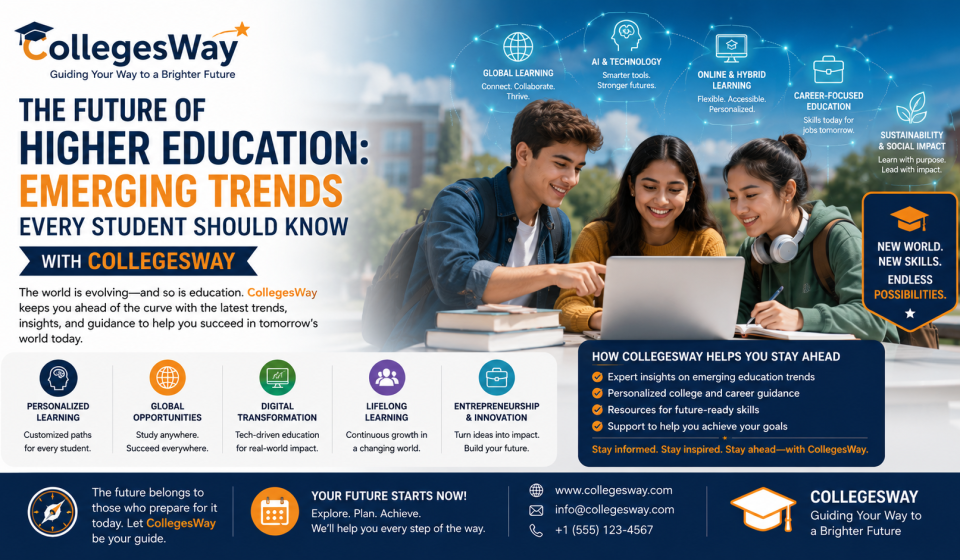

Higher education is undergoing a significant transformation. Rapid technological advancements, changing workforce demands, globalization, and evolving student expectations are reshaping the way education is delivered and experienced. Traditional.
Why Higher Education Is Changing
Several factors are driving changes in higher education worldwide.
These include:
- Technological innovation
- Globalization
- Workforce transformation
- Digital learning platforms
- Industry skill requirements
- Student demand for flexibility
- Increased focus on employability
Educational institutions are moving beyond traditional teaching methods to create learning experiences that are more accessible, practical, and career-oriented.
Students who understand these changes can make smarter educational choices and gain a competitive advantage in the job market.
The Rise of Online and Hybrid Learning
One of the most significant trends in higher education is the growth of online and hybrid learning models.
Online education allows students to:
- Learn from anywhere
- Access course materials at any time
- Balance education with work and personal commitments
- Participate in global learning communities
Hybrid learning combines traditional classroom instruction with digital learning tools.
Benefits include:
- Greater flexibility
- Enhanced accessibility
- Personalized learning experiences
- Improved student engagement
CollegesWay helps students evaluate online, hybrid, and traditional learning options based on their educational goals and learning preferences.
Personalized Learning Experiences
Modern education is becoming increasingly student-centered.
Instead of using a one-size-fits-all approach, institutions are adopting personalized learning models that adapt to individual needs and learning styles.
Personalized education may include:
- Customized learning paths
- Adaptive learning technologies
- Individualized support
- Flexible course schedules
This approach helps students learn more effectively and achieve better academic outcomes.
CollegesWay assists students in identifying institutions that prioritize personalized learning and academic success.
Growing Importance of Skill-Based Education
Employers increasingly value practical skills alongside academic qualifications.
As a result, higher education institutions are integrating skill development into their programs.
Important skills include:
- Communication
- Critical thinking
- Problem-solving
- Leadership
- Digital literacy
- Teamwork
- Creativity
Students who develop these competencies are better prepared for modern workplace challenges.
CollegesWay encourages students to choose programs that combine theoretical knowledge with practical skill development.
Artificial Intelligence and Educational Technology
Artificial Intelligence (AI) is transforming education in remarkable ways.
Educational institutions are using AI-powered tools to:
- Personalize learning experiences
- Track student progress
- Improve academic support
- Enhance administrative efficiency
Other educational technologies include:
- Virtual classrooms
- Learning management systems
- Interactive simulations
- Digital assessment platforms
These innovations improve accessibility, engagement, and learning outcomes.
Students who embrace educational technology can maximize their learning potential and stay ahead in an increasingly digital world.
Career-Focused Education and Employability
The primary goal of higher education is no longer limited to earning a degree.
Students increasingly seek educational programs that prepare them for successful careers.
Modern institutions emphasize:
- Internship opportunities
- Industry collaborations
- Career counseling
- Placement assistance
- Experiential learning
Employers value graduates who possess both academic knowledge and real-world experience.
CollegesWay helps students identify institutions with strong career support services and excellent placement records.
Micro-Credentials and Professional Certifications
Traditional degrees remain important, but employers are also recognizing shorter, specialized learning credentials.
Micro-credentials and certifications allow students to:
- Learn specific skills
- Stay current with industry trends
- Improve employability
- Enhance professional profiles
Popular certification areas include:
- Data Analytics
- Artificial Intelligence
- Cybersecurity
- Digital Marketing
- Cloud Computing
- Project Management
These credentials complement traditional education and provide additional career advantages.
Global Learning Opportunities
Globalization has expanded educational opportunities beyond national boundaries.
Students can now access:
- International degree programs
- Student exchange opportunities
- Global online courses
- Cross-cultural learning experiences
International exposure helps students develop:
- Cultural awareness
- Communication skills
- Global perspectives
- Professional adaptability
CollegesWay helps students explore international education opportunities that align with their academic and career objectives.
Flexible Learning Pathways
Students today require education that accommodates diverse lifestyles and responsibilities.
Flexible learning options include:
- Part-time programs
- Online courses
- Modular learning
- Self-paced education
These alternatives make higher education more accessible to:
- Working professionals
- Adult learners
- Parents
- Remote students
Flexibility allows learners to continue their education without sacrificing personal or professional commitments.
Focus on Lifelong Learning
The future workforce will require continuous learning and skill development.
Technological change and evolving industries mean that education does not end after graduation.
Lifelong learning helps individuals:
- Stay competitive
- Adapt to industry changes
- Explore new career opportunities
- Maintain professional relevance
Educational institutions increasingly offer programs designed to support continuous learning throughout a person’s career.
CollegesWay encourages students to view education as a lifelong journey rather than a one-time achievement.
Data-Driven Student Success Strategies
Colleges and universities are using data analytics to improve student outcomes.
Educational institutions analyze information such as:
- Academic performance
- Attendance patterns
- Learning progress
- Student engagement
This data helps educators provide targeted support and improve student success rates.
Students benefit from more personalized guidance and improved learning experiences.
Mental Health and Student Well-Being
Student well-being has become a major priority in higher education.
Educational institutions recognize that mental health directly impacts academic performance and overall success.
Many colleges now offer:
- Counseling services
- Wellness programs
- Mental health resources
- Stress management support
A healthy learning environment contributes to improved student satisfaction and academic achievement.
CollegesWay encourages students to consider campus support services when selecting educational institutions.
Sustainability and Social Responsibility in Education
Higher education institutions are increasingly promoting sustainability and social responsibility.
Students are encouraged to engage in:
- Environmental initiatives
- Community service
- Ethical leadership
- Sustainable development projects
These experiences help learners become responsible global citizens and future leaders.
The Role of CollegesWay in Preparing Students for the Future
As higher education continues to evolve, students need trusted guidance to navigate new opportunities and challenges.
CollegesWay supports students through:
Personalized Career Counseling
Helping students align educational choices with future career goals.
College Selection Assistance
Guiding students toward institutions that match their academic interests and aspirations.
Admission Support
Simplifying application processes and helping students meet admission requirements.
Future Career Planning
Providing insights into emerging industries and future job market trends.
Educational Guidance
Helping students understand modern learning pathways and educational opportunities.
Through expert support and student-centered services, CollegesWay empowers learners to make informed decisions and succeed in a rapidly changing world.
Source
https://www.unesco.org
https://www.oecd.org/education
https://www.weforum.org
https://www.educause.edu
https://www.edutopia.org
Conclusion
The future of higher education is being shaped by technological innovation, personalized learning, career-focused education, global opportunities, and lifelong learning. Students who understand these emerging trends can make better academic decisions and prepare themselves for success in an increasingly competitive and dynamic world.
CollegesWay plays a crucial role in helping students navigate this evolving landscape through personalized counseling, admission support, career guidance, and educational planning. By staying informed about the future of education and embracing modern learning opportunities, students can build strong foundations for academic achievement, professional growth, and lifelong success.
As the educational world continues to transform, CollegesWay remains committed to helping students discover opportunities, overcome challenges, and achieve their highest potential.
FAQ
1. Why is higher education changing?
Higher education is evolving due to technological advancements, changing workforce needs, globalization, and increased demand for flexible learning options.
2. What is personalized learning?
Personalized learning adapts educational experiences to individual student needs, interests, learning styles, and academic goals.
3. How does online learning benefit students?
Online learning provides flexibility, accessibility, convenience, and opportunities to learn from anywhere in the world.
4. What are micro-credentials?
Micro-credentials are specialized certifications that help students develop specific skills and improve career opportunities.
5. Why is skill-based education important?
Employers increasingly value practical skills such as communication, leadership, problem-solving, and digital literacy alongside academic qualifications.
6. How does CollegesWay help students prepare for the future?
CollegesWay offers career counseling, college selection guidance, admission support, and educational planning tailored to student goals.
7. What role does Artificial Intelligence play in education?
AI helps personalize learning, track academic progress, improve student support, and enhance educational experiences.
8. Why is lifelong learning important?
Lifelong learning helps individuals adapt to changing industries, develop new skills, remain competitive, and achieve long-term career success.