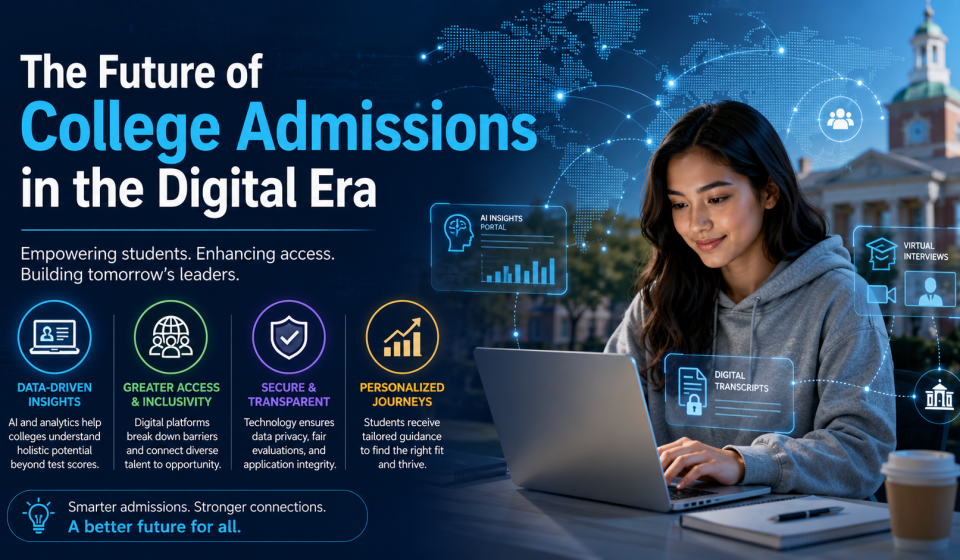
The Future of College Admissions in the Digital Era: How Technology Is Transforming Higher Education Enrollment

The college admissions process has undergone significant changes over the past decade, and technological advancements continue to reshape how students apply to colleges and universities worldwide. Traditional paper-based applications, in-person interviews, and lengthy admission procedures are rapidly being replaced by digital platforms, artificial intelligence, data analytics, and virtual engagement tools.
The Evolution of College Admissions
Historically, college admissions involved extensive paperwork, mailed transcripts, physical entrance examinations, and face-to-face interactions. The process often required significant time, effort, and financial resources.
With the rise of internet technologies, colleges began adopting online application systems, electronic document submissions, and digital communication channels. This transition improved efficiency and reduced administrative burdens for both institutions and applicants.
Today, digital innovation continues to revolutionize admissions by introducing automation, predictive analytics, virtual recruitment, and AI-powered evaluation systems.
Why Digital Transformation Matters in College Admissions
Digital technologies are reshaping admissions for several important reasons.
Key benefits include:
- Faster application processing
- Improved accessibility
- Enhanced student engagement
- Reduced administrative costs
- Data-driven decision-making
- Greater transparency
- Personalized applicant experiences
- Increased global reach
These advancements help institutions attract diverse student populations while simplifying the application process.
Online Application Platforms: The New Standard
Digital application portals have become the foundation of modern college admissions.
Students can now:
- Submit applications online
- Upload academic documents
- Track application status
- Communicate with admissions officers
- Receive admission updates instantly
Online systems eliminate many logistical challenges associated with traditional application methods.
Benefits include:
- Reduced paperwork
- Faster processing
- Improved accuracy
- Enhanced convenience
Digital platforms provide a seamless experience for applicants and institutions alike.
Artificial Intelligence in College Admissions
Artificial intelligence is emerging as a powerful tool in higher education admissions.
Application Screening
AI systems can assist admissions teams by analyzing large volumes of applications efficiently.
These systems can evaluate:
- Academic records
- Test scores
- Extracurricular activities
- Personal statements
Automation helps reduce administrative workload while improving processing speed.
Personalized Student Engagement
AI-powered chatbots provide instant assistance to prospective students.
Chatbots can answer questions regarding:
- Admission requirements
- Application deadlines
- Scholarship opportunities
- Campus programs
This improves accessibility and enhances the student experience.
Predictive Analytics
Institutions use predictive analytics to identify applicants most likely to succeed academically and remain enrolled through graduation.
Data-driven insights support informed admissions decisions and student success initiatives.
The Rise of Test-Optional Admissions
One of the most significant changes in college admissions is the growing adoption of test-optional policies.
Many institutions now allow students to apply without submitting standardized test scores.
Reasons include:
- Expanding access to education
- Reducing barriers for disadvantaged students
- Promoting holistic evaluation
- Addressing concerns about testing fairness
As digital assessment methods evolve, traditional standardized testing may play a reduced role in future admissions decisions.
Holistic Admissions Approaches
Digital technologies enable institutions to evaluate applicants more comprehensively.
Holistic admissions consider factors such as:
- Academic performance
- Leadership experience
- Community involvement
- Personal achievements
- Life experiences
- Creativity and innovation
This approach recognizes that student potential extends beyond grades and test scores.
Technology allows admissions teams to review broader applicant profiles efficiently and effectively.
Virtual Campus Tours and Online Recruitment
Technology has transformed how colleges connect with prospective students.
Virtual Campus Tours
Interactive virtual tours allow students to explore campuses from anywhere in the world.
Benefits include:
- Greater accessibility
- Reduced travel costs
- Increased convenience
- Enhanced decision-making
Students can view facilities, classrooms, housing, and campus life without physical visits.
Virtual Information Sessions
Many institutions now host:
- Online webinars
- Live Q&A sessions
- Virtual open houses
- Digital student panels
These events provide valuable information and foster engagement with prospective applicants.
Mobile-First Admissions Experiences
Modern students rely heavily on smartphones and mobile devices.
As a result, colleges are increasingly developing mobile-friendly admissions platforms.
Mobile capabilities include:
- Application submission
- Document uploads
- Status tracking
- Communication tools
- Event registration
Mobile accessibility improves convenience and increases application completion rates.
Data Analytics and Admissions Strategy
Data analytics has become a crucial component of modern enrollment management.
Institutions analyze data to:
- Predict enrollment trends
- Identify target student populations
- Improve recruitment strategies
- Enhance student retention
Analytics supports evidence-based decision-making and helps institutions optimize admissions outcomes.
Social Media’s Role in College Admissions
Social media platforms have become powerful recruitment and communication tools.
Colleges use social media to:
- Showcase campus culture
- Share student success stories
- Promote academic programs
- Engage prospective applicants
Popular platforms include:
- YouTube
- TikTok
Students increasingly rely on social media content when researching educational institutions.
Digital Credentials and Academic Portfolios
The future of admissions may involve broader use of digital credentials and portfolios.
Students can showcase:
- Academic achievements
- Certifications
- Projects
- Research experience
- Creative work
- Technical skills
Digital portfolios provide richer insights into student capabilities beyond traditional transcripts.
Blockchain Technology in Admissions
Blockchain technology offers opportunities to improve credential verification and data security.
Potential applications include:
- Secure transcript storage
- Academic record verification
- Fraud prevention
- Credential authentication
Blockchain could streamline admissions processes while enhancing trust and transparency.
The Growing Importance of Skills-Based Evaluation
Employers increasingly prioritize practical skills alongside academic credentials.
Educational institutions may adopt admissions models that assess:
- Problem-solving abilities
- Communication skills
- Leadership potential
- Technical competencies
- Critical thinking
Skills-based evaluation aligns admissions practices with evolving workforce demands.
Equity and Accessibility in Digital Admissions
Technology has the potential to expand educational access for students worldwide.
Benefits include:
- Greater geographic reach
- Reduced travel requirements
- Lower application costs
- Increased flexibility
However, institutions must also address challenges related to the digital divide.
Ensuring equitable access to technology remains essential for inclusive admissions practices.
Challenges Facing Digital Admissions
Despite numerous advantages, digital admissions systems face several challenges.
Data Privacy and Security
Colleges must protect sensitive applicant information from cybersecurity threats and data breaches.
Algorithmic Bias
AI systems must be carefully designed to avoid reinforcing existing inequalities.
Technology Access Gaps
Some students may lack reliable internet access or digital resources.
Authenticity Verification
Institutions must verify the accuracy and authenticity of digital submissions and credentials.
Addressing these concerns is critical to maintaining fairness and trust.
The Role of Human Judgment
Although technology improves efficiency, human decision-making remains essential.
Admissions professionals provide:
- Contextual evaluation
- Personal judgment
- Ethical oversight
- Individualized assessment
The future of admissions will likely combine technological innovation with human expertise.
Future Trends in College Admissions
Several emerging trends are expected to shape admissions in the coming years.
AI-Powered Application Review
Advanced AI systems will continue improving efficiency and personalization.
Personalized Recruitment Campaigns
Data-driven marketing will deliver customized content based on student interests and goals.
Continuous Admissions Models
Institutions may adopt more flexible admission timelines and rolling application systems.
Global Applicant Pools
Digital technologies will enable colleges to recruit students from increasingly diverse international markets.
Enhanced Student Matching Systems
Sophisticated algorithms may help match students with institutions that best fit their academic and personal goals.
Preparing Students for the Digital Admissions Future
Students can strengthen their applications by:
- Developing digital literacy skills
- Building strong online portfolios
- Participating in extracurricular activities
- Maintaining academic excellence
- Learning new technologies
- Demonstrating leadership and initiative
Preparation for digital admissions begins long before submitting an application.
Source
- https://www.education.gov.in
- https://www.unesco.org
- https://www.oecd.org
- https://www.aicte-india.org
- https://www.ugc.gov.in
Conclusion
The future of college admissions in the digital era is characterized by innovation, accessibility, and data-driven decision-making. Technologies such as artificial intelligence, virtual recruitment platforms, predictive analytics, blockchain, and mobile applications are transforming how students and institutions interact throughout the admissions process. While challenges related to equity, privacy, and technological access remain, digital transformation offers tremendous opportunities to create more efficient, inclusive, and personalized admissions experiences. As higher education continues to evolve, students who embrace digital tools and develop future-ready skills will be better positioned to navigate the admissions landscape successfully.
FAQ
1. How is technology changing college admissions?
Technology is improving application processing, student engagement, virtual recruitment, data analysis, and admissions decision-making.
2. What is a test-optional admissions policy?
A test-optional policy allows students to apply without submitting standardized test scores such as SAT or ACT results.
3. How does artificial intelligence help in admissions?
AI assists with application screening, student communication, predictive analytics, and personalized engagement.
4. What are virtual campus tours?
Virtual campus tours are online experiences that allow prospective students to explore college facilities and campus life remotely.
5. What skills will be important for future college applicants?
Digital literacy, critical thinking, communication, leadership, creativity, and problem-solving skills will be increasingly valuable.