The Benefits of Experiential Learning in College: How Hands-On Education Builds Career-Ready Skills and Academic Success

Higher education is rapidly evolving to meet the demands of a dynamic global workforce. While classroom lectures and textbooks remain essential components of learning, colleges increasingly recognize that students gain deeper understanding and stronger professional.
Modern employers seek graduates who possess more than academic qualifications. They value individuals who can solve problems, communicate effectively, work collaboratively, adapt to changing environments, and make informed decisions. Experiential learning allows students to develop these competencies by participating in authentic learning experiences throughout their college journey. Whether pursuing engineering, business, healthcare, commerce, science, arts, or social sciences, students benefit from practical exposure that strengthens confidence, critical thinking, creativity, and career readiness. This comprehensive guide explores the benefits of experiential learning in college, explains its impact on student success, and highlights how future-focused institutions use experiential education to prepare graduates for lifelong learning and professional achievement.
What Is Experiential Learning?
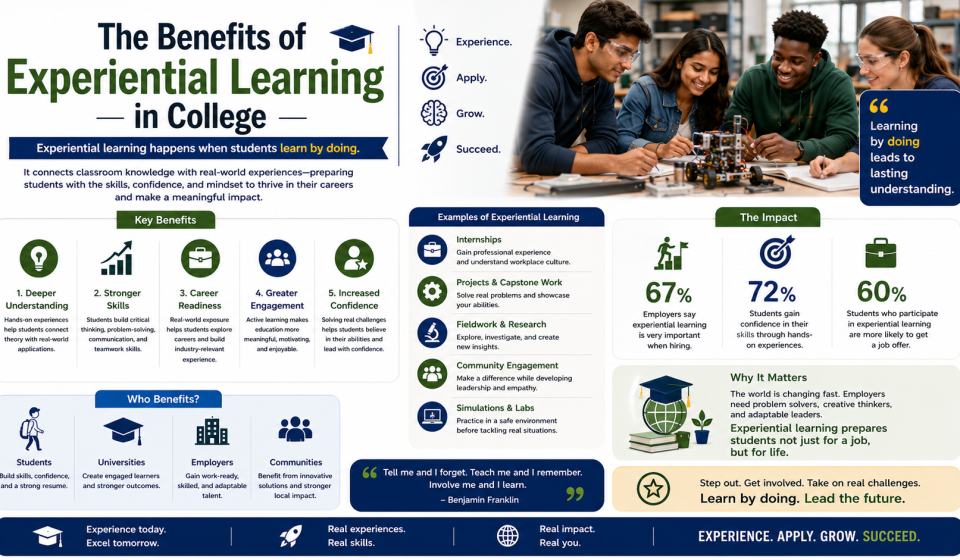
Experiential learning is a teaching and learning approach where students gain knowledge, skills, and understanding through direct experience, active participation, and thoughtful reflection.
Instead of relying only on lectures, students learn by doing.
Common forms of experiential learning include:
- Internships
- Laboratory work
- Research projects
- Field visits
- Community service
- Industry training
- Case studies
- Simulations
- Entrepreneurship programs
- Capstone projects
Experiential learning connects academic theory with practical application.
Why Experiential Learning Matters
Hands-on education helps students understand concepts more effectively while preparing them for professional careers.
Key benefits include:
- Better academic engagement
- Practical knowledge
- Stronger problem-solving skills
- Career readiness
- Improved confidence
- Lifelong learning
Students actively participate in the learning process rather than simply receiving information.
Connecting Theory with Practice
Experiential learning allows students to apply classroom concepts in real-world settings.
Students gain opportunities to:
- Test academic knowledge
- Solve practical challenges
- Analyze real situations
- Improve decision-making
Practical application strengthens understanding and retention.
Developing Career-Ready Skills
Modern employers expect graduates to possess both technical and interpersonal competencies.
Experiential learning develops:
- Communication
- Leadership
- Teamwork
- Time management
- Adaptability
- Professional ethics
These transferable skills improve employability.
Enhancing Critical Thinking
Practical learning experiences encourage students to think independently.
Students learn to:
- Analyze information
- Evaluate evidence
- Identify solutions
- Make informed decisions
Critical thinking is valuable across all professions.
Building Confidence
Hands-on experiences increase student confidence by providing opportunities to apply knowledge successfully.
Confidence grows through:
- Presentations
- Projects
- Internships
- Research
- Team collaboration
Self-confidence contributes to stronger academic and professional performance.
Improving Communication Skills
Experiential learning often requires interaction with faculty, industry professionals, clients, and peers.
Students improve:
- Verbal communication
- Written communication
- Presentation skills
- Professional discussions
- Active listening
Communication remains one of the most valuable workplace skills.
Encouraging Collaboration
Many experiential activities involve teamwork.
Students learn:
- Cooperation
- Shared responsibility
- Conflict resolution
- Leadership
- Respect for diverse perspectives
Collaboration prepares graduates for modern workplaces.
Research and Innovation
Experiential education frequently includes research opportunities.
Students may participate in:
- Faculty research
- Innovation projects
- Scientific investigations
- Product development
- Prototype creation
Research enhances analytical and technical skills.
Internship Experience
Internships are among the most valuable forms of experiential learning.
Benefits include:
- Workplace exposure
- Professional networking
- Industry knowledge
- Career exploration
- Practical skill development
Internships help students transition from college to employment.
Community Engagement
Service-learning projects combine education with community involvement.
Students develop:
- Social responsibility
- Civic awareness
- Empathy
- Leadership
- Practical problem-solving
Community engagement supports holistic development.
Technology and Experiential Learning
Digital technologies have expanded experiential education.
Modern colleges use:
- Virtual laboratories
- Simulation software
- Artificial intelligence tools
- Online collaboration platforms
- Learning management systems
Technology enhances accessibility and practical learning opportunities.
Faculty Mentorship
Experienced faculty guide students throughout experiential learning activities.
Mentors support students through:
- Project supervision
- Career advice
- Research guidance
- Performance feedback
- Professional development
Mentorship enriches learning experiences.
Career Readiness
Experiential learning prepares students for successful careers.
Graduates develop:
- Workplace confidence
- Technical competence
- Professional communication
- Leadership ability
- Adaptability
Employers highly value practical experience.
Evaluating Colleges for Experiential Learning
When selecting a college, students should consider:
- Internship opportunities
- Laboratory facilities
- Industry partnerships
- Research programs
- Innovation centers
- Community engagement
- Career development services
These resources strengthen educational quality.
Common Challenges
Experiential learning may require additional time, greater responsibility, teamwork, adaptability, and active participation. Students may initially find practical assignments more demanding than traditional classroom activities, but these experiences often produce stronger long-term learning outcomes and professional growth.
The Future of Experiential Learning
Higher education continues to embrace experiential education through project-based learning, artificial intelligence, virtual reality simulations, interdisciplinary collaboration, entrepreneurship ecosystems, industry partnerships, and competency-based assessment. As industries evolve, experiential learning will remain one of the most effective approaches for preparing graduates with the knowledge, practical skills, creativity, and adaptability needed for lifelong success in an increasingly competitive global workforce.
Source
https://www.ugc.gov.in
https://www.education.gov.in
https://www.unesco.org
Conclusion
Experiential learning has become an essential part of modern higher education because it transforms theoretical knowledge into practical understanding and career-ready skills. Through internships, research projects, laboratory work, field experiences, community engagement, innovation activities, and industry collaboration, students gain confidence, critical thinking abilities, communication skills, and professional competence. Colleges that prioritize experiential learning create graduates who are better prepared for workplace challenges, continuous learning, and long-term career success. By actively participating in hands-on educational experiences, students can maximize both their academic achievements and future professional opportunities.
FAQ
1. What is experiential learning?
Experiential learning is an educational approach where students learn through direct experience, practical activities, reflection, internships, projects, research, and real-world applications rather than relying solely on classroom lectures.
2. Why is experiential learning important in college?
Experiential learning improves academic understanding, develops career-ready skills, strengthens critical thinking, increases confidence, and prepares students for professional success.
3. What are examples of experiential learning?
Examples include internships, laboratory work, research projects, field visits, community service, simulations, entrepreneurship programs, case studies, and capstone projects.
4. How does experiential learning improve employability?
Students develop practical experience, communication skills, teamwork, leadership, adaptability, and professional confidence, all of which are highly valued by employers.
5. How can students choose colleges with strong experiential learning opportunities?
Students should evaluate internship programs, industry partnerships, laboratory facilities, research opportunities, innovation centers, community engagement initiatives, and career development services before selecting a college.
6. Does experiential learning benefit students in every field of study?
Yes. Students in engineering, business, healthcare, commerce, sciences, arts, law, education, and social sciences can all benefit from practical, experience-based learning opportunities.