Key Factors That Influence Student Success Beyond Academics: The Complete Guide to Building a Bright Future in College and Beyond

Success in higher education is no longer measured solely by grades, examination scores, or academic achievements. While strong academic performance remains important, today’s students need much more to thrive in an increasingly competitive, technology-driven.
Modern colleges recognize that education extends far beyond textbooks and classroom lectures. Institutions are investing in career guidance, industry partnerships, internships, student clubs, research opportunities, innovation centers, entrepreneurship programs, mental health support, mentorship, and digital learning resources to help students become well-rounded professionals. The implementation of the National Education Policy (NEP) 2020 has further strengthened this approach by encouraging multidisciplinary learning, skill development, experiential education, and flexibility in higher education.
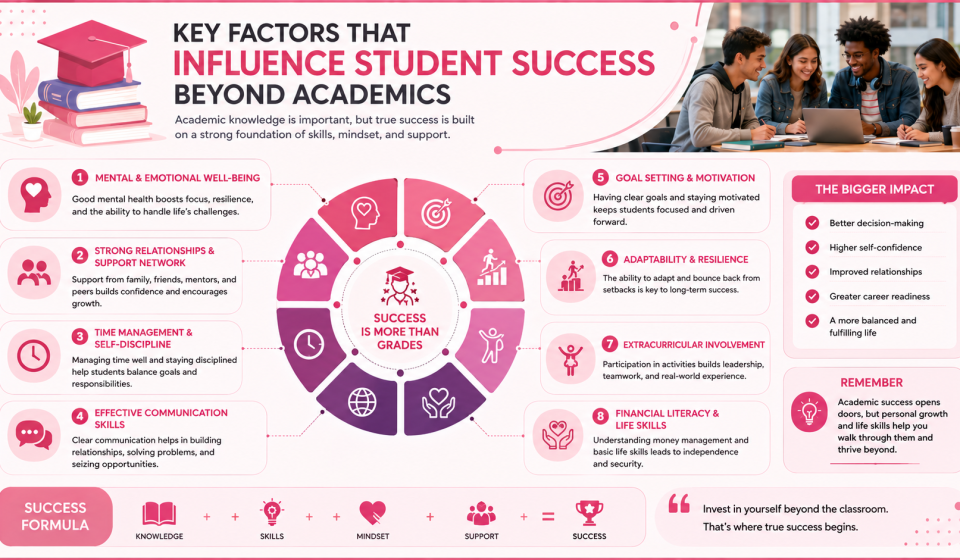
Why Student Success Goes Beyond Academics
Academic knowledge provides the foundation for learning, but long-term success requires additional skills and experiences.
Students benefit from developing:
- Leadership
- Communication
- Emotional intelligence
- Practical skills
- Professional ethics
- Adaptability
These qualities prepare graduates for both career and personal success.
Leadership Development
Leadership opportunities help students learn how to:
- Make decisions
- Motivate teams
- Solve problems
- Manage responsibilities
- Communicate effectively
Student councils, clubs, and campus organizations provide valuable leadership experiences.
Communication Skills
Strong communication is essential for:
- Job interviews
- Presentations
- Team collaboration
- Professional networking
- Workplace success
Colleges that encourage public speaking, debates, presentations, and discussions help students become confident communicators.
Practical Learning
Hands-on experiences improve understanding and career readiness.
Examples include:
- Laboratory work
- Internships
- Live projects
- Industrial visits
- Field studies
- Case studies
Practical learning bridges the gap between theory and real-world application.
Internship Opportunities
Internships allow students to:
- Gain workplace experience
- Learn industry expectations
- Build professional networks
- Develop technical skills
- Strengthen resumes
Students with internship experience often have better employment prospects.
Career Guidance and Mentorship
Career support services provide:
- Career counseling
- Resume building
- Interview preparation
- Internship assistance
- Placement guidance
- Professional mentoring
Early career planning leads to more informed decisions.
Emotional Intelligence
Successful students know how to:
- Manage emotions
- Handle stress
- Resolve conflicts
- Build healthy relationships
- Adapt to challenges
Emotional intelligence contributes to academic achievement and workplace success.
Time Management
Effective time management helps students:
- Balance academics and extracurricular activities
- Meet deadlines
- Reduce stress
- Improve productivity
- Achieve personal goals
Developing this habit benefits students throughout life.
Student Clubs and Extracurricular Activities
Participation in clubs helps students develop:
- Teamwork
- Leadership
- Creativity
- Networking
- Organizational skills
- Confidence
Learning extends well beyond the classroom.
Research and Innovation
Research opportunities encourage students to:
- Explore new ideas
- Think critically
- Conduct investigations
- Develop innovative solutions
- Publish academic work
Research enhances academic and professional profiles.
Digital Skills
Technology has become essential across every profession.
Students should develop:
- Digital literacy
- Online collaboration
- Data analysis
- AI awareness
- Productivity software skills
Digital competence improves employability.
Community Engagement
Volunteer work and social initiatives help students build:
- Empathy
- Social responsibility
- Leadership
- Collaboration
- Civic awareness
Community service supports personal growth.
Supportive Campus Environment
A student-friendly campus provides:
- Academic advising
- Mental health support
- Faculty mentoring
- Inclusive learning
- Safe facilities
- Career services
Supportive environments encourage student success.
Lifelong Learning
The most successful professionals continue learning after graduation.
Continuous learning helps individuals:
- Adapt to industry changes
- Learn new technologies
- Advance professionally
- Stay competitive
Education should never stop.
How to Choose a College That Supports Overall Success
Before taking admission, evaluate whether the college offers:
- Career guidance programs
- Internship opportunities
- Leadership activities
- Research facilities
- Modern teaching methods
- Industry exposure
- Student support services
- Active campus life
These factors contribute significantly to long-term success.
Source
https://www.education.gov.in
https://www.ugc.gov.in
https://www.aicte-india.org
https://www.nirfindia.org
https://www.nsdcindia.org
Conclusion
Student success extends far beyond academic performance because today’s world requires graduates to possess practical experience, leadership abilities, communication skills, emotional intelligence, digital literacy, adaptability, and a commitment to lifelong learning. Colleges that provide internships, career guidance, research opportunities, extracurricular activities, mentorship, industry exposure, and supportive campus environments help students develop into confident, capable, and career-ready professionals. Rather than focusing only on grades or rankings, students should choose institutions that encourage holistic development and provide opportunities for personal, academic, and professional growth. Investing in a college that nurtures success beyond academics lays the foundation for a fulfilling career and a meaningful future.
FAQ
1. Why is student success not limited to academics?
Academic knowledge is important, but employers also value communication skills, leadership, teamwork, adaptability, emotional intelligence, and practical experience when evaluating graduates.
2. How do internships contribute to student success?
Internships provide real-world workplace experience, improve technical and professional skills, expand networking opportunities, strengthen resumes, and increase employability.
3. Why are leadership activities important during college?
Leadership experiences help students develop decision-making, communication, responsibility, teamwork, confidence, and organizational skills that are valuable in every career.
4. What role does emotional intelligence play in education?
Emotional intelligence helps students manage stress, build healthy relationships, solve conflicts, adapt to change, and perform better academically and professionally.
5. Why should students participate in extracurricular activities?
Extracurricular activities develop leadership, teamwork, creativity, networking, communication, and time-management skills while enhancing overall personal growth.
6. How do career guidance services benefit students?
Career guidance provides counseling, resume preparation, interview training, internship assistance, placement support, and professional mentoring that improve career readiness.
7. Why are digital skills important for college students?
Digital literacy, online collaboration, artificial intelligence awareness, productivity tools, and data analysis skills are increasingly essential across nearly every profession.
8. How can students choose a college that supports overall development?
Students should compare colleges based on academic quality, internships, career services, leadership opportunities, research facilities, campus culture, industry partnerships, extracurricular activities, faculty support, and student wellness programs instead of relying only on rankings or popularity.