Industry-Ready Skills Every College Student Should Develop in 2026: The Ultimate Guide to Future Career Success

The modern job market is evolving faster than ever before. Technological advancements, artificial intelligence, automation, digital transformation, and globalization are reshaping industries across the world. As businesses adapt to these changes, employers are seeking graduates who possess more than academic qualifications.
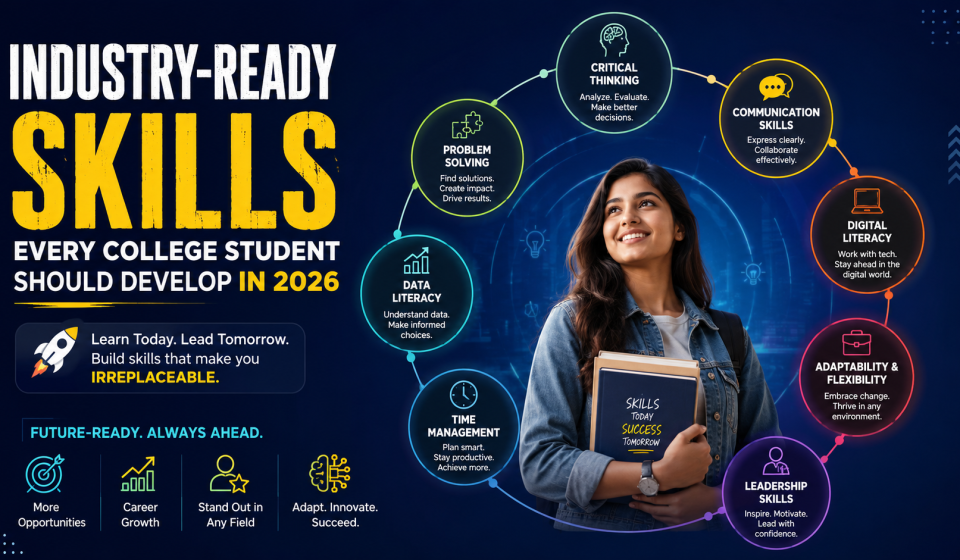
For college students, earning a degree is no longer enough to guarantee career success. Employers increasingly prioritize practical skills, industry knowledge, and workplace readiness when evaluating candidates. As we move through 2026, students who invest in developing industry-ready skills will have a significant advantage in securing internships, employment opportunities, and long-term career growth.
Why Industry-Ready Skills Matter More Than Ever
The gap between academic learning and workplace expectations continues to be a major challenge for employers and graduates alike. Many students complete degree programs with strong theoretical knowledge but limited practical experience.
Employers seek candidates who can contribute from day one. They value individuals who understand workplace dynamics, communicate effectively, solve problems independently, and adapt to changing environments.
Industry-ready skills help students:
- Increase employability.
- Improve internship opportunities.
- Build professional confidence.
- Adapt to evolving industries.
- Enhance career growth potential.
- Stand out in competitive job markets.
Developing these skills during college creates a strong foundation for long-term success.
Digital Literacy and Technology Proficiency
Digital literacy has become one of the most fundamental skills in today’s workforce. Nearly every industry relies on technology to improve efficiency, communication, and decision-making.
Students should develop proficiency in:
- Cloud-based tools.
- Productivity software.
- Data management systems.
- Digital collaboration platforms.
- Cybersecurity awareness.
- Online research techniques.
Even non-technical careers increasingly require employees to understand digital tools and workflows.
Technology proficiency demonstrates adaptability and prepares students for technology-driven workplaces.
Artificial Intelligence Literacy
Artificial Intelligence is transforming industries worldwide. From healthcare and finance to marketing and education, AI is becoming an essential business tool.
College students should understand:
- Basic AI concepts.
- Generative AI applications.
- AI-powered productivity tools.
- Ethical considerations of AI.
- Data-driven decision-making.
- AI’s impact on industries.
Students who can effectively work alongside AI technologies will be better positioned for future career opportunities.
Critical Thinking and Problem-Solving
One of the most valuable skills employers seek is the ability to analyze situations and develop effective solutions.
Critical thinking involves:
- Evaluating information objectively.
- Identifying patterns and trends.
- Making informed decisions.
- Assessing risks and opportunities.
- Solving complex challenges.
In an age where information is abundant, the ability to think critically helps professionals navigate uncertainty and make sound judgments.
Students can strengthen this skill through research projects, case studies, debates, and practical learning experiences.
Communication Skills
Strong communication remains one of the most in-demand skills across industries.
Employers value professionals who can:
- Present ideas clearly.
- Write effectively.
- Listen actively.
- Collaborate with diverse teams.
- Deliver professional presentations.
- Communicate across digital platforms.
Excellent communication improves workplace relationships, enhances leadership potential, and supports career advancement.
Students should actively participate in presentations, discussions, public speaking activities, and professional networking opportunities.
Adaptability and Flexibility
The workforce of 2026 is characterized by constant change. New technologies, evolving business models, and shifting market conditions require professionals to adapt quickly.
Adaptability includes:
- Learning new skills.
- Embracing change.
- Managing uncertainty.
- Remaining open to feedback.
- Adjusting to new responsibilities.
Students who develop flexibility are better prepared to thrive in dynamic work environments.
Adaptability also supports lifelong learning, which is increasingly essential for career longevity.
Data Literacy and Analytical Thinking
Data has become a powerful asset for organizations across all industries. Employers seek individuals who can interpret information and use insights to support decision-making.
Students should develop skills in:
- Data interpretation.
- Basic statistics.
- Spreadsheet analysis.
- Data visualization.
- Research methodologies.
- Evidence-based decision-making.
Even careers outside traditional data fields benefit from analytical thinking and data-driven problem-solving.
Data literacy enables professionals to make informed decisions and contribute to organizational success.
Emotional Intelligence
Technical skills are important, but emotional intelligence often determines workplace effectiveness.
Emotional intelligence involves:
- Self-awareness.
- Empathy.
- Relationship management.
- Conflict resolution.
- Emotional regulation.
- Social awareness.
Professionals with strong emotional intelligence build better relationships, work effectively in teams, and demonstrate stronger leadership capabilities.
As automation handles routine tasks, uniquely human skills such as empathy and emotional understanding become increasingly valuable.
Teamwork and Collaboration
Modern workplaces rely heavily on collaboration. Employees frequently work across departments, locations, and cultures.
Successful teamwork requires:
- Cooperation.
- Respect for diverse perspectives.
- Effective communication.
- Shared problem-solving.
- Accountability.
College students can strengthen collaboration skills through group projects, student organizations, internships, and volunteer activities.
Employers consistently rank teamwork among the most important workplace competencies.
Leadership Skills
Leadership is no longer limited to management positions. Organizations value employees who demonstrate initiative, accountability, and the ability to influence positive outcomes.
Leadership skills include:
- Decision-making.
- Strategic thinking.
- Motivation.
- Delegation.
- Responsibility.
- Vision setting.
Students can develop leadership experience through campus organizations, community service, project management, and entrepreneurial initiatives.
Leadership capabilities often accelerate career growth and professional recognition.
Creativity and Innovation
Innovation drives progress across industries. Employers seek individuals who can generate fresh ideas and develop creative solutions to challenges.
Creativity involves:
- Original thinking.
- Curiosity.
- Experimentation.
- Innovation.
- Design thinking.
- Continuous improvement.
Students should actively engage in creative projects, brainstorming activities, and interdisciplinary learning experiences.
Creative thinking helps organizations remain competitive in rapidly changing markets.
Time Management and Productivity
Effective time management is critical for academic and professional success.
Students should learn to:
- Prioritize tasks.
- Meet deadlines.
- Manage multiple responsibilities.
- Set goals.
- Maintain productivity.
- Avoid procrastination.
Strong organizational skills improve performance and reduce stress in both educational and workplace settings.
Employers value professionals who can consistently deliver high-quality work on schedule.
Networking and Relationship Building
Professional success often depends on strong networks and meaningful relationships.
Networking skills include:
- Building professional connections.
- Maintaining relationships.
- Seeking mentorship.
- Participating in industry events.
- Leveraging online platforms.
Students who develop networking abilities gain access to internships, career advice, job opportunities, and industry insights.
Building relationships early creates long-term career advantages.
Entrepreneurial Mindset
An entrepreneurial mindset benefits students regardless of career path.
This mindset includes:
- Initiative.
- Creativity.
- Opportunity recognition.
- Risk assessment.
- Resilience.
- Innovation.
Even within traditional employment settings, organizations value employees who think like entrepreneurs and contribute new ideas.
Entrepreneurial thinking encourages proactive problem-solving and continuous improvement.
Cybersecurity Awareness
As organizations increasingly rely on digital systems, cybersecurity awareness has become essential.
Students should understand:
- Online safety practices.
- Data protection.
- Password security.
- Cyber threats.
- Privacy considerations.
- Responsible technology use.
Cybersecurity knowledge protects both individuals and organizations from digital risks.
Even non-technical professionals benefit from understanding basic security principles.
Global and Cultural Awareness
The workforce is becoming increasingly interconnected. Professionals often collaborate with colleagues, clients, and partners from different cultural backgrounds.
Global awareness includes:
- Cultural sensitivity.
- Inclusive communication.
- International perspectives.
- Cross-cultural collaboration.
- Diversity appreciation.
Employers value individuals who can work effectively in diverse environments and contribute to inclusive workplaces.
Lifelong Learning and Continuous Skill Development
The skills required today may evolve significantly over the next decade. Successful professionals embrace lifelong learning and continuously update their knowledge.
Students should cultivate habits such as:
- Professional development.
- Online learning.
- Industry research.
- Skill certifications.
- Personal growth planning.
A commitment to continuous improvement ensures long-term career relevance and adaptability.
Building Industry-Ready Skills During College
College provides numerous opportunities to develop professional competencies.
Students can strengthen industry-ready skills through:
- Internships.
- Research projects.
- Student organizations.
- Volunteer work.
- Online certifications.
- Networking events.
- Competitions and hackathons.
- Leadership programs.
Combining academic learning with practical experiences creates well-rounded graduates prepared for workplace success.
Source
https://www.weforum.org
https://www.oecd.org
https://www.linkedin.com
https://www.mckinsey.com
https://www.coursera.org
Conclusion
As industries continue to evolve in 2026, employers are seeking graduates who possess a combination of technical expertise, digital literacy, adaptability, and strong interpersonal skills. Developing industry-ready competencies during college not only improves employability but also prepares students for long-term professional success in a rapidly changing world. From artificial intelligence literacy and data analysis to communication, leadership, and emotional intelligence, these skills enable students to thrive across diverse career paths. By actively investing in personal and professional development, college students can position themselves as valuable contributors to future workplaces and build rewarding, resilient careers.
FAQ
What are industry-ready skills?
Industry-ready skills are practical competencies that help students succeed in professional environments, including technical abilities, communication, leadership, and problem-solving skills.
Why are industry-ready skills important for college students?
These skills improve employability, prepare students for workplace challenges, and help bridge the gap between academic learning and professional expectations.
Which skill is most important in 2026?
While many skills are valuable, adaptability, digital literacy, AI literacy, communication, and problem-solving are among the most critical for future career success.
How can students develop industry-ready skills during college?
Students can gain these skills through internships, projects, leadership roles, certifications, networking opportunities, and practical learning experiences.
Is AI literacy necessary for non-technical students?
Yes. AI is influencing nearly every industry, making basic AI knowledge valuable for students across all academic disciplines.
What role does emotional intelligence play in career success?
Emotional intelligence improves teamwork, leadership, communication, and workplace relationships, making it highly valued by employers.
Why is data literacy becoming important?
Organizations increasingly rely on data for decision-making, making analytical thinking and data interpretation valuable skills across industries.
How does lifelong learning support career growth?
Continuous learning helps professionals stay relevant, adapt to industry changes, and develop new skills throughout their careers.