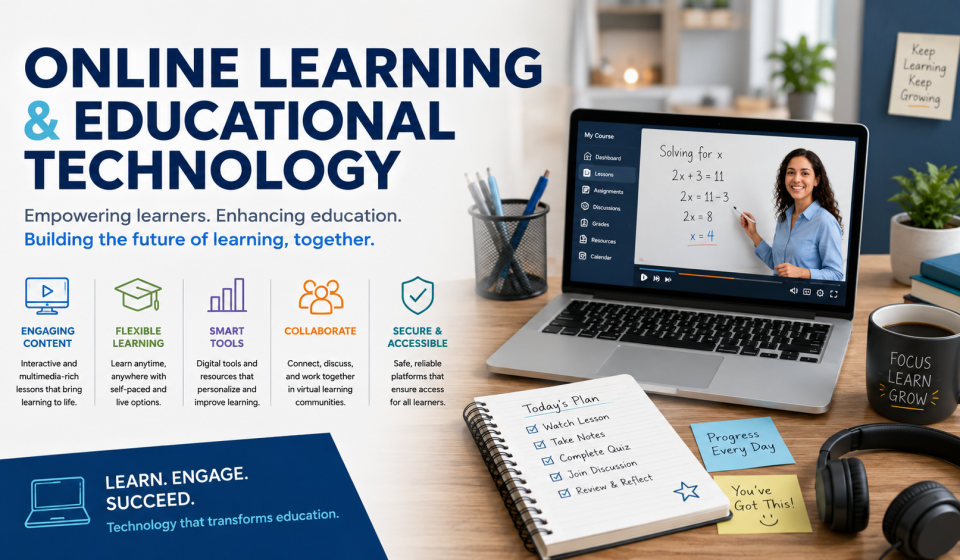
Online Learning & Educational Technology: How Digital Education Is Transforming the Future of Learning

The education sector has undergone a remarkable transformation over the past decade, driven largely by advancements in technology and the growing accessibility of the internet. Online learning and educational technology have revolutionized the way students, teachers, institutions, and professionals access and deliver education. What was once limited to traditional classrooms has evolved into a flexible, interactive, and globally connected learning environment.
Understanding Online Learning
Online learning refers to the delivery of educational content through digital platforms and internet-based technologies. It allows students to access learning materials, attend classes, complete assignments, and interact with instructors remotely.
Online learning can take various forms, including:
- Live virtual classes
- Self-paced courses
- Hybrid learning models
- Massive Open Online Courses (MOOCs)
- Professional certification programs
- Corporate training programs
This flexibility enables learners to study according to their schedules and individual learning needs.
What Is Educational Technology?
Educational technology involves the use of digital tools, software, hardware, and technological systems to improve teaching and learning experiences.
Examples of educational technology include:
- Learning Management Systems (LMS)
- Virtual classrooms
- Educational apps
- Artificial Intelligence tools
- Interactive whiteboards
- Online assessment platforms
- Educational videos
- Gamified learning platforms
The primary objective of educational technology is to enhance learning outcomes while making education more efficient and accessible.
The Rise of Online Learning
Several factors have contributed to the rapid growth of online education:
Increased Internet Accessibility
Widespread internet availability has made digital learning accessible to millions of students worldwide.
Technological Advancements
Modern devices such as smartphones, tablets, and laptops allow learners to access educational content anytime and anywhere.
Growing Demand for Flexible Education
Students and working professionals increasingly seek learning opportunities that fit their schedules.
Lifelong Learning Trends
Continuous skill development has become essential in today’s evolving job market, encouraging individuals to pursue online learning opportunities throughout their careers.
Benefits of Online Learning
Flexibility and Convenience
One of the biggest advantages of online learning is flexibility.
Students can:
- Learn at their own pace
- Access content anytime
- Study from any location
- Balance education with work and family responsibilities
This flexibility makes education more accessible to diverse groups of learners.
Cost-Effective Education
Online learning often reduces educational expenses.
Students can save money on:
- Transportation
- Accommodation
- Printed materials
- Campus-related costs
Many online courses are also more affordable than traditional classroom programs.
Access to Global Learning Opportunities
Online education eliminates geographical barriers.
Students can learn from:
- International universities
- Industry experts
- Global institutions
- Specialized instructors
This expanded access provides opportunities that may not be available locally.
Personalized Learning Experiences
Educational technology enables personalized learning pathways.
Adaptive learning systems can:
- Identify strengths and weaknesses
- Adjust content difficulty
- Recommend learning resources
- Track progress
Personalized education often improves engagement and learning outcomes.
Wide Range of Courses
Online platforms offer courses across countless disciplines, including:
- Business
- Technology
- Healthcare
- Marketing
- Data Science
- Graphic Design
- Artificial Intelligence
Learners can pursue subjects aligned with their academic and career goals.
How Educational Technology Improves Learning
Interactive Learning
Technology makes learning more engaging through:
- Videos
- Simulations
- Virtual labs
- Interactive quizzes
- Multimedia presentations
Interactive content helps students understand complex concepts more effectively.
Real-Time Feedback
Digital platforms provide immediate feedback on assignments, quizzes, and assessments.
This allows students to:
- Identify mistakes quickly
- Improve understanding
- Monitor progress
Timely feedback enhances learning efficiency.
Enhanced Collaboration
Educational technology supports collaboration through:
- Discussion forums
- Group projects
- Video conferencing
- Shared workspaces
Students can communicate and collaborate regardless of physical location.
Data-Driven Learning
Modern educational platforms collect valuable data about student performance.
Educators can use this information to:
- Identify learning gaps
- Personalize instruction
- Improve course design
- Enhance student outcomes
Popular Educational Technology Tools
Learning Management Systems (LMS)
Platforms such as Moodle, Canvas, and Blackboard help institutions manage courses, assignments, assessments, and student communication.
Video Conferencing Platforms
Tools like Zoom and Microsoft Teams enable live online classes and virtual collaboration.
Educational Applications
Mobile learning apps provide convenient access to educational resources and learning activities.
AI-Powered Learning Platforms
Artificial Intelligence can personalize learning experiences and provide intelligent tutoring support.
Challenges of Online Learning
Despite its many advantages, online education also presents challenges.
Limited Face-to-Face Interaction
Some students miss the social aspects of traditional classrooms.
Reduced in-person interaction may affect:
- Networking opportunities
- Classroom engagement
- Collaborative experiences
Self-Discipline Requirements
Online learning requires strong:
- Time management
- Motivation
- Organization
- Self-discipline
Students who struggle with independent learning may face difficulties.
Technology Access Issues
Not all learners have equal access to:
- Reliable internet
- Modern devices
- Digital resources
These barriers can create educational inequalities.
Screen Fatigue
Extended screen time may lead to:
- Eye strain
- Fatigue
- Reduced concentration
Balancing online learning with regular breaks is essential.
The Role of Artificial Intelligence in Education
Artificial Intelligence is becoming increasingly important in educational technology.
AI applications include:
- Personalized tutoring
- Automated grading
- Learning analytics
- Adaptive assessments
- Virtual assistants
AI helps create customized learning experiences while improving efficiency for educators.
Online Learning and Career Development
Online education has become a valuable tool for career advancement.
Professionals use online courses to:
- Learn new skills
- Earn certifications
- Change careers
- Stay updated with industry trends
Employers increasingly recognize online credentials from reputable institutions and learning platforms.
Future Trends in Educational Technology
Virtual Reality (VR)
VR can create immersive learning experiences that enhance understanding and engagement.
Augmented Reality (AR)
AR combines digital content with real-world environments, making learning more interactive.
Microlearning
Short, focused lessons improve knowledge retention and fit busy schedules.
Mobile Learning
Smartphones continue to expand access to education worldwide.
Personalized Learning Systems
Advanced technologies will further customize educational experiences based on individual needs and learning styles.
How Students Can Succeed in Online Learning
Students can maximize online learning success by:
- Creating dedicated study spaces
- Following consistent schedules
- Participating actively in discussions
- Setting learning goals
- Minimizing distractions
- Managing time effectively
Successful online learners combine technology with strong study habits and self-discipline.
Source
https://www.coursera.org
https://www.edx.org
https://www.khanacademy.org
https://www.unesco.org
https://www.weforum.org
https://www.education.com
Conclusion
Online learning and educational technology have fundamentally transformed the way education is delivered and experienced. By providing flexibility, accessibility, personalization, and global learning opportunities, digital education empowers students and professionals to pursue knowledge without traditional limitations. While challenges such as self-discipline and technology access remain, continued innovation in educational technology promises even greater opportunities in the future. As digital tools continue to evolve, online learning will play an increasingly important role in shaping education, workforce development, and lifelong learning worldwide.
FAQ
1. What is online learning?
Online learning is a method of education that uses internet-based platforms to deliver courses, training programs, and educational content remotely.
2. What is educational technology?
Educational technology refers to digital tools and systems used to improve teaching, learning, assessment, and educational management.
3. What are the benefits of online learning?
Benefits include flexibility, accessibility, affordability, personalized learning, and access to global educational resources.
4. How does educational technology improve learning?
It enhances engagement, provides real-time feedback, supports collaboration, and enables personalized learning experiences.
5. What skills are important for online learning success?
Time management, self-discipline, communication skills, and digital literacy are essential for successful online learning.
6. Can online courses help with career development?
Yes, online courses allow learners to gain new skills, earn certifications, and improve employability.
7. What role does Artificial Intelligence play in education?
AI supports personalized learning, automated grading, intelligent tutoring, and learning analytics.
8. What is the future of educational technology?
Future trends include Artificial Intelligence, Virtual Reality, Augmented Reality, mobile learning, and highly personalized learning systems.