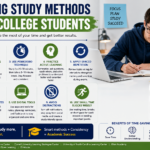

College life can be exciting, but it can also feel overwhelming. Students often deal with lectures, assignments, exams, projects, internships, social activities, and personal responsibilities at the same time. Many students believe that studying for long hours is the only way to get good grades. However, success in college is not always about studying harder; it is about studying smarter.
Why Studying Smarter Matters in College
College subjects are often more detailed and demanding than school-level studies. Students are expected to understand concepts deeply, think critically, and apply knowledge in exams or real-world situations. Simply memorizing everything at the last minute may not work.
Studying smarter helps students save time and energy. It improves concentration, increases retention, and builds confidence before exams. It also prevents burnout, which is common among students who study for long hours without proper planning. When students use effective study strategies, they can learn more in less time and perform better academically.
Create a Realistic Study Schedule
A study schedule is one of the most important tools for college success. Without a proper plan, students may waste time deciding what to study or leave important topics for the last moment. A realistic schedule helps divide study time across different subjects and tasks.
Start by listing all your classes, assignments, exams, and deadlines. Then, break your study sessions into smaller blocks. For example, instead of studying one subject for five hours continuously, study for 45 to 60 minutes and then take a short break. This keeps your brain fresh and improves focus.
Make sure your schedule is flexible. College life can be unpredictable, so leave some extra time for revision, unexpected tasks, or difficult topics. A good study plan should support your routine, not make you feel stressed.
Use Active Learning Techniques
One of the biggest mistakes students make is passive studying. Passive studying includes only reading textbooks, highlighting lines, or copying notes without thinking deeply. These methods may feel productive, but they often do not help with long-term understanding.
Active learning is much more effective. It means engaging with the material instead of just looking at it. You can use methods such as summarizing topics in your own words, asking questions, teaching the concept to a friend, solving practice problems, or creating flashcards.
When you actively work with information, your brain processes it better. This helps you remember concepts during exams and apply them more confidently.
Take Better Notes in Class
Good notes can make studying much easier. Instead of writing every word your professor says, focus on key ideas, definitions, examples, and explanations. Try to organize your notes clearly so they are easy to review later.
One popular method is the Cornell note-taking system. In this method, you divide your page into sections for main notes, key points, and summary. This helps you review quickly and understand the topic better. You can also use bullet points, diagrams, charts, and mind maps.
After class, spend 10 to 15 minutes reviewing your notes. This small habit can improve memory and reduce the amount of time needed before exams.
Practice Retrieval Instead of Rereading
Many students reread notes again and again before exams. While rereading feels easy, it is not always the best way to remember information. A smarter method is retrieval practice.
Retrieval practice means testing yourself without looking at your notes. For example, close your book and try to write down everything you remember about a topic. You can also answer practice questions, use flashcards, or explain the topic aloud.
This method strengthens memory because it forces your brain to recall information. The more you practice recalling, the easier it becomes to remember during exams.
Use Spaced Repetition for Better Memory
Cramming the night before an exam may help you remember some information for a short time, but it usually does not support long-term learning. Spaced repetition is a smarter study technique that involves reviewing information at regular intervals.
For example, you can review a topic on the same day you learn it, then again after two days, after one week, and before the exam. This repeated exposure helps move information from short-term memory to long-term memory.
Students can use flashcard apps, digital calendars, or simple notebooks to apply spaced repetition. It is especially useful for subjects that require memorization, such as biology, history, medicine, law, or language learning.
Avoid Multitasking While Studying
Many college students try to study while checking messages, watching videos, or scrolling social media. This reduces focus and makes studying take longer. Multitasking divides attention and makes it harder to understand and remember information.
To study smarter, create a distraction-free environment. Keep your phone away or use focus mode. Choose a quiet place, organize your study materials, and set a clear goal for each session. For example, instead of saying “I will study chemistry,” say “I will complete chapter 3 notes and solve 15 practice questions.”
Clear goals help your mind stay focused and make study sessions more productive.
Take Smart Breaks
Studying for long hours without breaks can lead to mental fatigue. Your brain needs rest to process information. Taking short breaks improves focus, creativity, and memory.
You can use the Pomodoro technique, where you study for 25 minutes and take a 5-minute break. After four sessions, take a longer break of 15 to 30 minutes. During breaks, avoid scrolling endlessly on your phone. Instead, stretch, drink water, walk around, or rest your eyes.
Smart breaks help you return to studying with more energy and better concentration.
Understand Your Learning Style
Every student learns differently. Some students understand better through visuals, while others learn by listening, writing, or practicing. Knowing your learning style can help you choose better study methods.
Visual learners can use diagrams, flowcharts, mind maps, and color-coded notes. Auditory learners may benefit from recorded lectures, group discussions, or explaining topics aloud. Kinesthetic learners may learn better by solving problems, doing experiments, or using real-life examples.
However, do not limit yourself to only one method. Combining different learning techniques often gives the best results.
Join Study Groups Wisely
Study groups can be helpful when used properly. Discussing topics with classmates can improve understanding and expose you to different perspectives. Group study is especially useful for solving difficult problems, preparing for presentations, or reviewing exam topics.
However, study groups can become distracting if there is no structure. To make them effective, set a clear agenda before starting. Decide which topics to cover, assign tasks, and keep the discussion focused. A small group of serious students is usually better than a large group with no direction.
Prioritize Health and Sleep
Many students sacrifice sleep to study more, especially before exams. This may seem productive, but lack of sleep can harm memory, focus, and decision-making. A tired brain cannot learn effectively.
Getting enough sleep, eating healthy food, drinking water, and exercising regularly are important for academic success. Even a short walk or light workout can reduce stress and improve concentration. A healthy body supports a sharp mind.
Studying smarter means taking care of yourself, not just your books.
Use Technology the Right Way
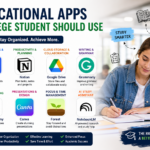
Technology can be a powerful study tool when used wisely. Students can use apps for note-taking, flashcards, time management, grammar checking, online courses, and research. Digital calendars can help track deadlines, while productivity apps can block distractions.
AI tools can also help students summarize concepts, generate practice questions, explain difficult topics, and organize study plans. However, technology should support learning, not replace it. Students should still think critically, verify information, and understand concepts deeply.
Review Regularly Before Exams
Exam preparation becomes easier when students review regularly. Waiting until the last week creates pressure and increases stress. Regular review helps you stay prepared throughout the semester.
At the end of each week, revise important topics, update your notes, and identify weak areas. Before exams, focus more on practice questions, previous papers, summaries, and difficult concepts. This approach reduces last-minute panic and improves confidence.
Common Mistakes College Students Should Avoid
Some common study mistakes include cramming, studying without a plan, ignoring difficult subjects, multitasking, skipping revision, and not asking for help. Many students also spend too much time making notes look perfect instead of understanding the content.
To study smarter, focus on progress rather than perfection. Ask professors, classmates, or tutors for help when needed. Identify what works for you and keep improving your study routine.
Source
https://l1nq.com/12hm7p8
https://sl1nk.com/fhjnfs8
Conclusion
Studying smarter, not harder, is one of the best ways to succeed in college. It helps students save time, reduce stress, and improve academic results. Smart study habits such as active learning, spaced repetition, retrieval practice, better note-taking, proper scheduling, and regular revision can make a big difference.
College success does not depend only on how many hours you study. It depends on how effectively you use those hours. By staying organized, avoiding distractions, taking care of your health, and using proven study methods, you can become a more confident and successful student.
FAQs
1. What does it mean to study smarter, not harder?
Studying smarter means using effective study techniques that help you learn faster and remember better. It focuses on quality study time instead of simply studying for long hours.
2. What is the best study method for college students?
Some of the best study methods include active learning, retrieval practice, spaced repetition, note summarization, and solving practice questions.
3. How many hours should a college student study daily?
The ideal study time depends on the course and workload. However, 2 to 4 focused hours daily can be more effective than long, distracted study sessions.
4. How can I improve concentration while studying?
You can improve concentration by removing distractions, setting clear goals, using short study sessions, taking breaks, and studying in a quiet environment.
5. Is group study helpful for college students?
Yes, group study can be helpful if it is organized and focused. It allows students to discuss ideas, solve problems, and understand topics better.