How to Evaluate Academic Excellence Beyond College Brochures: The Complete 2026 Guide to Choosing the Right College for Long-Term Success

Selecting the right college is one of the most important decisions a student will make, yet many applicants rely heavily on glossy brochures, promotional websites, and marketing campaigns when comparing institutions. While these materials provide useful information about courses.
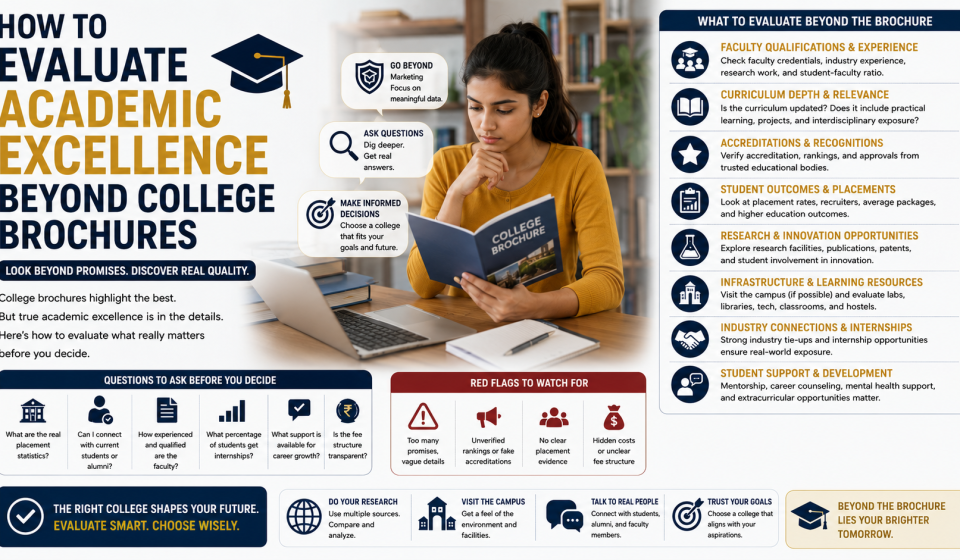
In 2026, higher education has become increasingly competitive, with colleges offering a wide range of programs, modern infrastructure, global partnerships, and career-focused initiatives. However, impressive photographs, attractive rankings in advertisements, and eye-catching slogans do not always reflect the actual quality of education. Academic excellence is determined by factors such as faculty expertise, curriculum relevance, teaching methods, research opportunities, student support services, learning resources, industry exposure, graduate outcomes, and the overall academic environment.
Why College Brochures Should Not Be Your Only Source
College brochures are designed to introduce an institution and highlight its achievements.
However, they may not provide complete information about:
- Teaching quality
- Academic challenges
- Student experiences
- Faculty accessibility
- Graduate outcomes
Students should gather information from multiple reliable sources.
Examine Faculty Qualifications
Strong academic institutions often have faculty members who demonstrate:
- Advanced academic qualifications
- Teaching experience
- Research involvement
- Industry expertise
- Professional development
Experienced faculty contribute significantly to learning quality.
Review the Curriculum
An excellent curriculum should include:
- Updated course content
- Practical learning opportunities
- Industry relevance
- Skill development
- Interdisciplinary learning
Modern curricula should evolve with changing industry needs.
Evaluate Teaching Methods
Look for colleges that encourage:
- Interactive classrooms
- Project-based learning
- Case studies
- Laboratory experience
- Collaborative learning
Engaging teaching methods improve understanding and retention.
Research Academic Resources
Quality learning depends on access to resources such as:
- Well-equipped libraries
- Digital learning platforms
- Research laboratories
- Innovation centers
- Academic databases
Learning resources enhance educational experiences.
Understand Student Support Services
Academic success is strengthened through services including:
- Academic advising
- Career counseling
- Tutoring
- Mental health support
- Internship assistance
Comprehensive support contributes to better student outcomes.
Explore Research Opportunities
Research activities help students develop:
- Critical thinking
- Problem-solving abilities
- Analytical skills
- Innovation
- Independent learning
Participation in research strengthens academic development.
Assess Industry Exposure
Career-focused colleges often provide:
- Internship opportunities
- Industry projects
- Guest lectures
- Professional workshops
- Employer networking events
Practical exposure prepares students for the workplace.
Learn From Current Students and Alumni
Speaking with students and graduates can provide valuable insights into:
- Classroom experiences
- Faculty support
- Campus culture
- Internship opportunities
- Career preparation
First-hand experiences often reveal information not found in brochures.
Evaluate Graduate Outcomes
Important indicators include:
- Employment opportunities
- Higher education admissions
- Professional certifications
- Entrepreneurship support
- Alumni achievements
Graduate success reflects educational effectiveness.
Visit the Campus Whenever Possible
Campus visits allow students to observe:
- Classroom environments
- Learning facilities
- Student interactions
- Campus culture
- Overall atmosphere
Personal observation supports informed decision-making.
Choose a College That Matches Your Goals
Consider whether the institution aligns with your:
- Academic interests
- Career aspirations
- Learning style
- Financial situation
- Personal values
The right fit is often more important than popularity.
Make an Evidence-Based Decision
Before finalizing admission, review:
- Official accreditation
- Academic programs
- Faculty information
- Student services
- Career support
- Verified public information
A balanced evaluation leads to greater confidence in your decision.
Source
https://www.ugc.gov.in
https://www.aicte-india.org
https://www.naac.gov.in
https://www.education.gov.in
https://www.nirfindia.org
Conclusion
Academic excellence cannot be measured by attractive brochures alone. While promotional materials introduce important features of a college, students should also evaluate faculty quality, curriculum design, teaching methods, research opportunities, academic resources, industry exposure, student support services, graduate outcomes, and institutional accreditation before making an admission decision. Careful research, campus visits, conversations with current students and alumni, and the use of verified public information provide a more complete understanding of an institution’s true academic strengths. Choosing a college based on evidence rather than marketing helps students build a stronger educational foundation, develop valuable professional skills, and achieve greater long-term career success.
FAQ
1. Why shouldn’t students rely only on college brochures?
College brochures mainly highlight an institution’s strengths for promotional purposes and may not provide complete information about teaching quality, student experiences, academic support, or career outcomes.
2. What are the most important indicators of academic excellence?
Faculty qualifications, curriculum quality, teaching methods, research opportunities, accreditation, academic resources, student support services, and graduate outcomes are among the key indicators.
3. How can students verify a college’s academic quality?
Students should review official accreditation, institutional websites, government education portals, verified rankings, campus visits, and conversations with current students and alumni.
4. Why are faculty members important when evaluating a college?
Experienced and qualified faculty contribute to better teaching, mentorship, research opportunities, and overall academic development.
5. Does industry exposure matter during college?
Yes. Internships, industry projects, workshops, guest lectures, and employer interactions help students develop practical skills and improve career readiness.
6. Should students visit campuses before admission?
Whenever possible, campus visits allow students to evaluate learning facilities, classroom environments, campus culture, and overall educational atmosphere.
7. Is choosing the most popular college always the best option?
Not necessarily. The best college is one that aligns with your academic interests, career goals, learning style, financial situation, and long-term aspirations.
8. How does academic excellence influence future career success?
High-quality education develops critical thinking, technical knowledge, communication skills, practical experience, and lifelong learning abilities that employers highly value.