How to Evaluate a College’s Student Success Rate Beyond Placements: A Complete Guide to Choosing the Right College for Long-Term Career Growth

Choosing the right college is one of the most important decisions a student will make, and many applicants often judge institutions primarily by their placement statistics.
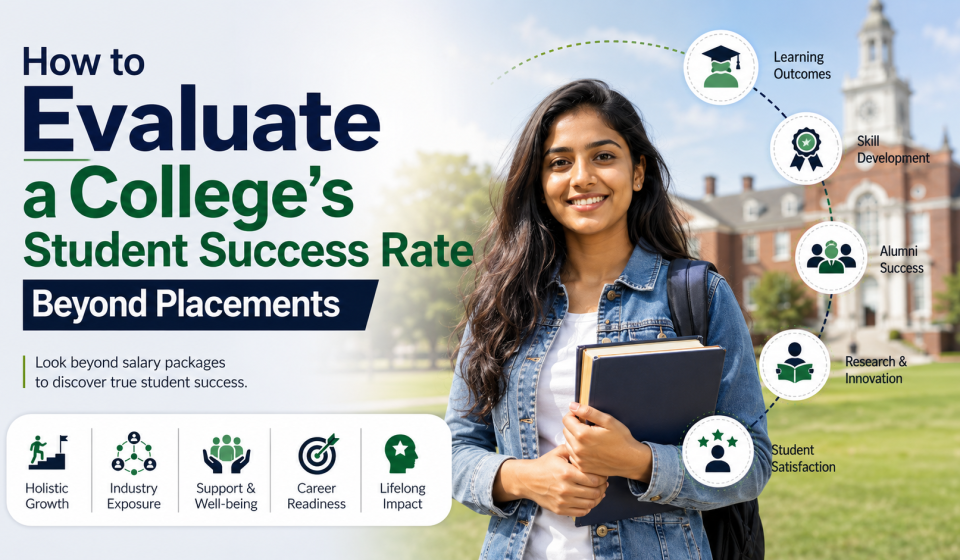
Today’s employers value graduates who possess technical expertise, communication skills, adaptability, leadership qualities, critical thinking, and practical experience. Likewise, students increasingly seek colleges that offer mentorship, internships, research opportunities, global exposure, entrepreneurship support, and holistic development rather than focusing only on placement records. Evaluating a college through these broader measures provides a more accurate understanding of the educational experience and the long-term outcomes it can deliver. This comprehensive guide explains how students and parents can assess a college’s student success rate beyond placements and make informed admission decisions that support academic excellence and future career growth.
Why Placement Percentage Alone Is Not Enough
Placement statistics often highlight the number of students who receive job offers, but they rarely provide the complete picture.
A placement report may not reveal:
- Average career growth after graduation
- Student satisfaction
- Higher education admissions
- Entrepreneurship success
- Research achievements
- Skill development opportunities
- Alumni accomplishments
A broader evaluation provides better insight into overall student success.
What Defines Student Success?
Student success refers to the overall academic, professional, and personal achievements students accomplish during and after college.
Key indicators include:
- Academic excellence
- Skill development
- Career readiness
- Leadership abilities
- Research participation
- Entrepreneurial achievements
- Personal growth
- Lifelong learning
- Community engagement
- Global opportunities
These factors contribute to sustainable career success.
Evaluate Academic Quality
Strong academics remain the foundation of student development.
Look for:
- Qualified faculty members
- Updated curriculum
- Practical learning methods
- Small class sizes
- Interactive teaching
- Industry-relevant subjects
Quality education improves long-term employability.
Review Faculty Expertise
Faculty significantly influence student outcomes.
Consider:
- Teaching experience
- Research publications
- Industry exposure
- Student mentorship
- Professional certifications
- Accessibility outside classrooms
Experienced faculty create better learning environments.
Examine Student Learning Outcomes
Good colleges clearly define what students should achieve.
Learning outcomes may include:
- Technical competency
- Communication skills
- Critical thinking
- Problem-solving ability
- Ethical decision-making
- Team collaboration
These outcomes prepare students for professional success.
Check Internship Opportunities
Internships provide practical workplace experience before graduation.
Evaluate whether the college offers:
- Industry internships
- Summer training
- Live projects
- Corporate partnerships
- Internship guidance
- Placement preparation
Internships improve employability and confidence.
Assess Industry Collaboration
Industry partnerships strengthen practical education.
Look for colleges that organize:
- Guest lectures
- Industrial visits
- Hackathons
- Workshops
- Corporate mentorship
- Sponsored projects
Industry interaction bridges classroom learning with workplace expectations.
Research Higher Education Success
Student success also includes postgraduate achievements.
Check whether graduates pursue:
- Master’s programs
- MBA admissions
- International universities
- Research fellowships
- Doctoral programs
- Competitive examinations
Strong academic progression reflects educational quality.
Explore Research Opportunities
Research develops innovation and analytical thinking.
Consider whether students participate in:
- Faculty research
- Innovation labs
- Research publications
- National conferences
- International seminars
- Patent development
Research experience benefits future careers.
Evaluate Entrepreneurship Support
Many successful graduates become entrepreneurs instead of employees.
Look for:
- Startup incubation centers
- Innovation hubs
- Business competitions
- Entrepreneurship mentoring
- Seed funding support
- Startup networking events
Entrepreneurship encourages innovation and leadership.
Analyze Student Development Programs
Holistic development extends beyond academics.
Useful programs include:
- Personality development
- Leadership workshops
- Communication training
- Career counseling
- Soft skills training
- Financial literacy
These programs prepare students for diverse career paths.
Measure Alumni Success
Successful alumni reflect the quality of education.
Research:
- Leadership positions
- Entrepreneurial achievements
- Research contributions
- Government service
- International careers
- Social impact
Alumni accomplishments demonstrate long-term institutional value.
Evaluate Campus Learning Culture
A supportive learning environment improves student success.
Indicators include:
- Collaborative classrooms
- Student engagement
- Innovation culture
- Faculty interaction
- Peer learning
- Academic support
Positive learning environments encourage growth.
Assess Career Development Services
Career support should continue throughout college.
Important services include:
- Career counseling
- Resume workshops
- Mock interviews
- Networking events
- Internship guidance
- Skill development sessions
Career preparation should begin early.
Examine Extracurricular Opportunities
Extracurricular activities strengthen personal development.
Students benefit from:
- Student clubs
- Technical societies
- Sports
- Cultural events
- Community service
- Leadership roles
Balanced development improves employability.
Consider Student Support Services
Comprehensive support contributes to better outcomes.
Look for:
- Academic mentoring
- Mental wellness support
- Peer tutoring
- Library resources
- Digital learning platforms
- Accessibility services
Support systems help students overcome challenges.
Evaluate Global Exposure
International experiences broaden perspectives.
Some colleges offer:
- Student exchange programs
- International collaborations
- Foreign internships
- Global certifications
- Collaborative research
- Cross-cultural learning
Global exposure enhances career opportunities.
Check Innovation and Practical Learning
Practical education improves understanding.
Look for:
- Laboratories
- Simulation centers
- Project-based learning
- Industry case studies
- Innovation competitions
- Design thinking workshops
Hands-on learning builds confidence.
Review Skill Development Initiatives
Modern employers seek graduates with multiple competencies.
Essential skills include:
- Digital literacy
- Artificial intelligence awareness
- Data analysis
- Public speaking
- Leadership
- Teamwork
Continuous skill development supports career growth.
Questions Students Should Ask Before Admission
Before choosing a college, ask:
- What percentage of students complete internships?
- How many students pursue higher education?
- What research opportunities are available?
- Does the college support startups?
- What career counseling services exist?
- How active is the alumni network?
- What leadership opportunities are available?
- How frequently are industry experts invited?
These questions reveal valuable insights.
Student Success Throughout College
During the first year, students should receive orientation, mentoring, and academic support to adapt to college life. In the second year, opportunities for practical learning, technical workshops, and extracurricular involvement become increasingly important. Third-year students should gain internship experience, research exposure, leadership opportunities, and professional networking. By the final year, colleges should provide career counseling, placement preparation, entrepreneurship support, higher education guidance, and industry interaction that prepares graduates for multiple career pathways.
Common Mistakes Students Make While Evaluating Colleges
Many students focus only on placement percentages, campus size, or popularity while overlooking academic quality, faculty expertise, student support services, and long-term career development. Others rely entirely on promotional brochures without verifying accreditation, alumni outcomes, internship opportunities, or industry collaborations. Some ignore research facilities, innovation culture, and personal development programs that significantly influence future success. A balanced evaluation helps students choose a college that aligns with both their academic interests and career aspirations.
The Future of Student Success in Higher Education
Higher education is rapidly evolving with artificial intelligence, digital learning, interdisciplinary education, entrepreneurship, and global collaboration becoming central to student development. Colleges are increasingly measured by graduate employability, innovation, research contributions, startup creation, leadership development, and lifelong learning rather than placement statistics alone. Institutions that integrate academic excellence with practical learning, industry engagement, student well-being, and continuous skill development will produce graduates capable of thriving in dynamic global careers. Students who evaluate colleges using these broader success indicators will make better admission decisions and build stronger foundations for lifelong achievement.
Source
https://www.ugc.gov.in
https://www.aicte-india.org
https://www.nirfindia.org
https://www.naac.gov.in
Conclusion
Evaluating a college’s student success rate requires looking beyond placement statistics and considering the complete educational experience. Academic quality, faculty expertise, internship opportunities, research exposure, entrepreneurship support, student development programs, alumni achievements, industry collaboration, career counseling, and global learning opportunities all contribute to long-term success. A college that nurtures knowledge, innovation, leadership, adaptability, and lifelong learning prepares students not only for their first job but also for sustained professional growth. By carefully assessing these broader indicators, students and parents can confidently choose an institution that supports academic excellence, career readiness, and meaningful personal development.
FAQ
1. Why shouldn’t students rely only on placement statistics when choosing a college?
Placement percentages show only the number of students who receive jobs. They do not reflect academic quality, faculty expertise, internships, research opportunities, entrepreneurship support, alumni success, or long-term career growth.
2. What are the best indicators of student success in a college?
Important indicators include academic outcomes, faculty quality, internship opportunities, research participation, higher education admissions, entrepreneurship support, leadership development, alumni achievements, and career services.
3. How do internships contribute to student success?
Internships provide practical experience, improve technical and professional skills, enhance confidence, strengthen resumes, and help students understand workplace expectations before graduation.
4. Why is alumni success important when evaluating a college?
Successful alumni demonstrate the long-term value of a college’s education, mentorship, industry connections, and career development programs across different professions.
5. How can students verify a college’s claims about student success?
Students should review official accreditation, NIRF and NAAC information, internship records, alumni profiles, faculty credentials, placement reports, research achievements, and speak with current students or graduates whenever possible.
6. Does a college with moderate placement numbers still provide excellent education?
Yes. Some colleges focus strongly on research, higher education, entrepreneurship, public service, innovation, and skill development. Evaluating the overall educational environment provides a more complete understanding of student success.