How to Evaluate a College’s Student Development Programs Before Admission: A Complete Guide to Choosing the Right College for Academic and Career Success

Choosing the right college involves much more than comparing rankings, tuition fees, or campus facilities. One of the most important factors that students and parents should evaluate before admission is the quality of a college’s student development programs.
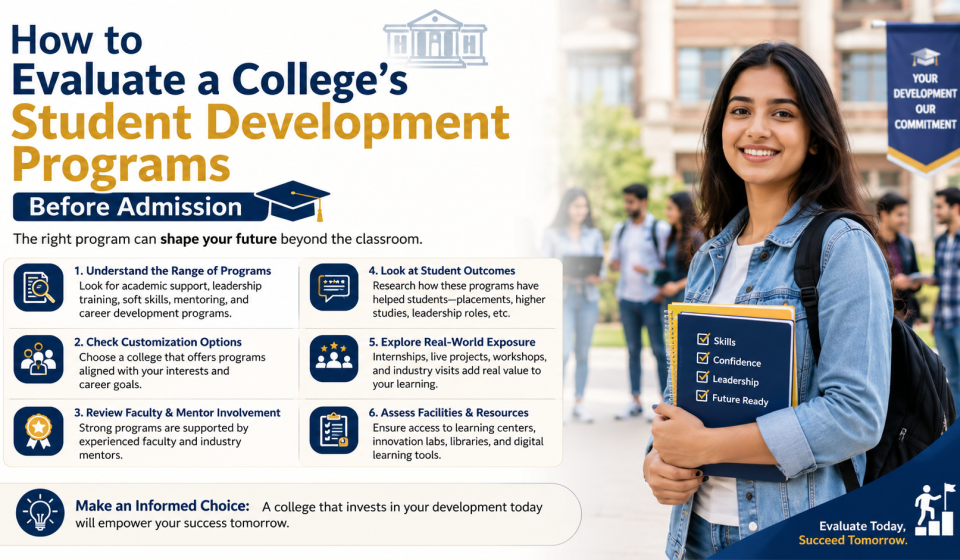
Today’s employers seek graduates who possess technical knowledge as well as essential soft skills such as leadership, teamwork, critical thinking, adaptability, communication, and problem-solving. Colleges that invest in comprehensive student development create learning environments where students gain practical experience, build confidence, expand professional networks, and prepare for future careers. Before selecting a college, prospective students should carefully examine the institution’s development programs, student support services, industry partnerships, extracurricular opportunities, and career preparation initiatives. This comprehensive guide explains how to evaluate a college’s student development programs before admission and highlights the key factors that contribute to long-term academic, professional, and personal success.
What Are Student Development Programs?
Student development programs are structured initiatives that help students build academic, professional, personal, and leadership skills throughout college.
These programs may include:
- Leadership development
- Career counseling
- Personality development
- Communication skills training
- Internship support
- Research opportunities
- Entrepreneurship programs
- Mentorship initiatives
- Community engagement
- Life skills workshops
These programs complement classroom learning.
Why Student Development Matters
A college education should prepare students for both employment and lifelong learning.
Strong development programs help students:
- Build confidence
- Improve communication
- Strengthen leadership
- Develop teamwork
- Enhance problem-solving
- Prepare for future careers
Holistic development increases career readiness.
Evaluate Career Development Services
Career support is one of the most valuable student services.
Look for:
- Career counseling
- Resume-building workshops
- Mock interviews
- Internship assistance
- Placement preparation
- Career fairs
Effective career services improve employment opportunities.
Assess Leadership Opportunities
Leadership experience develops valuable workplace skills.
Check whether the college offers:
- Student councils
- Leadership training
- Club management roles
- Volunteer projects
- Event coordination
Leadership experiences strengthen professional growth.
Review Internship and Industry Exposure
Practical learning bridges academic knowledge and workplace expectations.
Important opportunities include:
- Industry internships
- Industrial visits
- Live projects
- Corporate collaborations
- Guest lectures
- Skill development programs
Industry exposure improves employability.
Examine Research Opportunities
Research develops analytical thinking and innovation.
Evaluate whether students have access to:
- Faculty-guided research
- Research laboratories
- Innovation centers
- Academic conferences
- Publication opportunities
Research experience strengthens academic profiles.
Check Entrepreneurship Support
Students interested in starting businesses benefit from entrepreneurial resources.
Look for:
- Startup incubation centers
- Business competitions
- Innovation labs
- Entrepreneurship mentoring
- Funding guidance
Entrepreneurship programs encourage innovation.
Evaluate Communication Skill Development
Communication skills remain essential across every profession.
Colleges may provide:
- Public speaking workshops
- Debate clubs
- Presentation training
- Business communication courses
- Language development programs
Strong communication improves career success.
Mentorship Programs Matter
Mentors provide valuable academic and professional guidance.
Effective mentoring may include:
- Faculty mentoring
- Alumni mentoring
- Industry experts
- Peer mentoring
Mentorship supports student growth.
Student Wellness and Support Services
Personal well-being contributes to academic success.
Evaluate services such as:
- Counseling centers
- Mental health support
- Academic advising
- Wellness programs
- Health services
Student wellness promotes better learning.
Clubs, Organizations, and Campus Activities
Extracurricular participation develops practical skills.
Look for:
- Technical clubs
- Cultural organizations
- Sports activities
- Volunteer programs
- Professional societies
Campus involvement builds confidence.
Alumni Engagement
Strong alumni networks provide valuable career guidance.
Consider:
- Alumni mentoring
- Networking events
- Career talks
- Internship referrals
- Professional networking opportunities
Successful alumni strengthen student outcomes.
Questions to Ask Before Admission
Prospective students should ask:
- What student development programs are available?
- How are internships arranged?
- Are leadership opportunities available?
- What percentage of students participate in development programs?
- What career services are offered?
- Are mentorship opportunities available?
These questions provide useful insight into campus life.
Common Mistakes to Avoid
Students often focus only on rankings, campus appearance, or placement statistics while overlooking development opportunities. A college with comprehensive student development programs often prepares graduates more effectively for long-term career success than one that emphasizes academics alone.
The Future of Student Development
Artificial intelligence, digital learning platforms, virtual internships, personalized career coaching, entrepreneurship ecosystems, interdisciplinary education, global collaboration, innovation centers, and industry partnerships will continue transforming student development programs and preparing graduates for future careers.
Source
https://www.ugc.gov.in
https://www.aicte-india.org
https://www.education.gov.in
https://www.naac.gov.in
Conclusion
Evaluating a college’s student development programs before admission is essential for choosing an institution that supports both academic excellence and lifelong career success. Strong programs in leadership, communication, internships, research, entrepreneurship, mentorship, wellness, and career development provide students with practical experiences that extend far beyond classroom learning. By carefully examining these opportunities, students can select a college that aligns with their personal goals, strengthens their professional skills, and prepares them for a rapidly changing global workforce. Investing time in evaluating student development programs today can lead to greater confidence, employability, and success in the future.
FAQ
1. What are student development programs in colleges?
Student development programs include leadership training, career counseling, internships, communication skills, research opportunities, entrepreneurship support, mentorship, and wellness initiatives that help students grow academically and professionally.
2. Why should students evaluate development programs before admission?
These programs influence career readiness, leadership skills, employability, personal growth, networking opportunities, and overall college experience.
3. Which student development services are most important?
Career counseling, internship assistance, leadership development, communication training, mentorship programs, research opportunities, entrepreneurship support, and wellness services are among the most valuable.
4. How can students learn about a college’s development programs?
Students can review the college website, attend admission sessions, visit the campus, speak with current students and alumni, explore placement reports, and ask detailed questions during counseling sessions.
5. Do student development programs improve employability?
Yes. They help students develop practical workplace skills, professional confidence, leadership abilities, communication skills, and industry experience that employers highly value.
6. Should rankings be the only factor when choosing a college?
No. Students should also evaluate academic quality, faculty expertise, infrastructure, internships, industry collaborations, student development programs, research opportunities, campus culture, and career support services.