How to Evaluate a College’s Industry Exposure Before Applying: The Ultimate Guide to Choosing a Career-Focused Institution

Selecting the right college is one of the most important investments in a student’s future. While rankings, campus infrastructure, and tuition fees often influence admission decisions, one critical factor is frequently overlooked—industry exposure. In today’s highly competitive job market.
Industry exposure refers to the opportunities a college provides for students to interact with businesses, professionals, startups, research organizations, and employers during their academic journey. These opportunities include internships, industrial visits, live projects, guest lectures, corporate mentorship, workshops, certification programs, research collaborations, innovation centers, startup incubators, and campus recruitment drives. Such experiences enable students to understand workplace expectations, develop practical skills, build professional networks, and improve their employability before graduation.
Why Industry Exposure Matters
Industry exposure allows students to connect academic learning with real-world applications.
Its benefits include:
- Practical experience
- Career readiness
- Professional networking
- Improved employability
- Better problem-solving skills
- Increased confidence
Students become more prepared for workplace expectations.
Check Internship Opportunities
Internships are one of the strongest indicators of industry engagement.
Look for colleges that offer:
- Mandatory internships
- Summer internships
- Paid internships
- Internship partnerships
- Placement-linked internships
Practical workplace experience enhances career prospects.
Evaluate Industry Partnerships
Strong colleges collaborate with:
- Multinational companies
- Startups
- Government organizations
- Research institutions
- Manufacturing industries
Industry partnerships improve learning opportunities.
Guest Lectures and Expert Sessions
Leading institutions regularly invite:
- Industry experts
- Business leaders
- Entrepreneurs
- Researchers
- Corporate executives
Students gain valuable professional insights directly from experienced practitioners.
Industrial Visits
Industrial visits help students:
- Observe workplace operations
- Understand manufacturing processes
- Learn industry standards
- Explore emerging technologies
These experiences complement classroom education.
Live Industry Projects
Some colleges allow students to work on real business challenges.
Benefits include:
- Practical problem-solving
- Team collaboration
- Client communication
- Project management
- Portfolio development
Live projects strengthen resumes and interview performance.
Placement Performance
Placement records often reflect the quality of industry engagement.
Review:
- Placement percentage
- Recruiting companies
- Average salary packages
- Internship-to-job conversion rates
- Alumni placement success
Consistent placement trends are more valuable than isolated achievements.
Corporate Mentorship
Mentorship programs connect students with experienced professionals.
Mentors help students:
- Plan careers
- Improve technical skills
- Build professional confidence
- Prepare for interviews
Professional guidance accelerates career development.
Skill Development Programs
Industry-focused colleges emphasize:
- Communication skills
- Leadership
- Teamwork
- Digital literacy
- Technical certifications
- Professional ethics
These skills increase employability.
Research and Innovation
Innovation-driven colleges encourage:
- Industry-sponsored research
- Product development
- Startup incubation
- Patent support
- Innovation competitions
Research opportunities improve career and higher education prospects.
Entrepreneurship Support
Many institutions provide:
- Startup incubators
- Business mentoring
- Funding guidance
- Innovation labs
- Entrepreneurship workshops
Students interested in business creation benefit greatly from these resources.
Alumni Network
A successful alumni network demonstrates strong industry relationships.
Evaluate:
- Alumni achievements
- Leadership positions
- Corporate presence
- Entrepreneurial success
Alumni often support internships and campus recruitment.
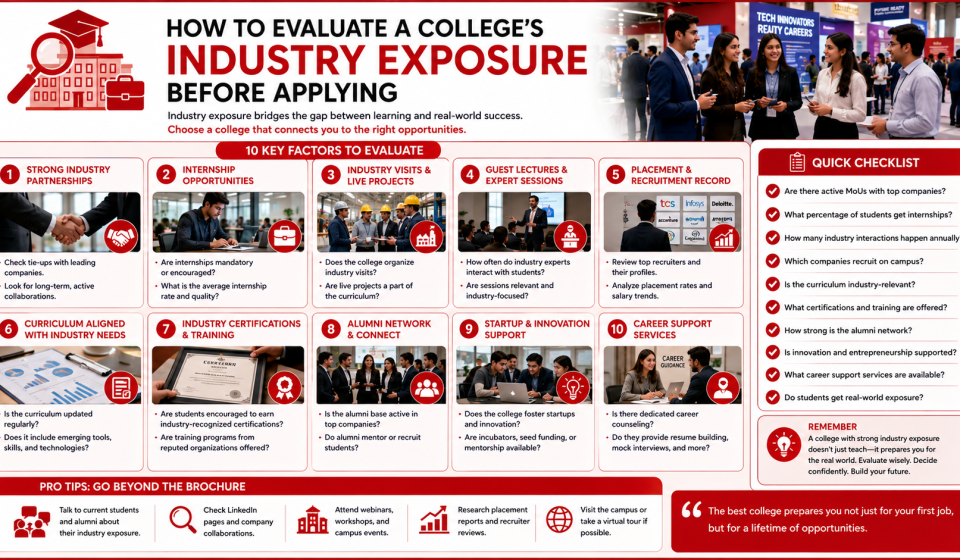
Questions to Ask Before Applying
Before selecting a college, ask:
- Which companies recruit from the campus?
- Are internships compulsory?
- How often are industrial visits conducted?
- Are live projects included in the curriculum?
- Does the college have corporate partnerships?
- What career guidance services are available?
The answers provide valuable insight into industry engagement.
Source
https://www.ugc.gov.in
https://www.aicte-india.org
https://www.education.gov.in
https://www.nirfindia.org
https://www.nsdcindia.org
Conclusion
Industry exposure has become one of the most important factors in higher education because it prepares students for successful careers beyond the classroom. Colleges that offer internships, corporate partnerships, industrial visits, live projects, mentorship programs, research collaborations, entrepreneurship support, and strong placement services help students develop practical skills, professional confidence, and valuable industry connections. When evaluating colleges before applying, students should look beyond rankings and reputation to assess how effectively an institution integrates academic learning with real-world professional experiences. Choosing a college with strong industry exposure is an investment in career readiness, employability, and long-term professional success.
FAQ
1. What is industry exposure in college education?
Industry exposure refers to opportunities that allow students to interact with businesses and professionals through internships, industrial visits, live projects, guest lectures, research collaborations, mentorship, and corporate partnerships.
2. Why is industry exposure important for students?
Industry exposure develops practical skills, improves employability, strengthens professional networks, enhances workplace understanding, and prepares students for successful careers.
3. How can students evaluate a college’s industry exposure?
Students should review internship programs, placement records, corporate partnerships, industrial visits, guest lectures, live projects, alumni success, research collaborations, and entrepreneurship initiatives.
4. Are internships more important than classroom learning?
Both are important. Classroom education builds theoretical knowledge, while internships provide practical experience that helps students apply what they have learned in real workplace settings.
5. How do industry partnerships improve education?
Industry partnerships provide practical training, internships, corporate mentoring, guest lectures, live projects, research opportunities, certifications, and improved campus recruitment.
6. Why should students examine placement records carefully?
Placement statistics reveal how effectively a college prepares students for employment and demonstrate the strength of its relationships with recruiting organizations.
7. Can industry exposure help students who plan higher education instead of jobs?
Yes. Industry experience strengthens research skills, practical knowledge, innovation, and academic profiles, which are valuable for postgraduate admissions and international study opportunities.
8. What should students ask colleges before taking admission?
Students should ask about internship opportunities, recruiting companies, placement statistics, industry collaborations, corporate mentorship, industrial visits, certification programs, research projects, startup support, and career guidance services before making their final admission decision.