How to Choose Between Government, Private, and Deemed Universities: The Ultimate Student Guide to Making the Right Higher Education Decision in 2026

Choosing the right university is one of the biggest decisions in a student’s academic journey. The institution you select not only shapes your education but also influences your career opportunities, professional network, personality development, and future earning potential.
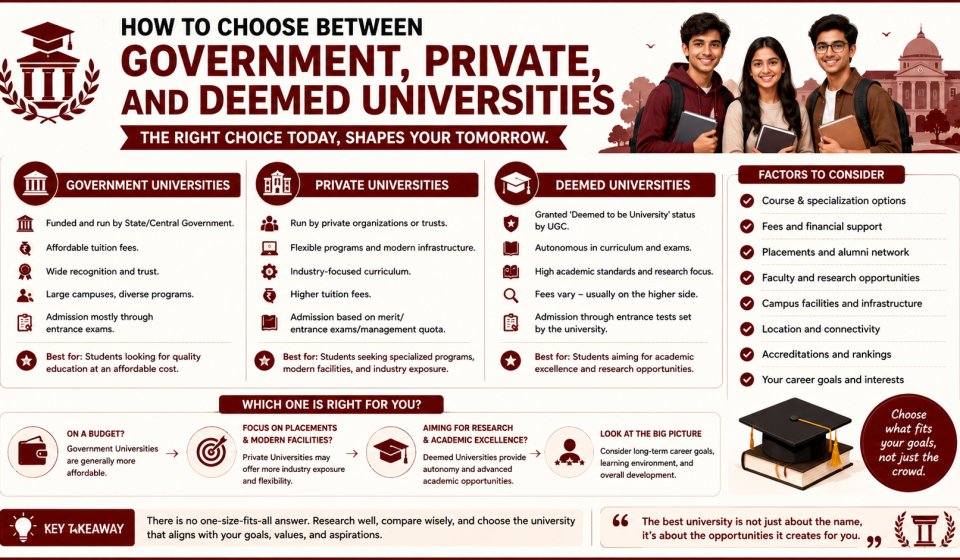
Many students and parents assume that one type of university is always better than another. However, the truth is that the best choice depends on your academic goals, financial situation, preferred course, career aspirations, learning style, and long-term plans. A highly ranked government university may offer affordable education and excellent research opportunities, while a reputed private university may provide industry-oriented curricula, modern infrastructure, international collaborations, and stronger placement support. Similarly, well-established deemed universities often combine academic flexibility with advanced research facilities and specialized programs.
Understanding Government Universities
Government universities are established and funded by the Central or State Governments.
They are generally known for:
- Affordable tuition fees
- Strong academic reputation
- Experienced faculty
- Research opportunities
- Public funding
- Wide course offerings
Many government universities have decades of educational excellence.
Understanding Private Universities
Private universities are established by private educational organizations or trusts and operate under the regulations of the University Grants Commission (UGC).
They often focus on:
- Modern infrastructure
- Industry-oriented curriculum
- Skill development
- International collaborations
- Advanced technology
- Career-focused education
Many private universities invest heavily in innovation and student services.
Understanding Deemed-to-be Universities
Deemed-to-be Universities are institutions granted special status by the Government of India based on their academic excellence and research performance.
They typically offer:
- Academic autonomy
- Flexible curriculum
- Research-driven education
- Specialized programs
- Innovation-focused learning
- Advanced laboratories
Many deemed universities are recognized for excellence in specific disciplines.
Compare Tuition Fees
One of the biggest differences is cost.
Generally:
- Government universities have lower tuition fees.
- Private universities often charge higher fees.
- Deemed universities vary depending on programs and facilities.
Students should also consider scholarships and financial aid.
Evaluate Accreditation
Before applying, verify that the university has proper recognition and accreditation.
Check:
- UGC recognition
- NAAC accreditation
- AICTE approval (where applicable)
- Program-specific approvals
Accreditation ensures educational quality and degree recognition.
Examine Faculty Quality
Faculty members play a major role in academic success.
Research:
- Qualifications
- Teaching experience
- Industry expertise
- Research publications
- Student mentoring
Strong faculty improve learning outcomes.
Review Curriculum
Modern curricula should include:
- Industry-relevant subjects
- Practical learning
- Internships
- Projects
- Digital skills
- Emerging technologies
Updated curricula improve employability.
Placement Opportunities
Placement support varies across institutions.
Review:
- Placement records
- Average salary packages
- Recruiting companies
- Internship partnerships
- Career services
- Alumni success
Never rely solely on advertised placement percentages.
Research Facilities
Students interested in higher studies or innovation should evaluate:
- Research centers
- Laboratories
- Funding opportunities
- Publications
- Innovation hubs
- Collaboration projects
Research strengthens academic and professional growth.
Campus Infrastructure
Quality infrastructure contributes to effective learning.
Consider:
- Smart classrooms
- Libraries
- Computer labs
- Sports facilities
- Hostels
- Medical support
- Innovation centers
Visit campuses whenever possible.
Industry Connections
Strong industry partnerships provide:
- Live projects
- Guest lectures
- Internships
- Corporate mentoring
- Skill development
- Better placement opportunities
Industry exposure improves career readiness.
Student Life
A balanced college experience includes:
- Student clubs
- Cultural festivals
- Sports
- Leadership opportunities
- Entrepreneurship cells
- Community engagement
Campus life supports holistic development.
International Exposure
Some universities offer:
- Student exchange programs
- International internships
- Global research collaborations
- Dual-degree opportunities
- Foreign university partnerships
Global exposure enhances career prospects.
Financial Aid
Before making a decision, explore:
- Merit scholarships
- Need-based scholarships
- Government financial assistance
- Education loans
- Fee concessions
Financial planning is an important part of college selection.
Common Mistakes Students Make
Avoid:
- Choosing only based on fees.
- Believing advertisements without verification.
- Ignoring accreditation.
- Focusing only on rankings.
- Overlooking internship support.
- Neglecting career outcomes.
Careful evaluation leads to better decisions.
How to Choose the Right University
Ask yourself:
- Does the university offer my preferred course?
- Is it properly accredited?
- Are placement opportunities strong?
- Does it fit my budget?
- Are internships available?
- Is the curriculum industry-oriented?
- Will it support my long-term career goals?
Answering these questions simplifies decision-making.
Source
https://www.ugc.gov.in
https://www.education.gov.in
https://www.naac.gov.in
https://www.aicte-india.org
https://www.nirfindia.org
Conclusion
Choosing between a government, private, and deemed university requires much more than comparing fees or rankings. Every institution offers unique strengths, and the best choice depends on your career goals, financial situation, academic interests, preferred learning environment, and future aspirations. Government universities often provide affordable education and strong research opportunities, private universities focus on industry-oriented learning and modern infrastructure, while deemed universities offer academic flexibility and specialized programs. By carefully evaluating accreditation, faculty expertise, curriculum quality, placement records, internships, research facilities, industry collaborations, scholarships, and campus life, students can confidently select an institution that supports both academic excellence and long-term career success. An informed decision today can create opportunities that last a lifetime.
FAQ
1. What is the difference between a government, private, and deemed university?
Government universities are funded by the government, private universities are established by private organizations under UGC regulations, and deemed-to-be universities are institutions granted academic autonomy due to their demonstrated excellence in education and research.
2. Are government universities always better than private universities?
Not necessarily. Government universities often offer affordable education and strong academic reputations, while many private universities provide excellent infrastructure, industry-focused programs, international collaborations, and strong placement support. The best choice depends on individual goals.
3. Are degrees from deemed universities valid?
Yes. Degrees awarded by recognized deemed-to-be universities approved by the University Grants Commission (UGC) are valid and widely accepted for employment and higher education, subject to applicable regulations.
4. Which type of university offers better placement opportunities?
Placement opportunities vary by institution rather than university type. Students should review placement records, recruiter partnerships, internship support, average salary packages, and alumni outcomes before making a decision.
5. How important is accreditation when choosing a university?
Accreditation is extremely important because it confirms that the institution meets established educational quality standards and that its degrees are officially recognized.
6. Should tuition fees be the main deciding factor?
No. Students should also consider academic quality, faculty, infrastructure, internships, research opportunities, placement support, scholarships, and career outcomes before selecting a university.
7. Can private universities provide quality education?
Yes. Many private universities offer excellent faculty, modern infrastructure, industry-oriented curricula, research opportunities, international exposure, and strong student support services.
8. What is the best way to choose the right university?
Compare multiple institutions based on accreditation, curriculum, faculty qualifications, placements, internships, research facilities, campus life, financial affordability, student support services, and alignment with your long-term academic and career goals.