
Choosing the right college is one of the most important decisions a student will make, but selecting an institution should involve much more than comparing rankings, tuition fees, or campus facilities. While academic excellence remains essential.
As industries increasingly value soft skills, critical thinking, teamwork, and practical experience alongside academic qualifications, students should carefully evaluate how a college supports overall development. Institutions that provide mentorship programmes, internships, extracurricular activities, mental health support, leadership opportunities, innovation centres, and career guidance create an environment where students can grow in every aspect of life. Understanding how to identify colleges with a strong commitment to holistic education can help students make informed decisions that positively influence their future education, career, and personal success.
What Is Holistic Student Development?
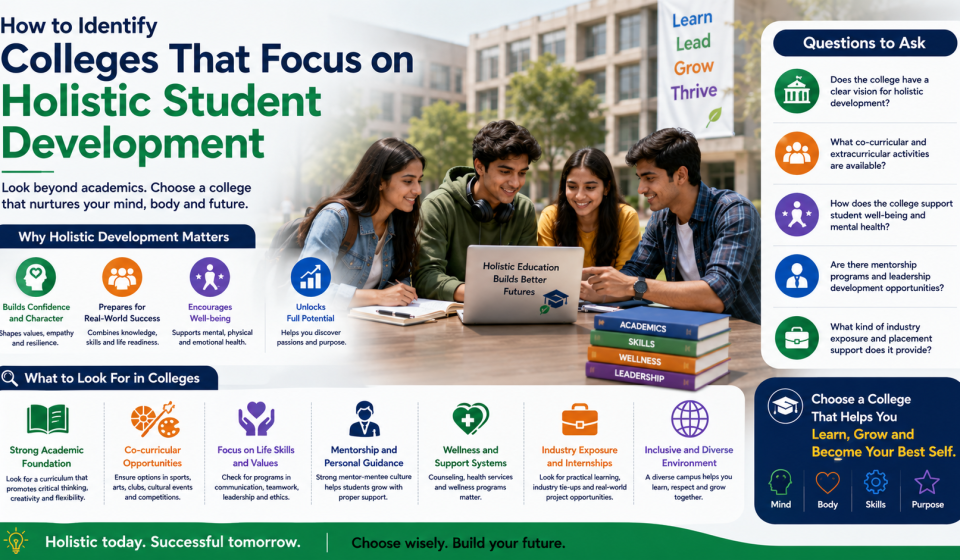
Holistic student development refers to an educational approach that focuses on nurturing every aspect of a student’s growth rather than concentrating only on academic performance. It recognises that successful individuals need intellectual abilities, emotional resilience, social skills, ethical values, leadership qualities, and practical experience.
Holistic development generally includes:
- Academic excellence
- Personal growth
- Leadership development
- Communication skills
- Emotional intelligence
- Physical well-being
- Career readiness
- Social responsibility
- Creativity and innovation
- Ethical decision-making
The objective is to prepare students for lifelong success both inside and outside the workplace.
Why Holistic Development Matters
Modern employers no longer evaluate candidates based solely on degrees or examination scores.
They also seek graduates who demonstrate:
- Critical thinking
- Teamwork
- Adaptability
- Leadership
- Problem-solving
- Communication
- Emotional intelligence
- Professional ethics
Colleges that emphasise holistic development help students build these essential qualities throughout their educational journey.
Signs of a College That Focuses on Holistic Student Development
Choosing the right institution requires looking beyond promotional brochures.
Several indicators suggest that a college genuinely supports holistic growth.
Strong Academic Programmes with Practical Learning
Academic quality remains the foundation of higher education.
Look for colleges that combine classroom instruction with:
- Practical laboratories
- Live industry projects
- Research opportunities
- Field visits
- Case studies
- Capstone projects
- Experiential learning
Practical learning strengthens understanding and improves career readiness.
Industry Partnerships and Internship Opportunities
One of the strongest indicators of holistic education is active collaboration with industry.
Colleges should offer:
- Internship programmes
- Industrial visits
- Guest lectures
- Industry mentoring
- Campus placements
- Skill development workshops
These opportunities help students connect academic knowledge with real-world applications.
Comprehensive Career Services
Career support should begin long before graduation.
Strong career development centres provide:
- Career counselling
- Resume building
- Interview preparation
- Internship assistance
- Placement support
- Networking events
- Career assessments
These services improve employability and career confidence.
Opportunities for Leadership Development
Leadership skills are developed through experience.
Look for colleges offering:
- Student councils
- Club leadership positions
- Event management responsibilities
- Volunteer programmes
- Entrepreneurship initiatives
Leadership experiences prepare students for managerial and professional roles.
Active Student Clubs and Organisations
Extracurricular participation contributes significantly to personal development.
Examples include:
- Technical clubs
- Debate societies
- Entrepreneurship clubs
- Cultural organisations
- Photography clubs
- Coding communities
- Environmental groups
- Sports teams
Student organisations encourage teamwork, confidence, and networking.
Strong Faculty Mentorship
Supportive faculty members play an important role in student success.
Good colleges encourage mentoring relationships where faculty assist students with:
- Academic planning
- Career advice
- Research guidance
- Personal development
- Professional networking
Personalised mentorship enhances learning and confidence.
Modern Learning Environment
Innovative colleges embrace modern teaching methods.
Features may include:
- Smart classrooms
- Digital learning platforms
- Learning Management Systems (LMS)
- Online libraries
- AI-assisted learning tools
- Collaborative learning spaces
Technology enhances both accessibility and learning outcomes.
Focus on Soft Skill Development
Communication and interpersonal skills are essential for career success.
Effective colleges provide training in:
- Public speaking
- Business communication
- Presentation skills
- Teamwork
- Negotiation
- Time management
- Conflict resolution
These skills complement academic knowledge.
Mental Health and Well-Being Support
Student well-being directly influences academic performance.
Holistic institutions often provide:
- Counselling services
- Mental health awareness programmes
- Stress management workshops
- Peer support groups
- Wellness initiatives
A supportive environment promotes healthier learning experiences.
Sports and Physical Fitness
Physical wellness contributes to mental and emotional health.
Look for colleges that encourage:
- Sports competitions
- Fitness centres
- Yoga programmes
- Recreational activities
- Outdoor events
Balanced development includes maintaining physical health.
Encouragement for Innovation and Creativity
Innovation prepares students for future careers.
Colleges supporting creativity may offer:
- Innovation labs
- Startup incubators
- Hackathons
- Design thinking workshops
- Research competitions
These activities encourage problem-solving and entrepreneurial thinking.
Community Engagement Opportunities
Social responsibility is another aspect of holistic development.
Students benefit from participating in:
- Volunteer programmes
- Community service
- Environmental initiatives
- Awareness campaigns
- Social impact projects
Community engagement develops empathy and leadership.
Global Learning Opportunities
International exposure broadens perspectives.
Many colleges now provide:
- Student exchange programmes
- International collaborations
- Virtual global classrooms
- Overseas internships
- International conferences
Global experiences improve cultural awareness and communication skills.
Strong Alumni Network
Successful alumni often indicate a strong educational environment.
A supportive alumni network provides:
- Career mentoring
- Internship referrals
- Networking opportunities
- Industry insights
- Placement assistance
Research alumni achievements before selecting a college.
Transparent Placement Records
Placement statistics reveal how effectively colleges prepare students for employment.
Evaluate:
- Placement percentage
- Average salary packages
- Recruiting companies
- Internship placements
- Industry diversity
Reliable placement data demonstrates career-focused education.
Accreditation and Academic Reputation
Choose colleges recognised by appropriate educational authorities.
Accreditation ensures:
- Academic quality
- Curriculum standards
- Institutional credibility
- Employer recognition
A recognised institution increases the value of your qualification.
Personalised Learning Support
Every student learns differently.
Holistic colleges often provide:
- Academic advising
- Remedial support
- Flexible learning options
- Skill enhancement courses
- Individual learning plans
Personalised guidance improves academic success.
Questions Students Should Ask Before Choosing a College
Before enrolling, consider asking:
- What internship opportunities are available?
- How strong are industry partnerships?
- Does the college provide career counselling?
- What extracurricular activities are offered?
- Are leadership programmes available?
- How successful are recent graduates?
- What student support services exist?
- Are innovation and research encouraged?
Answers to these questions provide valuable insights into the college’s priorities.
Common Mistakes to Avoid
Avoid making decisions based only on:
- College rankings
- Advertising campaigns
- Friends’ choices
- Campus appearance
- Tuition fees alone
Instead, evaluate the complete student development experience.
Benefits of Choosing a Holistic Development College
Students graduating from such institutions often enjoy:
- Better academic performance
- Stronger communication skills
- Higher employability
- Increased confidence
- Leadership experience
- Professional networking
- Improved emotional resilience
- Better problem-solving abilities
- Career readiness
- Lifelong personal growth
These qualities contribute to long-term professional success.
Future Trends in Holistic Higher Education
Higher education continues evolving.
Future-focused colleges increasingly emphasise:
- Artificial Intelligence learning
- Digital literacy
- Sustainability education
- Entrepreneurship
- Global collaboration
- Hybrid learning
- Personalised education
- Continuous skill development
Students choosing forward-thinking institutions remain better prepared for future careers.
Source
https://www.unesco.org
https://www.oecd.org
https://www.weforum.org
https://www.naceweb.org
Conclusion
Choosing a college that focuses on holistic student development is one of the most important decisions students can make for their future. Beyond academic excellence, the right institution should provide opportunities for leadership, internships, career guidance, innovation, extracurricular participation, community engagement, and personal well-being. These experiences help students develop the technical expertise, soft skills, confidence, and adaptability needed to succeed in higher education, the workplace, and life. A holistic learning environment nurtures well-rounded individuals who are prepared to face future challenges with resilience and purpose.
As the demands of the global workforce continue to evolve, employers increasingly value graduates who demonstrate communication, teamwork, creativity, critical thinking, and emotional intelligence alongside strong academic achievements. By carefully evaluating factors such as faculty mentorship, industry partnerships, placement support, campus culture, student services, and opportunities for practical learning, students can choose a college that supports their complete growth. Investing time in selecting an institution committed to holistic student development lays the foundation for lifelong learning, meaningful careers, and personal success.
FAQ
1. What is holistic student development?
Holistic student development is an educational approach that focuses on academic achievement, personal growth, leadership, communication, emotional well-being, career readiness, and overall character development.
2. Why is holistic development important when choosing a college?
It prepares students with both technical knowledge and essential life skills such as communication, teamwork, leadership, problem-solving, and adaptability, making them more successful in their careers and personal lives.
3. How can I identify a college that supports holistic development?
Look for colleges that offer internships, career counselling, leadership programmes, extracurricular activities, industry partnerships, mentorship, mental health support, innovation centres, and strong placement services.
4. Do extracurricular activities contribute to holistic development?
Yes. Participation in clubs, sports, cultural events, volunteering, and student organisations helps students develop confidence, leadership, teamwork, and communication skills.
5. How do industry partnerships benefit students?
Industry collaborations provide internships, live projects, guest lectures, mentoring, certifications, and placement opportunities that improve practical knowledge and employability.
6. Why is faculty mentorship important?
Faculty mentors guide students academically and professionally by providing career advice, research support, learning guidance, and encouragement for personal development.
7. Should placement records influence my college choice?
Yes. Strong placement records, internship opportunities, and employer partnerships indicate that a college effectively prepares students for successful careers.
8. What is the biggest advantage of studying at a college focused on holistic development?
The greatest advantage is graduating as a well-rounded individual with academic knowledge, practical experience, leadership abilities, professional skills, and the confidence needed for lifelong success.