How to Choose a College That Matches Your Learning Style: The Ultimate 2026 Guide to Finding the Right Educational Fit

The higher education landscape in 2026 is rapidly evolving. Technological advancements, artificial intelligence (AI), blended learning, experiential education, digital classrooms, and multidisciplinary programs have transformed the way colleges deliver education.
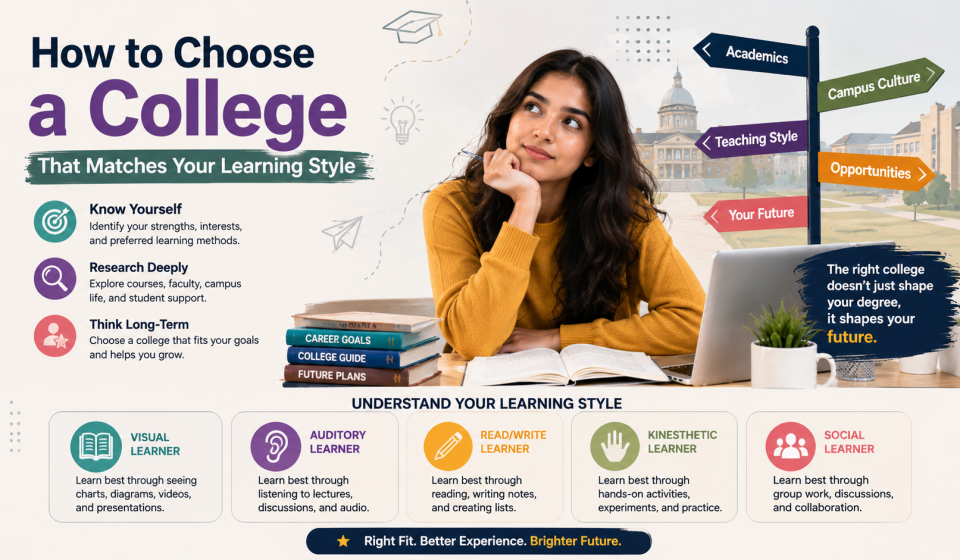
Understand Your Learning Style
Begin by understanding how you learn most effectively.
Common learning preferences include:
- Visual learning
- Practical hands-on learning
- Collaborative group learning
- Independent self-paced learning
- Discussion-based learning
- Research-oriented learning
Knowing your strengths helps narrow your college choices.
Evaluate Teaching Methods
Different colleges emphasize different instructional approaches.
Look for institutions that offer:
- Interactive classrooms
- Case-based learning
- Project-based education
- Laboratory sessions
- Practical workshops
- Digital learning platforms
Teaching methods should match your learning preferences.
Explore Practical Learning Opportunities
Practical exposure improves understanding.
Check whether the college provides:
- Internships
- Industry projects
- Research opportunities
- Innovation labs
- Entrepreneurship programs
- Skill development workshops
Experiential learning prepares students for real careers.
Assess Faculty Teaching Style
Excellent faculty members:
- Encourage classroom participation
- Provide mentorship
- Support research
- Use modern teaching techniques
- Offer constructive feedback
Faculty quality strongly influences learning outcomes.
Examine Classroom Environment
Consider:
- Student-teacher interaction
- Class size
- Technology integration
- Collaborative learning opportunities
- Academic support
A supportive environment enhances engagement.
Review Academic Flexibility
Modern colleges increasingly offer:
- Elective courses
- Multidisciplinary programs
- Flexible credit systems
- Minor specializations
- Online learning components
Flexibility allows students to personalize education.
Evaluate Technology Integration
Technology-enhanced learning includes:
- Smart classrooms
- Learning management systems
- Virtual laboratories
- AI-supported learning tools
- Digital libraries
Technology supports different learning preferences.
Consider Student Support Services
Look for colleges offering:
- Academic counseling
- Career guidance
- Mentoring programs
- Learning assistance
- Mental wellness support
Support services improve student success.
Visit the Campus
Whenever possible:
- Attend campus tours
- Observe classrooms
- Speak with faculty
- Interact with current students
- Explore laboratories and libraries
First-hand experience provides valuable insights.
Talk to Current Students and Alumni
Ask about:
- Teaching quality
- Faculty support
- Learning environment
- Internship opportunities
- Student satisfaction
Real experiences help validate your research.
Check Industry Exposure
Strong colleges provide:
- Guest lectures
- Industry visits
- Corporate collaborations
- Placement training
- Internship partnerships
Industry engagement enhances learning.
Research Placement and Career Support
Career services should include:
- Resume guidance
- Interview preparation
- Placement assistance
- Networking events
- Career counseling
Career support complements academic learning.
Balance Reputation with Personal Fit
A highly ranked college is not always the best choice for every student.
Prioritize institutions where you can:
- Learn effectively
- Grow personally
- Build practical skills
- Achieve career goals
Personal fit often leads to better long-term outcomes.
Common College Selection Mistakes
Avoid:
- Choosing only based on rankings
- Following friends blindly
- Ignoring teaching methods
- Overlooking student support
- Neglecting campus visits
- Failing to assess career services
A thoughtful decision leads to a more rewarding college experience.
Source
https://www.education.gov.in
https://www.ugc.gov.in
https://www.aicte-india.org
https://www.abc.gov.in
https://www.ncs.gov.in
Conclusion
Choosing a college that aligns with your learning style is one of the smartest decisions you can make for your academic and professional future. Beyond rankings and brand reputation, factors such as teaching methods, faculty support, practical learning opportunities, technology integration, academic flexibility, student services, and industry exposure play a crucial role in shaping your educational experience. By understanding your learning preferences and carefully evaluating institutions based on how well they support your personal and career goals, you can maximize your academic performance, build stronger professional skills, and enjoy a more fulfilling college journey. The right college is not simply the most popular one—it is the one that empowers you to learn, grow, and succeed in the way that suits you best.
FAQ
1. Why is learning style important when choosing a college?
A college that matches your learning style helps you understand concepts more effectively, stay engaged in academics, improve performance, and develop greater confidence throughout your education.
2. What factors should students evaluate besides college rankings?
Students should consider teaching methods, faculty quality, practical learning opportunities, academic flexibility, student support services, industry exposure, technology integration, and campus environment.
3. How can I identify my learning style?
You can identify your learning style by reflecting on whether you learn best through visual materials, practical activities, group discussions, independent study, research, or interactive classroom participation.
4. Does practical learning improve career readiness?
Yes. Internships, live projects, laboratory work, industry collaborations, and experiential learning help students apply classroom knowledge and prepare for real workplace responsibilities.
5. Why is faculty quality important in college selection?
Experienced and supportive faculty members provide mentorship, encourage critical thinking, improve classroom engagement, guide research, and contribute significantly to student success.
6. Should students visit campuses before taking admission?
Whenever possible, yes. Campus visits allow students to evaluate infrastructure, classrooms, laboratories, faculty interactions, learning environments, and overall student life before making a decision.
7. How does academic flexibility benefit students?
Flexible curricula allow students to choose electives, pursue multidisciplinary learning, explore different interests, and develop broader skills aligned with evolving career opportunities.
8. Can the right college improve long-term career success?
Absolutely. A college that supports your learning style, provides practical experiences, encourages skill development, and offers strong career guidance creates a solid foundation for long-term professional growth.