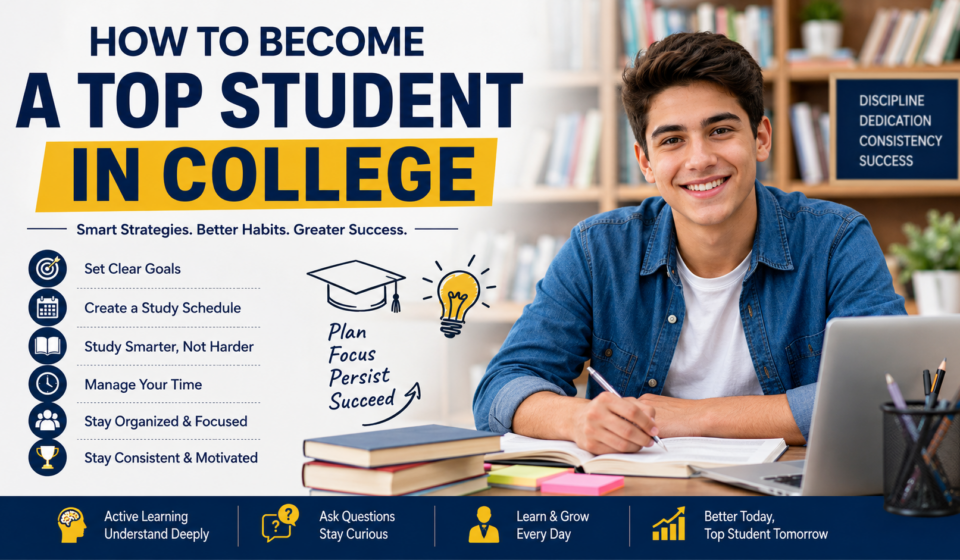

Becoming a top student in college is not only about being naturally intelligent. It is about building the right habits, managing time wisely, staying consistent, and using smart study strategies. Many students enter college with big dreams, but they often struggle because college life is different from school life. There are more assignments, exams, projects, social activities, and personal responsibilities.
Understand Your Academic Goals
The first step to becoming a top student in college is understanding your academic goals. Without clear goals, it becomes easy to lose focus. You should know what grades you want to achieve, which skills you want to develop, and what career path you want to follow after graduation.
Set short-term and long-term goals. A short-term goal may be completing assignments before deadlines or scoring higher in the next test. A long-term goal may be graduating with distinction or getting admission into a good postgraduate program. When your goals are clear, your daily actions become more meaningful.
Write your goals in a notebook or planner and review them regularly. This will remind you why your studies matter. Top students do not study randomly; they study with purpose.
Create a Smart Study Schedule
A proper study schedule helps you stay organized and avoid last-minute stress. Many college students fail to perform well because they wait until exams are near before they start studying. This habit creates pressure and reduces learning quality.
Create a weekly timetable that includes classes, study hours, assignments, breaks, exercise, and sleep. Give more time to difficult subjects and revise easier topics regularly. Instead of studying for long hours without focus, divide your study time into small sessions. For example, study for 45 minutes and then take a short break.
A smart study schedule should be realistic. Do not fill every hour with study tasks because you may feel tired and give up. Balance is important. Consistency is more powerful than studying for many hours only once in a while.
Attend Classes Regularly
Regular class attendance is one of the most important habits of top students. When you attend lectures, you understand topics directly from professors, hear important explanations, and learn what may be asked in exams. Missing classes can create knowledge gaps that become difficult to cover later.
During class, sit in a place where you can focus. Avoid unnecessary phone use and distractions. Listen carefully, take notes, and ask questions when something is unclear. Active participation helps you remember concepts better.
Professors often give useful tips, examples, and assignment instructions during lectures. Students who attend regularly are more prepared and confident during exams.
Take Effective Notes
Good note-taking is a powerful academic skill. Top students do not write every word the teacher says. Instead, they listen, understand, and write the main points in a clear format. Effective notes make revision easier and save time before exams.
You can use methods like the Cornell note-taking system, bullet points, headings, diagrams, and summaries. Highlight important definitions, formulas, dates, and examples. After class, review your notes and add missing details while the topic is still fresh in your mind.
Digital notes can be helpful, but handwritten notes often improve memory because they require active thinking. Choose the method that works best for you and keep your notes organized by subject.
Study Smarter, Not Harder
Many students believe that studying longer always means studying better. However, top students focus on smart study techniques. The quality of study matters more than the number of hours.
Use active learning methods such as explaining topics in your own words, solving practice questions, teaching a friend, creating flashcards, and testing yourself. Passive reading is not enough. When you actively work with the material, your brain understands and remembers it better.
Revision should also be regular. Instead of reading everything one night before the exam, revise small portions every week. This improves long-term memory and reduces exam fear.
Manage Your Time Properly
Time management is a major difference between average students and top students. College life includes many activities, and without planning, time can be wasted easily. Social media, movies, games, and unnecessary distractions can take away valuable study hours.
Use a planner, calendar, or mobile app to track deadlines and exam dates. Prioritize important tasks first. Complete assignments before the deadline instead of waiting until the last day. Break big projects into smaller steps so they feel easier to complete.
A useful rule is to finish difficult tasks when your energy is highest. For many students, this may be morning or early evening. Good time management gives you more control over your college life.
Build Strong Relationships With Professors
Top students understand the value of building positive relationships with professors. Teachers can guide you academically, clarify doubts, recommend books, support research projects, and even help with career advice.
Be respectful, attentive, and professional in class. Visit professors during office hours if you need help. Ask thoughtful questions and show interest in learning. You do not need to be perfect, but you should show sincerity and effort.
A good relationship with professors can also help when you need recommendation letters for internships, scholarships, or higher studies.
Stay Organized
Organization helps you reduce stress and improve productivity. Keep your study materials, notes, assignments, and digital files properly arranged. Use folders for each subject and name your files clearly.
Make a checklist for daily and weekly tasks. When you complete a task, mark it as done. This gives a sense of progress and motivation. An organized student is less likely to forget deadlines or lose important materials.
Your study space should also be clean and distraction-free. A peaceful study environment improves concentration and makes learning easier.
Develop Strong Reading Habits
College students often need to read textbooks, research papers, notes, and reference materials. Strong reading habits can improve understanding and academic performance.
Before reading a chapter, look at headings, subheadings, summaries, and key terms. This gives you an idea of what the topic is about. While reading, underline important points and write short notes in your own words.
Do not try to memorize everything blindly. Focus on understanding the concept. After reading, close the book and explain what you learned. This method helps improve retention and confidence.
Participate in Study Groups
Study groups can be very helpful when used correctly. Learning with classmates allows you to discuss ideas, clear doubts, and understand topics from different perspectives. Teaching others is also one of the best ways to strengthen your own knowledge.
However, study groups should not become social gatherings only. Choose serious students who are focused and disciplined. Set a clear topic for each session and avoid unnecessary distractions.
A good study group can make difficult subjects easier and keep you motivated throughout the semester.
Prepare Early for Exams
Exam preparation should begin long before the exam date. Top students do not depend on last-minute cramming. They revise regularly, solve previous papers, and practice important questions.
Start by understanding the exam pattern. Know which topics carry more marks and what type of questions are usually asked. Create a revision plan and follow it step by step.
Practice writing answers within a time limit. This improves speed and confidence. Also, take care of your sleep and health before exams. A tired mind cannot perform well, even if you have studied a lot.
Take Care of Your Health
Academic success is connected to physical and mental health. If you do not sleep properly, eat well, or manage stress, your performance may suffer. Top students understand that health supports learning.
Get enough sleep every night. Avoid studying the whole night before exams because lack of sleep affects memory and concentration. Eat balanced meals, drink enough water, and exercise regularly.
Mental health is equally important. Take breaks, talk to friends or family, and seek help if you feel overwhelmed. A healthy student can focus better and stay motivated.
Avoid Procrastination
Procrastination is one of the biggest enemies of college success. Many students delay tasks because they feel lazy, confused, or afraid of failure. But delaying work only increases stress.
To overcome procrastination, start with small steps. If an assignment feels difficult, work on it for just 10 minutes. Once you begin, it becomes easier to continue. Remove distractions and keep your phone away while studying.
Use deadlines and reminders to stay accountable. Reward yourself after completing important tasks. Over time, this habit will make you more disciplined and productive.
Improve Your Communication Skills
Being a top student is not only about marks. Communication skills also matter in college and future careers. You should be able to express your ideas clearly in writing, speaking, presentations, and group discussions.
Participate in class discussions, seminars, debates, and presentations. Practice writing clear assignments and reports. Good communication helps you stand out and builds confidence.
Strong communication skills also improve teamwork, networking, and interview performance.
Use College Resources
Many students do not use the resources available in college. Libraries, labs, counseling centers, career services, workshops, and online databases can support your academic growth.
Visit the library regularly and explore books beyond your syllabus. Attend academic workshops and skill-building sessions. Use career guidance services to prepare for internships and jobs.
Top students take advantage of every opportunity available to them. College is not only about passing exams; it is about building knowledge, skills, and confidence for the future.
Stay Consistent and Motivated
Consistency is the secret behind long-term success. You may feel motivated at the beginning of the semester, but real success comes from showing up every day. Even small daily efforts can create big results over time.
There will be days when you feel tired or discouraged. During such times, remember your goals and keep going. Do not compare yourself too much with others. Focus on your own progress.
Celebrate small achievements, such as completing a chapter, improving a test score, or submitting work early. These small wins will keep you motivated.
Source
https://sl1nk.com/9ww08cf
https://sl1nk.com/64pmz19
Conclusion
Becoming a top student in college is possible for anyone who is willing to work with discipline, focus, and consistency. It does not require perfection, but it does require smart habits. By setting clear goals, attending classes, managing time, taking good notes, studying actively, and preparing early for exams, students can improve their academic performance.
Health, organization, communication skills, and positive relationships with professors also play an important role in college success. A top student is not only someone who gets good marks but also someone who grows personally, professionally, and intellectually. With the right mindset and daily effort, you can become one of the best students in your college and prepare yourself for a bright future.
FAQs
1. How many hours should a college student study daily?
A college student should usually study 2 to 4 focused hours daily outside class. However, the quality of study is more important than the number of hours. Regular revision and active learning are more effective than long, unfocused study sessions.
2. What habits make a student successful in college?
Successful college students attend classes regularly, manage time well, take good notes, revise often, complete assignments early, ask questions, and maintain a healthy lifestyle.
3. How can I improve my grades in college?
You can improve your grades by creating a study schedule, understanding exam patterns, practicing previous papers, asking professors for help, joining study groups, and avoiding last-minute preparation.
4. Is it possible to become a top student if I am average now?
Yes, it is possible. Many top students become successful through consistency, discipline, and smart study techniques. You do not need to be naturally brilliant to improve your performance.
5. What is the best study method for college students?
Active learning is one of the best study methods. This includes self-testing, summarizing topics, solving practice questions, teaching others, and using flashcards for revision.