How to Assess Learning Resources Before Taking Admission: The Complete 2026 Guide to Choosing a College That Supports Academic Success

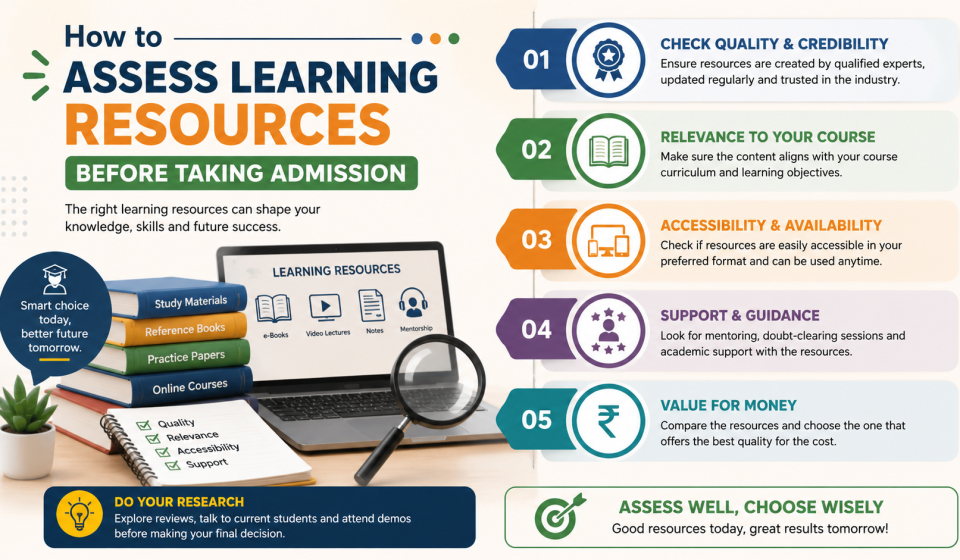
Choosing a college is one of the most significant decisions in a student’s educational journey. While rankings, campus buildings, and placement statistics often receive the most attention, one of the most important factors that directly influences academic success is the quality of learning resources available to students.
In 2026, higher education has become increasingly technology-driven and student-centered. Modern colleges invest in digital libraries, smart classrooms, research laboratories, virtual learning platforms, innovation centers, maker spaces, language labs, simulation facilities, and academic support services to enhance learning beyond traditional lectures. These resources encourage active learning, independent research, creativity, collaboration, and practical problem-solving.
Why Learning Resources Matter
Learning resources support:
- Academic understanding
- Practical skill development
- Research
- Innovation
- Career preparation
- Independent learning
High-quality resources enhance the overall educational experience.
Evaluate the Library
A modern academic library should provide:
- Updated textbooks
- Reference books
- Academic journals
- Digital resources
- Quiet study spaces
- Online databases
Libraries remain an essential part of higher education.
Digital Learning Platforms
Modern colleges often use:
- Learning Management Systems (LMS)
- Online lecture recordings
- E-books
- Virtual classrooms
- Interactive learning modules
Digital resources allow flexible and continuous learning.
Smart Classrooms
Look for classrooms equipped with:
- Interactive displays
- Multimedia presentation systems
- Internet connectivity
- Audio-visual technology
Technology supports engaging teaching methods.
Laboratory Facilities
Students in science, engineering, healthcare, and technology programs should evaluate:
- Laboratory equipment
- Safety standards
- Practical training opportunities
- Maintenance of facilities
- Availability of modern instruments
Hands-on learning is essential for technical education.
Research Opportunities
Strong institutions provide access to:
- Research laboratories
- Faculty-led projects
- Innovation centers
- Academic conferences
- Undergraduate research programs
Research develops analytical and problem-solving skills.
Faculty Accessibility
Learning resources also include knowledgeable faculty who provide:
- Academic mentoring
- Research guidance
- Career advice
- Personalized feedback
- Classroom support
Accessible faculty improve student learning.
Academic Support Services
Evaluate whether the college offers:
- Tutoring programs
- Writing support
- Academic advising
- Skill development workshops
- Learning assistance centers
Support services help students overcome academic challenges.
Technology and Innovation Centers
Modern campuses may include:
- Innovation hubs
- Maker spaces
- Computer laboratories
- Artificial intelligence labs
- Robotics facilities
These resources encourage creativity and practical application.
Career Learning Resources
Career preparation is strengthened through:
- Internship assistance
- Placement cells
- Career counseling
- Industry projects
- Professional certification support
Career services complement classroom education.
Visit the Campus
Whenever possible, observe:
- Library facilities
- Laboratory conditions
- Classroom technology
- Student study areas
- Academic atmosphere
Personal visits provide valuable information beyond brochures.
Speak With Current Students
Current students can share insights about:
- Resource availability
- Faculty support
- Practical learning
- Research opportunities
- Overall learning experience
Their experiences help prospective students make informed decisions.
Evaluate Continuous Improvement
Quality institutions regularly update:
- Library collections
- Laboratory equipment
- Digital technologies
- Academic programs
- Learning infrastructure
Continuous investment reflects institutional commitment.
Source
https://www.ugc.gov.in
https://www.aicte-india.org
https://www.naac.gov.in
https://www.education.gov.in
https://www.nirfindia.org
Conclusion
Assessing learning resources before taking admission is one of the most effective ways to choose a college that supports both academic excellence and long-term career success. Beyond attractive infrastructure and promotional materials, students should carefully evaluate libraries, laboratories, digital learning platforms, faculty expertise, academic support services, research opportunities, technology centers, and career development resources. Institutions that continuously invest in high-quality learning environments empower students to build strong knowledge, practical skills, critical thinking abilities, and professional confidence. Making an informed admission decision based on comprehensive learning resources helps students maximize their educational experience and prepare successfully for future academic and professional opportunities.
FAQ
1. Why should students evaluate learning resources before admission?
Learning resources directly influence academic performance, practical skill development, research opportunities, and career readiness, making them an important factor in college selection.
2. What learning resources should students assess?
Students should evaluate libraries, laboratories, smart classrooms, digital learning platforms, research facilities, academic support services, faculty accessibility, and career development resources.
3. Why are digital learning resources important?
Digital platforms provide flexible learning opportunities through online lectures, e-books, virtual classrooms, learning management systems, and interactive educational tools.
4. How do laboratories contribute to education?
Laboratories provide practical experience, strengthen technical skills, support research, and help students apply theoretical knowledge in real-world situations.
5. Are faculty members considered learning resources?
Yes. Experienced and accessible faculty provide academic guidance, mentoring, research supervision, career advice, and valuable educational support.
6. Should students visit campuses before admission?
Whenever possible, campus visits allow students to personally evaluate learning facilities, academic resources, classroom environments, and overall educational quality.
7. How can students verify the quality of learning resources?
Students can review official institutional websites, accreditation reports, government education portals, campus visits, and feedback from current students and alumni.
8. Why are learning resources important for career success?
High-quality learning resources improve knowledge, practical skills, research experience, innovation, critical thinking, and professional readiness, helping graduates succeed in competitive careers.