How to Assess a College’s Learning Ecosystem Before Admission: The Complete Guide to Choosing the Right Academic Environment

Choosing a college is one of the most important decisions in a student’s life, and while rankings, placement records, and tuition fees often dominate the conversation, they do not tell the whole story. A college’s learning ecosystem plays a significant role in shaping your academic success.
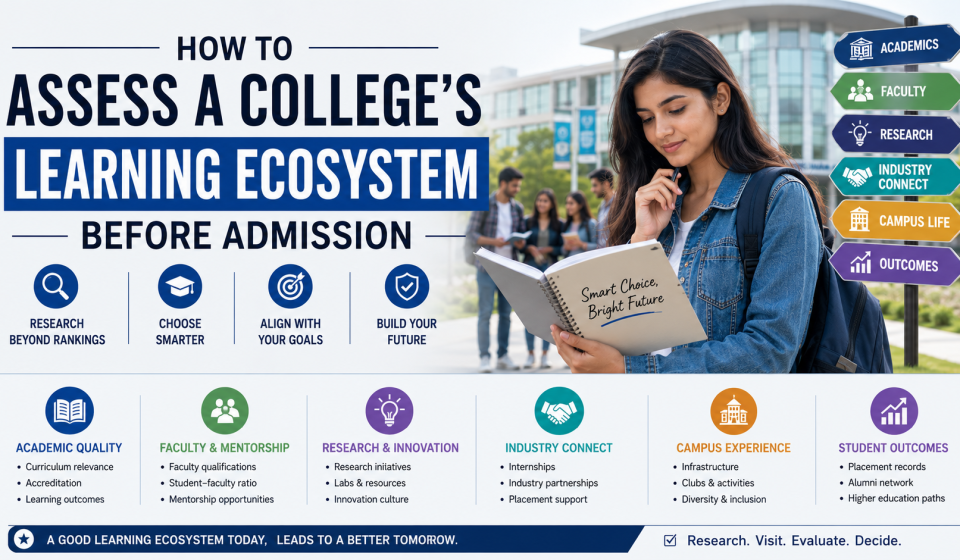
Many students focus only on admission eligibility or the reputation of an institution, but evaluating the learning ecosystem before enrolling can help you make a more informed decision. A supportive academic environment encourages curiosity, critical thinking, practical learning, collaboration, and continuous improvement. Colleges that invest in modern learning resources and student development often produce graduates who are better prepared for higher education, competitive careers, and lifelong learning. This comprehensive guide explains how to assess a college’s learning ecosystem before admission and highlights the key factors every student should evaluate before making a final choice.
What Is a College Learning Ecosystem?
A college learning ecosystem refers to the complete academic and educational environment that supports student learning both inside and outside the classroom.
It includes:
- Faculty quality
- Curriculum design
- Teaching methods
- Academic resources
- Laboratories
- Libraries
- Technology infrastructure
- Student support services
- Research opportunities
- Industry collaborations
- Campus culture
- Peer learning
- Innovation initiatives
- Career guidance
- Extracurricular activities
A strong learning ecosystem helps students gain knowledge, develop practical skills, and prepare for successful careers.
Why the Learning Ecosystem Matters
A college’s environment influences far more than classroom education.
Benefits of a strong learning ecosystem include:
- Better academic performance
- Improved critical thinking
- Higher student engagement
- Enhanced practical skills
- Stronger communication abilities
- Greater innovation
- Career readiness
- Better mental well-being
- Increased confidence
- Lifelong learning habits
Students often succeed because of the environment that supports their growth.
Evaluate the Quality of Faculty
Faculty members are the foundation of any learning ecosystem.
Before applying, consider:
- Academic qualifications
- Teaching experience
- Industry experience
- Research contributions
- Student reviews
- Faculty accessibility
- Professional certifications
Experienced faculty members often provide valuable mentorship beyond classroom teaching.
Examine the Curriculum
A modern curriculum should remain relevant to current industry needs.
Look for:
- Updated course content
- Practical assignments
- Industry-oriented subjects
- Interdisciplinary learning
- Skill-based education
- Flexible electives
- Project-based learning
A dynamic curriculum prepares students for evolving career opportunities.
Understand the Teaching Methodology
Different colleges use different teaching approaches.
Effective methods include:
- Interactive lectures
- Case studies
- Group discussions
- Practical demonstrations
- Simulations
- Problem-based learning
- Collaborative projects
- Experiential learning
Student-centered learning generally produces better outcomes than lecture-only instruction.
Assess Classroom Technology
Technology enhances modern education.
Check whether the college offers:
- Smart classrooms
- High-speed internet
- Learning Management Systems (LMS)
- Virtual laboratories
- Digital libraries
- Online learning platforms
- Multimedia teaching tools
Technology-rich campuses improve accessibility and learning flexibility.
Visit the Library
A well-equipped library remains an essential academic resource.
Evaluate:
- Book collections
- Digital databases
- Research journals
- Study spaces
- Online access
- Library support services
Quality libraries encourage independent learning and research.
Explore Laboratory Facilities
Laboratories should support practical learning.
Consider:
- Equipment quality
- Safety standards
- Modern technology
- Laboratory availability
- Practical sessions
- Research support
Hands-on experience is particularly important for engineering, science, healthcare, and technology students.
Investigate Research Opportunities
Research promotes innovation and critical thinking.
Find out whether students can:
- Participate in faculty research
- Publish papers
- Attend conferences
- Access research funding
- Work on innovation projects
Research experience strengthens academic and professional profiles.
Check Industry Collaboration
Industry partnerships bridge education and employment.
Look for colleges with:
- Corporate collaborations
- Guest lectures
- Industrial visits
- Live projects
- Internship programs
- Industry certifications
Strong partnerships improve employability.
Review Internship Opportunities
Internships provide valuable workplace experience.
Ask about:
- Internship support
- Placement assistance
- Company partnerships
- Internship duration
- Industry exposure
Practical experience enhances career readiness.
Analyze Placement Support
Placement statistics should be interpreted carefully.
Evaluate:
- Placement cell quality
- Career counseling
- Resume workshops
- Mock interviews
- Employer diversity
- Average salary trends
Strong career services support successful transitions into employment.
Evaluate Student Support Services
A supportive college provides services such as:
- Academic advising
- Career counseling
- Psychological counseling
- Mentorship programs
- Learning assistance
- Disability support
Student well-being contributes to academic success.
Observe Campus Culture
Campus culture influences daily student life.
Consider:
- Diversity
- Inclusiveness
- Student engagement
- Respectful environment
- Collaboration
- Ethical values
Positive campus cultures promote healthy personal development.
Talk to Current Students
Current students offer valuable firsthand insights.
Ask about:
- Teaching quality
- Faculty interaction
- Campus facilities
- Academic workload
- Student satisfaction
- Internship experiences
Their experiences often reveal details unavailable in brochures.
Review Alumni Success
Successful alumni reflect institutional effectiveness.
Explore:
- Career achievements
- Higher education admissions
- Entrepreneurial success
- Professional recognition
Active alumni networks also provide mentoring opportunities.
Examine Student Clubs and Organizations
Extracurricular activities develop leadership and teamwork.
Examples include:
- Technical clubs
- Cultural clubs
- Entrepreneurship cells
- Debate societies
- Sports teams
- Volunteer organizations
A vibrant student community supports holistic development.
Evaluate Innovation and Entrepreneurship Support
Many colleges encourage student innovation.
Look for:
- Startup incubation centers
- Innovation labs
- Business competitions
- Entrepreneurship mentoring
- Seed funding opportunities
Entrepreneurial support benefits aspiring business leaders.
Check Global Learning Opportunities
International exposure broadens perspectives.
Some colleges offer:
- Student exchange programs
- International collaborations
- Global internships
- Joint research projects
- Foreign language courses
Global experiences prepare students for international careers.
Assess Academic Flexibility
Modern education values flexibility.
Look for:
- Elective choices
- Minor programs
- Dual specialization
- Credit transfer options
- Interdisciplinary courses
Flexible learning supports personalized education.
Review Assessment Methods
Evaluation should extend beyond written examinations.
Comprehensive assessment may include:
- Projects
- Presentations
- Practical work
- Case studies
- Research assignments
- Continuous assessment
Multiple evaluation methods encourage deeper learning.
Understand Faculty Accessibility
Students benefit when faculty members are approachable.
Consider whether professors provide:
- Office hours
- Academic mentoring
- Career guidance
- Research supervision
- Timely feedback
Faculty support significantly influences learning outcomes.
Examine Digital Learning Resources
Digital education has become increasingly important.
Check for:
- Online course access
- Recorded lectures
- Virtual classrooms
- E-learning platforms
- Educational software
Digital resources enhance learning flexibility.
Evaluate Campus Infrastructure
Academic success also depends on physical infrastructure.
Look for:
- Clean classrooms
- Comfortable study areas
- Reliable internet
- Safe campus environment
- Accessible facilities
- Modern laboratories
Well-maintained infrastructure improves the learning experience.
Consider Student Diversity
Learning alongside students from different backgrounds promotes:
- Cultural awareness
- Collaboration
- Communication
- Global perspectives
Diverse classrooms prepare students for multicultural workplaces.
Understand the College’s Vision and Mission
A college’s mission often reflects its educational philosophy.
Choose institutions that emphasize:
- Student development
- Innovation
- Ethics
- Research
- Community engagement
- Lifelong learning
These values contribute to a stronger educational experience.
Questions to Ask Before Admission
Before making your final decision, ask the admissions office about faculty qualifications, internship opportunities, placement support, laboratory facilities, research participation, student mentoring, industry collaborations, academic flexibility, extracurricular opportunities, and alumni engagement. Visiting the campus, attending open houses, and interacting with students and faculty can provide valuable insights into the overall learning environment.
Common Mistakes Students Should Avoid
Many students choose colleges based only on rankings, advertising, or peer influence. Others ignore important factors such as faculty quality, campus culture, student support services, and practical learning opportunities. Avoid making decisions without visiting the campus, comparing institutions, or reviewing accreditation and academic resources. A careful evaluation helps ensure that the college aligns with your educational goals and career aspirations.
The Future of College Learning Ecosystems
Higher education continues to evolve with advancements in artificial intelligence, hybrid learning, virtual laboratories, personalized education, digital collaboration, and industry-integrated curricula. Colleges that embrace innovation while maintaining strong academic standards are better equipped to prepare students for the changing demands of the global workforce. Choosing an institution with a future-focused learning ecosystem can provide lasting advantages throughout your academic and professional journey.
Source
https://www.ugc.gov.in
https://www.aicte-india.org
https://www.naac.gov.in
https://www.nirfindia.org
Conclusion
Assessing a college’s learning ecosystem before admission is essential for making an informed educational decision. Beyond rankings and placement statistics, factors such as faculty expertise, curriculum quality, teaching methods, research opportunities, campus culture, technology, student support services, and industry partnerships play a crucial role in shaping your academic experience and career readiness. A strong learning ecosystem encourages intellectual growth, practical skill development, innovation, and lifelong learning. By carefully evaluating these aspects before enrolling, students can choose a college that not only provides quality education but also supports their personal and professional success for years to come.
FAQ
1. What is a college learning ecosystem?
A college learning ecosystem is the complete academic environment that supports student learning through faculty, curriculum, teaching methods, research, technology, student services, campus culture, and industry engagement.
2. Why is evaluating a college’s learning ecosystem important?
It helps students choose an institution that offers quality education, practical learning opportunities, strong career support, and an environment that promotes overall development.
3. What factors should students consider before taking admission?
Students should evaluate faculty qualifications, curriculum, laboratories, libraries, technology, internships, placement support, research opportunities, campus culture, accreditation, and student support services.
4. How can I learn about a college before admission?
Visit the campus, attend admission events, speak with current students and alumni, review official websites, check accreditation, and explore placement and research information.
5. Are rankings enough to choose a college?
No. Rankings provide useful information but should be considered alongside factors such as teaching quality, practical learning, campus environment, student support, and career development opportunities.
6. How does a strong learning ecosystem improve career success?
A supportive learning ecosystem develops technical knowledge, practical skills, communication, leadership, networking, and problem-solving abilities, making graduates more competitive in the job market.