How Student Clubs Shape Leadership and Career Skills: The Ultimate Guide to Personal and Professional Growth in College

College is much more than attending lectures, completing assignments, and earning a degree. It is a time to discover your strengths, build meaningful relationships, and develop the practical skills that employers value most. While academic performance remains important.
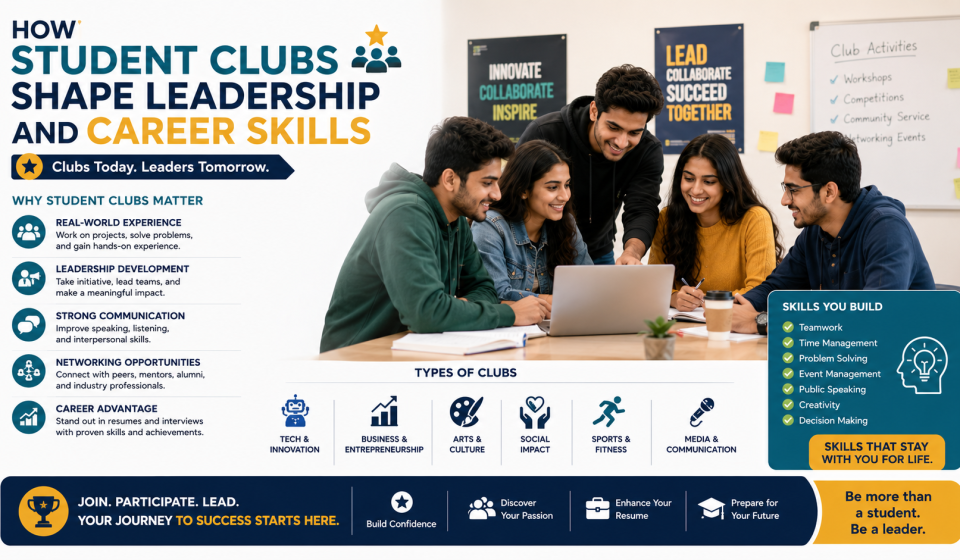
Student clubs provide a platform for students to explore their interests, collaborate with peers, organize events, solve real-world challenges, and take on leadership responsibilities. Whether it’s a technology club, entrepreneurship society, debate team, cultural association, sports club, environmental organization, or volunteer group, each offers valuable opportunities to grow beyond the classroom.
What Are Student Clubs?
Student clubs are organized groups within colleges and universities where students with similar interests come together to participate in educational, cultural, technical, social, or recreational activities.
Common types of student clubs include:
- Technology clubs
- Entrepreneurship clubs
- Coding communities
- Debate societies
- Business clubs
- Cultural organizations
- Photography clubs
- Sports clubs
- Environmental groups
- Volunteer organizations
- Robotics clubs
- Literary societies
These organizations provide opportunities for learning beyond the classroom.
Why Student Clubs Matter
Academic knowledge is essential, but employers also seek candidates with practical workplace skills.
Student clubs help students develop:
- Leadership
- Communication
- Teamwork
- Critical thinking
- Creativity
- Time management
- Networking
- Decision-making
These skills significantly improve career readiness.
Developing Leadership Skills
Leadership is one of the most valuable qualities employers seek.
Student clubs provide opportunities to serve as:
- Club President
- Vice President
- Secretary
- Treasurer
- Event Coordinator
- Project Leader
- Team Captain
These responsibilities teach students how to motivate teams, manage projects, and achieve organizational goals.
Improving Communication Skills
Strong communication is essential in every profession.
Club activities encourage students to:
- Deliver presentations
- Participate in discussions
- Host events
- Write reports
- Negotiate with sponsors
- Coordinate with faculty
Regular communication practice builds confidence and professionalism.
Learning Teamwork
Most workplace projects require collaboration.
Student clubs help members learn how to:
- Share responsibilities
- Respect diverse perspectives
- Resolve conflicts
- Support teammates
- Achieve common objectives
Effective teamwork improves workplace performance and productivity.
Enhancing Problem-Solving Abilities
Organizing events and managing club activities often involve unexpected challenges.
Students learn to:
- Analyze situations
- Make informed decisions
- Develop creative solutions
- Adapt quickly
- Evaluate outcomes
Problem-solving skills are highly valued across industries.
Building Time Management Skills
Balancing academics and extracurricular activities requires discipline.
Students become better at:
- Prioritizing tasks
- Planning schedules
- Meeting deadlines
- Managing multiple responsibilities
- Maintaining productivity
These habits prepare students for demanding professional roles.
Gaining Practical Experience
Student clubs provide hands-on learning through:
- Event planning
- Budget management
- Marketing campaigns
- Technical workshops
- Community service
- Competitions
Practical experience complements classroom education.
Expanding Professional Networks
Networking is an important aspect of career development.
Student organizations often connect members with:
- Industry experts
- Alumni
- Professors
- Recruiters
- Entrepreneurs
- Corporate mentors
These relationships can lead to internships, mentorships, and job opportunities.
Improving Public Speaking
Many students fear speaking in front of an audience.
Club participation offers opportunities to:
- Conduct meetings
- Present ideas
- Lead workshops
- Moderate discussions
- Deliver speeches
Public speaking skills improve confidence during interviews and professional presentations.
Encouraging Innovation and Creativity
Many clubs encourage members to explore new ideas through:
- Innovation competitions
- Startup challenges
- Design thinking workshops
- Research projects
- Creative performances
Creative thinking helps students solve complex workplace problems.
Developing Organizational Skills
Planning successful events requires careful coordination.
Students learn to:
- Allocate resources
- Manage budgets
- Coordinate logistics
- Delegate responsibilities
- Monitor project progress
These organizational skills are valuable in every career.
Strengthening Emotional Intelligence
Leadership involves understanding and managing emotions.
Student clubs help members develop:
- Empathy
- Active listening
- Conflict resolution
- Patience
- Relationship building
Emotional intelligence improves leadership effectiveness and workplace relationships.
Building a Strong Resume
Recruiters appreciate candidates who demonstrate initiative.
Student club experience highlights:
- Leadership roles
- Event management
- Volunteer work
- Team projects
- Community engagement
- Awards and achievements
These experiences make resumes more competitive.
Preparing for Job Interviews
Interviewers often ask candidates about teamwork, leadership, and problem-solving.
Student club experiences provide authentic examples that help answer behavioral interview questions with confidence.
Developing Entrepreneurial Thinking
Entrepreneurship clubs and innovation groups encourage students to:
- Identify opportunities
- Develop business ideas
- Create business plans
- Pitch projects
- Manage risks
These experiences foster creativity and business acumen.
Contributing to Society
Volunteer and social service clubs encourage civic responsibility.
Activities may include:
- Environmental campaigns
- Blood donation drives
- Literacy programs
- Health awareness initiatives
- Community development projects
Community involvement demonstrates leadership and social responsibility.
Career Benefits of Student Club Participation
Employers recognize the value of extracurricular involvement.
Students often gain:
- Better employability
- Internship opportunities
- Professional references
- Leadership experience
- Strong communication skills
- Industry exposure
- Increased confidence
These advantages contribute to long-term career success.
Tips to Get the Most Out of Student Clubs
Maximize your experience by:
- Joining clubs aligned with your interests.
- Participating actively in meetings.
- Volunteering for leadership roles.
- Attending workshops and networking events.
- Collaborating with diverse teams.
- Seeking mentorship from faculty and alumni.
- Documenting achievements for your resume.
- Balancing club activities with academic responsibilities.
Active participation creates meaningful learning experiences.
Source
https://www.naceweb.org
https://careerservices.fas.harvard.edu
https://www.indeed.com/career-advice
https://www.themuse.com
https://www.linkedin.com
Conclusion
Student clubs play a vital role in shaping well-rounded graduates by providing opportunities to develop leadership, communication, teamwork, problem-solving, and organizational skills that extend far beyond the classroom. Through active participation in campus organizations, students gain practical experience, build professional networks, improve confidence, and enhance their career readiness. These experiences not only strengthen resumes but also prepare students to adapt to modern workplace challenges with confidence and professionalism. By joining and actively contributing to student clubs, college students can unlock valuable personal growth opportunities and build a strong foundation for long-term academic and career success.
FAQ
1. Why are student clubs important for career development?
Student clubs help develop leadership, communication, teamwork, networking, and problem-solving skills that employers highly value during recruitment.
2. Can joining student clubs improve my resume?
Yes. Leadership roles, event management, volunteer work, and extracurricular achievements demonstrate initiative and practical experience, making your resume more competitive.
3. Which student clubs are best for career growth?
The best club depends on your interests and career goals. Popular choices include entrepreneurship clubs, technology clubs, business societies, debate clubs, volunteer organizations, and professional student associations.
4. Do employers value extracurricular activities?
Yes. Many employers consider extracurricular involvement as evidence of leadership, teamwork, time management, adaptability, and communication skills.
5. How do student clubs improve leadership skills?
Students gain leadership experience by organizing events, managing teams, making decisions, resolving conflicts, and coordinating projects within the club.
6. Can first-year students join student clubs?
Absolutely. Joining early allows students to build skills, gain experience, and take on greater responsibilities throughout their college journey.
7. How can student clubs help with networking?
Student clubs connect members with faculty, alumni, industry professionals, recruiters, and fellow students, creating valuable relationships for internships and future employment.
8. How many student clubs should I join?
It is generally better to actively participate in one or two clubs that match your interests and career goals rather than joining many organizations without meaningful involvement.