How Student Clubs Shape Leadership and Career Skills: The Ultimate Guide to Personal and Professional Growth in 2026

College is about much more than earning a degree. It is a time to discover your strengths, build meaningful relationships, develop practical skills, and prepare for a successful career. While classroom learning provides academic knowledge, student clubs and campus organizations.
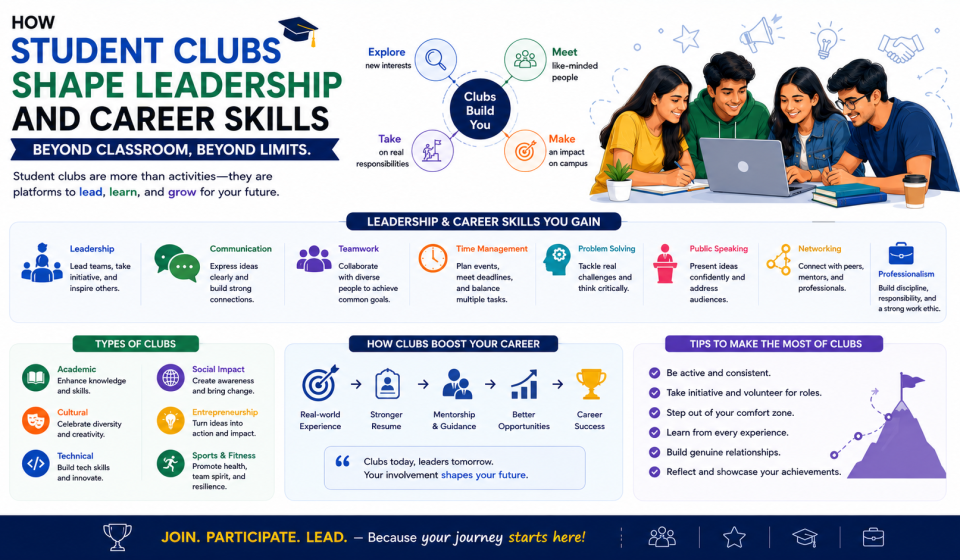
Student clubs create opportunities for learners to participate in activities that simulate workplace environments. Whether joining a technology club, entrepreneurship cell, debate society, cultural organization, sports club, volunteer group, environmental association, or business committee, students gain hands-on experience managing projects, organizing events, solving problems, and working with diverse teams. These experiences build transferable skills that remain valuable throughout a professional career.
Why Student Clubs Matter
Student clubs complement classroom education by providing practical learning experiences.
Benefits include:
- Leadership development
- Communication improvement
- Team collaboration
- Networking opportunities
- Professional confidence
- Time management
- Career readiness
These experiences help students become well-rounded professionals.
Develop Leadership Skills
Leadership grows through experience rather than titles.
Student clubs allow members to:
- Lead committees
- Organize events
- Coordinate projects
- Mentor junior students
- Make decisions
- Delegate responsibilities
These experiences prepare students for future managerial roles.
Improve Communication Skills
Effective communication is one of the most valuable workplace competencies.
Student organizations help improve:
- Public speaking
- Professional presentations
- Group discussions
- Active listening
- Email communication
- Conflict resolution
Strong communication increases confidence during interviews and in professional environments.
Learn Teamwork and Collaboration
Most club activities involve working with others.
Students learn how to:
- Share responsibilities
- Respect different viewpoints
- Collaborate toward common goals
- Resolve disagreements professionally
- Support teammates
Teamwork is essential in every industry.
Strengthen Time Management
Balancing academics with extracurricular activities teaches students to:
- Prioritize important tasks
- Plan schedules efficiently
- Meet deadlines
- Manage multiple responsibilities
- Avoid procrastination
Time management is a highly valued professional skill.
Build Problem-Solving Skills
Student clubs often encounter real challenges while organizing events and projects.
Members develop the ability to:
- Analyze situations
- Think creatively
- Find practical solutions
- Adapt quickly
- Make informed decisions
Problem-solving improves workplace performance.
Gain Event Management Experience
Many organizations organize seminars, workshops, competitions, and cultural festivals.
Students gain experience in:
- Planning
- Budgeting
- Marketing
- Coordination
- Logistics
- Risk management
These responsibilities mirror professional project management.
Expand Professional Networks
Student clubs connect members with:
- Professors
- Alumni
- Recruiters
- Guest speakers
- Industry professionals
- Entrepreneurs
Networking often leads to internships, mentorships, and employment opportunities.
Improve Emotional Intelligence
Leadership requires understanding people.
Club participation develops:
- Empathy
- Self-awareness
- Emotional control
- Relationship management
- Constructive feedback
Emotional intelligence strengthens leadership effectiveness.
Build Confidence
Taking part in club activities helps students become more confident by:
- Speaking before audiences
- Leading teams
- Organizing events
- Solving unexpected problems
- Interacting with professionals
Confidence improves both academic and career success.
Explore Career Interests
Student clubs expose learners to different industries and professions.
For example:
- Coding clubs introduce software development.
- Entrepreneurship cells encourage business innovation.
- Finance clubs improve investment knowledge.
- Marketing clubs teach branding strategies.
- Healthcare organizations promote public health awareness.
Students gain valuable career insights before graduation.
Enhance Resume Value
Recruiters appreciate candidates who demonstrate involvement beyond academics.
Student club experience highlights:
- Leadership
- Initiative
- Teamwork
- Project management
- Communication
- Organizational skills
These experiences strengthen resumes and job applications.
Learn Digital and AI Skills
Many student organizations now use modern technologies.
Members gain experience with:
- AI productivity tools
- Project management software
- Online collaboration platforms
- Digital marketing
- Social media management
- Virtual event planning
Digital skills increase workplace readiness.
Develop Professional Ethics
Student organizations teach responsibility through:
- Accountability
- Reliability
- Respect
- Integrity
- Transparency
- Commitment
Professional ethics contribute to long-term career success.
Create Lifelong Friendships
Beyond career benefits, clubs help students build meaningful relationships.
Strong friendships provide:
- Emotional support
- Academic collaboration
- Career guidance
- Professional connections
- Lifelong networks
Positive relationships often extend well beyond college.
Common Mistakes Students Should Avoid
Avoid:
- Joining too many clubs at once.
- Participating only for certificates.
- Avoiding leadership opportunities.
- Ignoring teamwork.
- Neglecting academics.
- Failing to contribute actively.
Meaningful participation creates lasting value.
Tips to Maximize Student Club Experience
To gain the greatest benefits:
- Join clubs aligned with your interests.
- Volunteer for responsibilities.
- Attend meetings regularly.
- Build professional relationships.
- Learn from mentors.
- Document your achievements.
- Include leadership experiences on your resume.
- Reflect on lessons learned after every project.
Consistent involvement leads to continuous personal and professional growth.
Source
https://www.naceweb.org
https://www.indeed.com/career-advice
https://www.linkedin.com
https://www.coursera.org
https://www.forbes.com
Conclusion
Student clubs play a vital role in shaping leadership abilities, professional skills, and career readiness. While classroom education builds academic knowledge, extracurricular involvement develops communication, teamwork, problem-solving, emotional intelligence, time management, and practical leadership experience that employers highly value. Participation in campus organizations also expands professional networks, builds confidence, strengthens resumes, and provides opportunities to explore career interests before graduation. By actively engaging in student clubs, volunteering for leadership roles, and contributing meaningfully to projects and events, students can gain experiences that significantly improve their employability and prepare them for long-term success in an increasingly competitive and technology-driven workplace.
FAQ
1. Why should college students join student clubs?
Student clubs help students develop leadership, communication, teamwork, problem-solving, networking, and time management skills while providing practical experiences beyond the classroom.
2. Do employers value student club experience?
Yes. Employers often appreciate extracurricular involvement because it demonstrates initiative, leadership potential, collaboration, project management, and professional development.
3. Can joining student clubs improve my resume?
Absolutely. Leadership positions, event management, volunteer work, competitions, and achievements gained through student clubs strengthen resumes and increase employability.
4. Which student clubs are best for career development?
Technology clubs, entrepreneurship cells, business societies, debate clubs, finance associations, cultural organizations, volunteer groups, research clubs, and professional societies all provide valuable career-building opportunities.
5. How do student clubs improve leadership skills?
Students gain leadership experience by organizing events, managing teams, coordinating projects, making decisions, mentoring peers, and taking responsibility for club activities.
6. Can introverted students benefit from student clubs?
Yes. Student clubs provide a supportive environment where introverted students can gradually improve communication skills, build confidence, expand their networks, and develop leadership abilities at their own pace.
7. How many student clubs should I join?
It is generally better to actively participate in one to three clubs that align with your interests and career goals rather than joining many organizations without meaningful involvement.
8. How can I maximize the benefits of joining student clubs?
Attend meetings consistently, volunteer for responsibilities, seek leadership opportunities, collaborate with teammates, network with mentors, document your achievements, and include relevant experiences on your resume and professional portfolio.