How College Learning Spaces Influence Student Performance: A Complete Guide to Choosing an Environment That Supports Academic Success

The quality of a college education depends on more than experienced faculty and a well-designed curriculum. The physical and digital learning spaces available on campus play a significant role in shaping how students learn, collaborate, stay motivated, and achieve academic success.
Today’s higher education institutions recognize that students learn in different ways and require flexible spaces to support lectures, group discussions, independent research, practical training, and technology-enabled learning. Learning spaces are no longer limited to lecture halls; they include maker labs, entrepreneurship centers, co-working spaces, simulation laboratories, multimedia rooms, outdoor study areas, and virtual classrooms. These environments encourage active learning, collaboration, and lifelong skill development that prepares students for future careers. This comprehensive guide explores how college learning spaces influence student performance, explains the characteristics of effective learning environments, and provides practical advice for evaluating campus resources before choosing a college.
What Are College Learning Spaces?
College learning spaces are the physical and digital environments where students study, collaborate, conduct research, and participate in educational activities.
Examples include:
- Smart classrooms
- Libraries
- Laboratories
- Innovation hubs
- Computer centers
- Study lounges
- Seminar halls
- Virtual classrooms
- Makerspaces
- Outdoor learning areas
Each space supports different styles of learning.
Why Learning Spaces Matter
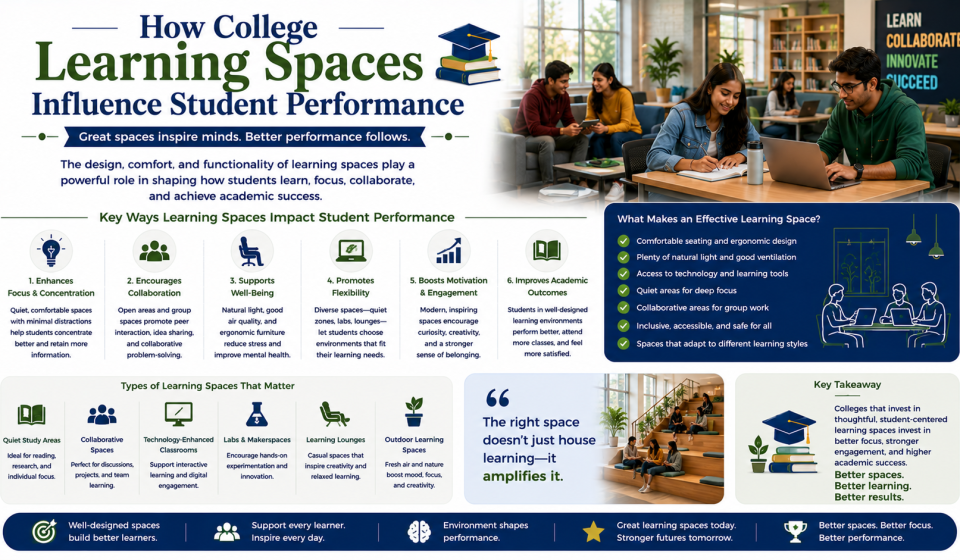
A well-designed learning environment supports academic achievement by encouraging engagement and effective study habits.
Quality learning spaces can help students:
- Improve concentration
- Increase participation
- Enhance collaboration
- Strengthen practical learning
- Support creativity
- Improve academic performance
The learning environment complements quality teaching.
Smart Classrooms
Modern smart classrooms integrate technology into teaching and learning.
Common features include:
- Interactive displays
- Digital projectors
- High-speed internet
- Audio-visual systems
- Learning management integration
Technology makes classroom experiences more engaging and interactive.
Libraries as Learning Centers
College libraries have evolved beyond book collections.
Modern libraries often provide:
- Digital databases
- Quiet reading rooms
- Collaborative study spaces
- Research support
- Online journals
- Computer access
Libraries remain essential for academic success.
Collaborative Learning Areas
Many colleges create dedicated spaces where students can work together.
These areas encourage:
- Group discussions
- Project planning
- Peer learning
- Brainstorming
- Team presentations
Collaboration strengthens communication and problem-solving skills.
Laboratories and Practical Learning
Hands-on learning is essential in many academic disciplines.
Laboratories help students:
- Apply theoretical knowledge
- Conduct experiments
- Develop technical skills
- Improve analytical thinking
Practical experiences reinforce classroom learning.
Innovation and Entrepreneurship Centers
Innovation-focused colleges provide environments where students can explore creative ideas.
Facilities may include:
- Startup incubation centers
- Design studios
- Robotics labs
- Prototype workshops
- Innovation labs
These spaces encourage creativity and entrepreneurial thinking.
Digital Learning Environments
Technology has expanded learning beyond campus buildings.
Digital learning tools include:
- Learning management systems
- Virtual classrooms
- Online libraries
- Recorded lectures
- Cloud collaboration platforms
Flexible digital access supports continuous learning.
Comfortable Study Spaces
Comfortable environments encourage productive study sessions.
Important features include:
- Good lighting
- Comfortable seating
- Quiet surroundings
- Proper ventilation
- Reliable internet access
Physical comfort contributes to concentration and learning efficiency.
Faculty Accessibility
Learning spaces also include opportunities for interaction with faculty members.
Accessible faculty support encourages:
- Academic guidance
- Research mentoring
- Career advice
- Personalized feedback
Strong student-faculty relationships improve educational outcomes.
Supporting Different Learning Styles
Students learn in different ways.
Effective campuses provide spaces for:
- Individual study
- Group collaboration
- Practical experimentation
- Digital learning
- Creative activities
Flexible environments accommodate diverse educational needs.
Building a Positive Campus Culture
Learning spaces influence more than academics.
Positive environments encourage:
- Student engagement
- Inclusivity
- Collaboration
- Respect
- Lifelong learning
Campus culture contributes to student satisfaction.
Technology Infrastructure
Reliable technology supports modern education.
Students benefit from:
- Campus-wide Wi-Fi
- Computer laboratories
- Digital resources
- Multimedia equipment
- Online learning platforms
Technology enhances academic flexibility.
Safety and Accessibility
Effective learning environments should be safe and accessible.
Important considerations include:
- Campus security
- Accessible facilities
- Emergency services
- Inclusive design
- Comfortable infrastructure
A safe campus supports student well-being.
Questions to Ask Before Choosing a College
Prospective students should evaluate learning spaces by asking:
- Are classrooms equipped with modern technology?
- Does the college have updated laboratories?
- What library resources are available?
- Are collaborative study spaces provided?
- Are innovation labs available?
- Is high-speed internet accessible across campus?
- What digital learning platforms are used?
These questions help students make informed admission decisions.
Common Mistakes When Evaluating Colleges
Many students focus only on rankings, tuition fees, or placement statistics while overlooking learning infrastructure, technology, faculty accessibility, library quality, laboratory facilities, and innovation opportunities. A comprehensive evaluation of the campus learning environment provides a better understanding of the overall educational experience.
The Future of College Learning Spaces
Higher education continues evolving through hybrid classrooms, artificial intelligence, virtual reality simulations, smart campuses, digital collaboration tools, flexible learning environments, and sustainable campus design. Future-ready colleges are creating innovative spaces that encourage interdisciplinary learning, creativity, research, and lifelong skill development. Students who choose institutions with strong learning ecosystems are better prepared for academic excellence and future careers.
Source
https://www.ugc.gov.in
https://www.aicte-india.org
https://www.education.gov.in
https://www.unesco.org
Conclusion
College learning spaces play a vital role in shaping student performance, engagement, and long-term academic success. Modern classrooms, libraries, laboratories, collaborative study areas, innovation centers, digital learning platforms, and accessible faculty support create environments where students can develop knowledge, practical skills, creativity, and confidence. When selecting a college, students should carefully evaluate the quality of its learning ecosystem alongside academic programs and placement opportunities. Choosing an institution that provides diverse, well-designed learning spaces helps create a richer educational experience and prepares students for lifelong learning and professional success.
FAQ
1. What are college learning spaces?
College learning spaces are physical and digital environments such as classrooms, libraries, laboratories, innovation hubs, study areas, and virtual learning platforms where students engage in educational activities.
2. How do learning spaces influence student performance?
Well-designed learning spaces improve concentration, collaboration, engagement, practical learning, and overall academic performance by supporting different learning styles.
3. Why are modern libraries important in higher education?
Modern libraries provide access to books, digital journals, research databases, collaborative study areas, computers, and academic support services that enhance learning.
4. What should students look for when evaluating a college’s learning environment?
Students should evaluate classroom technology, laboratories, library resources, collaborative spaces, innovation centers, internet connectivity, faculty accessibility, and digital learning infrastructure.
5. How do innovation hubs benefit students?
Innovation hubs encourage research, creativity, entrepreneurship, interdisciplinary collaboration, prototype development, and practical problem-solving experiences.
6. Do digital learning spaces improve education?
Yes. Virtual classrooms, online libraries, learning management systems, recorded lectures, and collaborative digital tools increase flexibility, accessibility, and continuous learning opportunities.