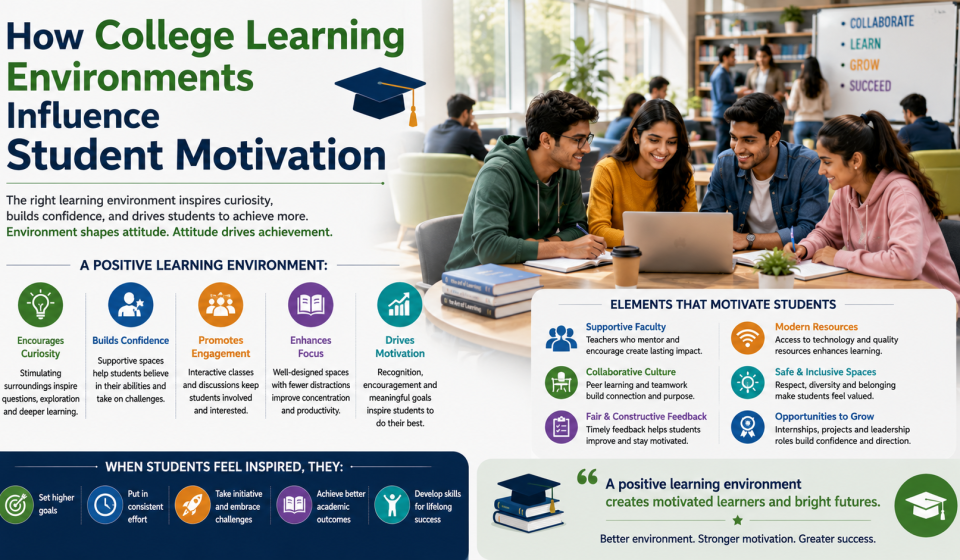
How College Learning Environments Influence Student Motivation: The Complete Guide to Academic Success and Personal Growth

A college learning environment plays a vital role in shaping a student’s academic journey, confidence, and overall motivation. While quality education, experienced faculty, and modern infrastructure are essential.
Student motivation is influenced by many factors beyond textbooks and classroom lectures. The availability of learning resources, faculty support, peer interactions, extracurricular opportunities, technology integration, and campus culture all contribute to a student’s willingness to learn and grow. When students feel supported, respected, and challenged in a positive way, they become more confident in their abilities and are more likely to participate actively in academic and professional development opportunities. Understanding how college learning environments impact motivation can help students choose institutions that support long-term success.
What Is a College Learning Environment?
A college learning environment refers to the overall academic, social, and physical atmosphere in which students study, interact, and develop their knowledge and skills. It includes classrooms, laboratories, libraries, digital learning platforms, faculty support, campus facilities, peer relationships, and institutional culture.
A strong learning environment promotes:
Academic excellence
Student engagement
Critical thinking
Innovation
Collaboration
Respect and inclusion
Personal growth
Career readiness
The right environment inspires students to reach their full potential.
Why Student Motivation Matters
Motivation is the driving force behind learning and achievement. Motivated students are more likely to:
Attend classes regularly
Complete assignments on time
Participate in discussions
Develop new skills
Explore research opportunities
Join extracurricular activities
Achieve higher academic performance
Prepare effectively for future careers
Colleges that encourage motivation help students become lifelong learners.
The Role of Faculty in Student Motivation
Faculty members have a significant influence on student success.
Supportive professors encourage motivation by:
Providing constructive feedback
Creating engaging classroom discussions
Explaining concepts clearly
Encouraging questions
Offering mentorship
Recognizing student achievements
Guiding career planning
When students feel valued by faculty, they become more confident and engaged in learning.
Interactive Teaching Methods Improve Engagement
Traditional lectures remain valuable, but interactive learning often increases motivation.
Examples include:
Group discussions
Case studies
Project-based learning
Problem-solving activities
Presentations
Laboratory sessions
Educational simulations
Collaborative assignments
Interactive classrooms encourage active participation rather than passive learning.
Modern Campus Infrastructure Supports Learning
A well-designed campus creates an environment where students can focus and succeed.
Important facilities include:
Smart classrooms
Science laboratories
Computer labs
Libraries
Innovation centers
Study spaces
Sports facilities
Student activity centers
Reliable internet connectivity
Comfortable learning spaces improve concentration and productivity.
Access to Learning Resources
Learning resources help students deepen their understanding beyond classroom instruction.
Essential resources include:
Digital libraries
Research journals
E-books
Online learning platforms
Academic databases
Career development centers
Tutoring services
Writing support centers
Students with access to quality resources often perform better academically.
Positive Peer Relationships Encourage Success
Peers influence motivation in many ways.
Supportive classmates encourage:
Group learning
Knowledge sharing
Healthy competition
Emotional support
Teamwork
Leadership
Communication skills
Positive friendships create an enjoyable and productive college experience.
Inclusive Campus Culture
An inclusive learning environment welcomes students from diverse backgrounds.
Inclusive colleges promote:
Equal opportunities
Respect
Cultural diversity
Accessibility
Collaboration
Belonging
Open communication
Students who feel accepted are more likely to participate actively in campus life.
Technology Enhances Learning
Educational technology has transformed higher education.
Useful technologies include:
Learning Management Systems
Virtual classrooms
Artificial Intelligence tools
Online assessments
Interactive presentations
Educational apps
Cloud collaboration platforms
Video conferencing
Technology makes learning more flexible and accessible.
The Importance of Academic Support Services
Many students require additional guidance during college.
Academic support may include:
Tutoring
Mentoring
Study workshops
Career counseling
Writing assistance
Mathematics support
Language learning centers
Research guidance
Support services help students overcome challenges and remain motivated.
Career Development Opportunities
Career-focused colleges inspire students by connecting education with employment.
Career development services often include:
Internships
Placement assistance
Resume workshops
Mock interviews
Industry visits
Career fairs
Professional networking
Skill development programs
Students become more motivated when they understand how classroom learning connects to future careers.
Extracurricular Activities Build Confidence
Learning extends beyond academics.
Activities such as:
Student clubs
Sports
Cultural events
Volunteer programs
Entrepreneurship cells
Technical competitions
Leadership programs
Community service
develop confidence, teamwork, communication, and leadership skills.
These experiences improve motivation and personal development.
Research Opportunities Inspire Innovation
Research encourages students to think independently and solve real-world problems.
Benefits include:
Critical thinking
Analytical skills
Innovation
Scientific curiosity
Publication opportunities
Professional growth
Students involved in research often develop stronger academic motivation.
Healthy Competition Promotes Excellence
Competitive academic environments encourage students to perform at their best.
Examples include:
Hackathons
Business competitions
Coding contests
Research presentations
Debates
Innovation challenges
Competitions help students apply classroom knowledge while developing confidence.
Mental Health and Student Motivation
Mental well-being significantly affects academic performance.
Colleges that provide mental health support help students manage:
Stress
Anxiety
Depression
Academic pressure
Time management
Work-life balance
Counseling services and wellness programs contribute to healthier learning environments.
Flexible Learning Approaches
Modern colleges increasingly offer flexible learning options.
These may include:
Hybrid learning
Online courses
Recorded lectures
Self-paced learning
Virtual laboratories
Flexible scheduling
Flexibility allows students to balance education with personal and professional responsibilities.
Safe and Supportive Campus Environment
Students perform better when they feel safe.
Campus safety includes:
Secure facilities
Anti-ragging policies
Emergency services
Health centers
Student support offices
Respectful campus culture
A secure environment reduces distractions and promotes learning.
Industry Exposure Increases Motivation
Connecting students with industry professionals helps them understand career expectations.
Industry exposure may include:
Guest lectures
Industrial visits
Live projects
Internships
Professional mentoring
Networking events
Employer interactions
Real-world exposure increases enthusiasm for learning.
Personalized Learning Experiences
Every student learns differently.
Personalized education includes:
Individual mentoring
Academic advising
Customized learning support
Skill-based electives
Project guidance
Career planning
Personal attention improves engagement and academic confidence.
Innovation and Entrepreneurship Support
Colleges that encourage innovation motivate students to create solutions for real-world problems.
Support may include:
Startup incubation centers
Business mentoring
Innovation labs
Funding opportunities
Entrepreneurship workshops
Students develop creativity, leadership, and business skills.
Importance of Student Feedback
Student feedback helps colleges continuously improve.
Regular feedback allows institutions to enhance:
Teaching quality
Campus facilities
Learning resources
Student services
Academic programs
Technology integration
Students feel valued when their opinions contribute to institutional improvement.
Characteristics of an Excellent Learning Environment
An effective college learning environment typically includes:
Qualified faculty
Interactive classrooms
Modern technology
Research opportunities
Career guidance
Inclusive culture
Academic support
Safe campus
Industry partnerships
Student-centered learning
These characteristics create an atmosphere that inspires lifelong learning.
How Students Can Stay Motivated Regardless of Environment
While colleges play an important role, students should also take responsibility for maintaining motivation.
Practical strategies include:
Setting academic goals
Managing time effectively
Seeking faculty guidance
Participating in campus activities
Building positive friendships
Maintaining healthy habits
Using campus resources
Practicing continuous learning
Taking initiative helps students succeed in almost any educational environment.
Choosing the Right College Learning Environment
Before selecting a college, students should evaluate:
Teaching quality
Faculty accessibility
Campus facilities
Research opportunities
Internship support
Placement record
Student services
Campus culture
Learning resources
Industry connections
Choosing the right environment can significantly influence both academic success and career outcomes.
Source
https://www.unesco.org
https://www.naceweb.org
https://www.aacu.org
https://www.careeronestop.org
Conclusion
A positive college learning environment is one of the strongest factors influencing student motivation, academic achievement, and long-term career success. Supportive faculty, modern facilities, engaging teaching methods, inclusive campus culture, career development opportunities, and access to quality learning resources all contribute to creating an atmosphere where students can thrive. Motivation grows when students feel encouraged, challenged, and connected to their educational journey. By selecting a college that prioritizes student-centered learning and by actively participating in academic and extracurricular opportunities, students can maximize their potential, develop valuable life skills, and build a successful future.
FAQ
1. What is a college learning environment?
A college learning environment includes the academic, social, physical, and technological conditions that influence how students learn, interact, and develop during their education.
2. How does the learning environment affect student motivation?
A supportive learning environment increases engagement, confidence, participation, and enthusiasm for learning by providing quality teaching, resources, and encouragement.
3. Why are supportive faculty important for student success?
Supportive faculty provide mentorship, constructive feedback, career guidance, and encouragement that help students stay motivated and improve academically.
4. How do extracurricular activities improve motivation?
Extracurricular activities build leadership, teamwork, communication, confidence, and social connections, making students more engaged in campus life.
5. What role does technology play in modern learning environments?
Technology improves access to educational resources, enables flexible learning, supports collaboration, and enhances classroom engagement through digital tools.
6. How do career services motivate students?
Career services connect education with employment by offering internships, placement support, resume guidance, networking opportunities, and interview preparation.
7. Why is campus culture important in higher education?
A positive campus culture promotes inclusion, respect, collaboration, safety, and student well-being, creating an environment where learners can succeed.
8. What should students consider when choosing a college?
Students should evaluate teaching quality, faculty support, learning resources, campus infrastructure, career opportunities, research facilities, placement assistance, and overall campus environment.