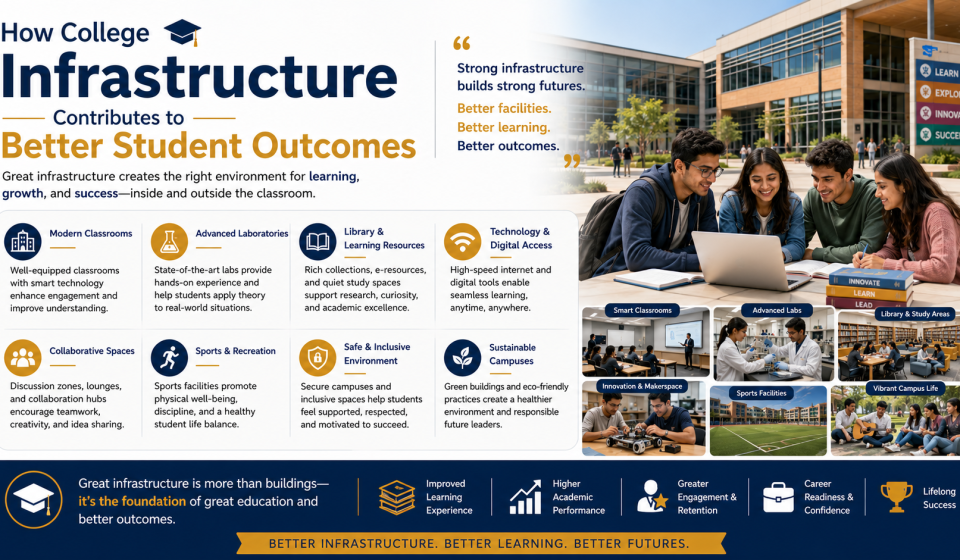
How College Infrastructure Contributes to Better Student Outcomes: A Complete Guide to Choosing a Campus That Supports Academic and Career Success

College infrastructure plays a fundamental role in shaping the overall student experience and significantly influences academic performance, skill development, personal growth, and career readiness. While faculty quality, curriculum, and industry partnerships are important factors in higher education, the physical and technological infrastruct.
As higher education continues to evolve, employers expect graduates to possess not only theoretical knowledge but also practical experience, digital literacy, communication skills, and problem-solving abilities. Colleges with modern infrastructure support these expectations by offering smart classrooms, simulation laboratories, entrepreneurship centers, high-speed internet, collaborative workspaces, and experiential learning facilities. These resources allow students to participate in research, innovation, internships, project-based learning, and extracurricular activities that prepare them for future careers. Before selecting a college, students should carefully evaluate the quality of campus infrastructure because it directly impacts learning opportunities, student engagement, and long-term educational outcomes. This comprehensive guide explains how college infrastructure contributes to better student outcomes and why it should be a key consideration during the admission process.
What Is College Infrastructure?
College infrastructure includes the physical, digital, and academic facilities that support teaching, learning, research, and student development.
Infrastructure typically includes:
- Smart classrooms
- Laboratories
- Libraries
- Research centers
- Computer labs
- Innovation hubs
- Sports facilities
- Hostels
- Cafeterias
- Student support centers
Modern infrastructure creates an effective learning environment.
Why Infrastructure Matters
The quality of campus facilities directly affects student learning and development.
Strong infrastructure helps students:
- Improve academic performance
- Stay motivated
- Access learning resources
- Develop practical skills
- Participate in research
- Prepare for careers
A supportive environment encourages success.
Smart Classrooms Improve Learning
Technology-enabled classrooms enhance teaching effectiveness.
Features may include:
- Interactive displays
- Digital projectors
- Audio-visual systems
- Internet connectivity
- Learning management systems
Smart classrooms encourage active learning.
Modern Laboratories Support Practical Education
Laboratories provide hands-on experience that complements theoretical learning.
Examples include:
- Science laboratories
- Engineering workshops
- Computer laboratories
- Healthcare simulation labs
- Media production studios
Practical learning strengthens technical skills.
Libraries Encourage Lifelong Learning
Libraries remain essential academic resources.
A quality library offers:
- Printed books
- Digital resources
- Research journals
- Study spaces
- Online databases
- Reference materials
Libraries promote independent learning.
Research Centers Foster Innovation
Research facilities help students develop analytical and investigative skills.
Benefits include:
- Faculty-guided research
- Innovation projects
- Academic publications
- Conference participation
- Prototype development
Research strengthens academic excellence.
Digital Infrastructure Enhances Education
Technology has become central to modern higher education.
Important digital resources include:
- High-speed Wi-Fi
- Learning management systems
- Cloud-based platforms
- Virtual classrooms
- Digital libraries
- Online assessments
Digital infrastructure improves accessibility.
Innovation and Entrepreneurship Centers
Many colleges establish innovation hubs to encourage creativity.
Facilities may include:
- Startup incubation centers
- Makerspaces
- Innovation laboratories
- Business mentoring
- Prototype workshops
Innovation centers prepare future entrepreneurs.
Sports and Recreation Facilities
Physical wellness contributes to academic success.
Look for:
- Sports grounds
- Indoor stadiums
- Fitness centers
- Yoga facilities
- Recreational spaces
Healthy students often perform better academically.
Student Support Services
Infrastructure also includes services that promote student well-being.
Important facilities include:
- Counseling centers
- Career development offices
- Academic advising
- Health centers
- Disability support services
Support systems improve student outcomes.
Safe and Inclusive Campus Environment
A secure campus creates a positive learning atmosphere.
Important features include:
- Campus security
- CCTV monitoring
- Accessible buildings
- Emergency services
- Inclusive facilities
Safety promotes confidence and engagement.
Hostel and Residential Facilities
Comfortable accommodation supports academic focus.
Quality hostels provide:
- Clean living spaces
- Internet access
- Study rooms
- Dining facilities
- Recreation areas
Residential life encourages community learning.
Industry-Oriented Infrastructure
Modern colleges invest in facilities that reflect workplace environments.
Examples include:
- Simulation centers
- Corporate training rooms
- Industry-standard equipment
- Collaborative workspaces
- Innovation labs
Industry-oriented infrastructure improves career readiness.
Questions to Ask Before Admission
Before selecting a college, students should ask:
- Are classrooms technology-enabled?
- What laboratory facilities are available?
- Does the campus provide digital library access?
- Are research centers accessible to undergraduate students?
- What sports and wellness facilities exist?
- Does the college have startup incubation or innovation centers?
These questions help students evaluate the learning environment.
Common Mistakes Students Make
Many students focus only on placement statistics or college rankings while overlooking infrastructure quality. Ignoring laboratory facilities, digital resources, libraries, research centers, student support services, and campus safety can limit learning opportunities. Visiting the campus and exploring its facilities before admission helps students make better educational decisions.
The Future of College Infrastructure
Artificial intelligence, smart campuses, Internet of Things (IoT), virtual laboratories, augmented reality classrooms, cloud-based learning platforms, sustainable campus design, digital collaboration spaces, green buildings, and advanced research facilities will continue transforming higher education and improving student outcomes.
Source
https://www.ugc.gov.in
https://www.aicte-india.org
https://www.education.gov.in
https://www.naac.gov.in
Conclusion
College infrastructure is much more than buildings and classrooms—it forms the foundation of an effective learning environment that supports academic excellence, innovation, research, personal development, and career readiness. Modern classrooms, advanced laboratories, digital libraries, research facilities, innovation centers, sports complexes, and student support services provide students with the resources they need to succeed both academically and professionally. When choosing a college, evaluating infrastructure alongside faculty quality, curriculum, industry collaboration, and placement opportunities helps students select an institution that offers a complete educational experience. Investing in a college with strong infrastructure is an investment in long-term success and lifelong learning.
FAQ
1. What is college infrastructure?
College infrastructure includes classrooms, laboratories, libraries, research centers, digital learning facilities, sports complexes, hostels, innovation centers, and student support services that contribute to teaching, learning, and student development.
2. Why is college infrastructure important for students?
Modern infrastructure improves learning experiences, supports practical education, encourages research, enhances student engagement, promotes well-being, and prepares students for future careers.
3. How does infrastructure improve academic performance?
Access to smart classrooms, advanced laboratories, digital resources, libraries, research facilities, and collaborative learning spaces enables students to learn more effectively and develop practical skills.
4. What facilities should students evaluate before admission?
Students should examine classrooms, laboratories, library resources, research centers, Wi-Fi connectivity, innovation hubs, sports facilities, hostels, health services, career centers, and campus safety measures.
5. Does college infrastructure influence employability?
Yes. Colleges with industry-standard laboratories, innovation centers, research facilities, digital technologies, and practical learning environments help students develop workplace skills that employers value.
6. Should infrastructure be considered along with rankings and placements?
Absolutely. Rankings and placements are important, but evaluating campus infrastructure, faculty expertise, curriculum quality, student support services, research opportunities, and industry collaboration provides a more complete picture of a college’s ability to support long-term student success.