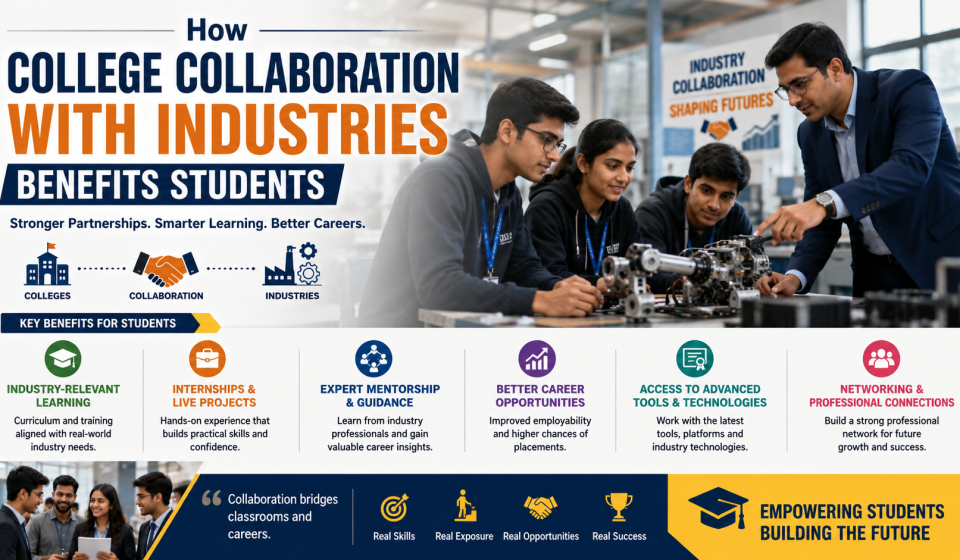
How College Collaboration With Industries Benefits Students: The Complete Guide to Practical Learning, Career Readiness, and Future Success

The expectations of higher education have changed significantly over the past decade. Today, employers seek graduates who not only possess strong academic.
Industry collaboration also helps educational institutions keep their curriculum aligned with changing market demands. Emerging technologies such as artificial intelligence, data science, cloud computing, cybersecurity, robotics, renewable energy, biotechnology, and digital marketing continue transforming the global job market. Colleges that work closely with industries can introduce updated courses, practical training, certification programs, and innovation initiatives that prepare students for these evolving career opportunities. Whether students pursue engineering, management, healthcare, commerce, information technology, law, design, or other professional disciplines, industry-academia collaboration equips them with valuable experiences that improve employability, encourage innovation, and promote lifelong professional development. This comprehensive guide explains why college collaboration with industries is essential and how students can maximize the opportunities it provides.
What Is College-Industry Collaboration?
College-industry collaboration refers to formal partnerships between educational institutions and companies that aim to improve learning, research, innovation, and career preparation.
These partnerships often include:
- Internship programs
- Industrial training
- Guest lectures
- Live business projects
- Research collaborations
- Industry-sponsored laboratories
- Certification programs
- Placement assistance
- Startup incubation
- Skill development workshops
Such initiatives connect academic education with real-world professional practice.
Why Industry Collaboration Is Important
Employers increasingly expect graduates to possess both theoretical knowledge and practical workplace skills.
Industry collaboration helps students:
- Understand real business environments
- Gain practical experience
- Improve employability
- Build professional confidence
- Learn emerging technologies
- Prepare for future careers
These experiences create job-ready graduates.
Bridging the Gap Between Theory and Practice
Traditional classroom education builds conceptual understanding, while industry collaboration demonstrates how those concepts are applied in professional environments.
Students learn to:
- Solve practical problems
- Apply classroom knowledge
- Analyze business situations
- Make professional decisions
- Work within organizational structures
Practical application strengthens long-term learning.
Internship and Industrial Training Opportunities
Internships provide valuable workplace exposure before graduation.
Students gain experience in:
- Professional communication
- Workplace ethics
- Project execution
- Team collaboration
- Client interactions
- Time management
Internships also strengthen resumes and interview performance.
Exposure to Emerging Technologies
Industry partnerships introduce students to modern technologies used by employers.
Examples include:
- Artificial Intelligence (AI)
- Machine Learning
- Data Analytics
- Cloud Computing
- Cybersecurity
- Internet of Things (IoT)
- Robotics
- Automation
- Blockchain
- Digital Marketing
Learning these technologies improves career competitiveness.
Developing Employability Skills
Industry collaboration develops both technical and soft skills.
Students improve:
- Communication
- Leadership
- Critical thinking
- Teamwork
- Adaptability
- Problem-solving
- Professional ethics
- Decision-making
These transferable skills are valued across industries.
Learning Through Live Industry Projects
Many companies collaborate with colleges by providing real business problems for students to solve.
Students gain practical experience in:
- Product development
- Market research
- Software development
- Process improvement
- Business analysis
- Innovation
Live projects prepare students for workplace responsibilities.
Industry Expert Sessions and Workshops
Guest lectures from experienced professionals provide valuable career insights.
Students learn about:
- Industry expectations
- Career pathways
- Current market trends
- Professional challenges
- Future technologies
These sessions complement classroom education.
Research and Innovation Opportunities
Industry partnerships encourage collaborative research.
Students may participate in:
- Applied research
- Product innovation
- Prototype development
- Technology commercialization
- Patent development
Research experience strengthens higher education and career opportunities.
Entrepreneurship Development
Many colleges establish incubation centers with industry support.
Students receive:
- Startup mentoring
- Business planning guidance
- Funding opportunities
- Investor networking
- Innovation support
Entrepreneurship programs encourage self-employment and innovation.
Building Professional Networks
Industry collaboration allows students to connect with:
- Company executives
- Recruiters
- Alumni
- Entrepreneurs
- Faculty mentors
- Industry specialists
Professional networking often leads to internships and employment.
Improving Curriculum Quality
Industry feedback helps colleges continuously improve academic programs.
Curriculum updates may include:
- Emerging technologies
- Practical assignments
- Industry certifications
- Skill-based electives
- Experiential learning modules
Relevant education prepares students for changing workforce requirements.
Global Career Opportunities
Many colleges collaborate with multinational organizations, allowing students to understand international business practices, multicultural teamwork, global quality standards, and overseas career opportunities.
Common Challenges
Successful industry collaboration requires active participation from colleges, companies, faculty members, and students. Challenges may include limited internship availability, rapidly changing technology, scheduling conflicts, or differences between academic learning and workplace expectations. Strong partnerships, continuous curriculum updates, and student engagement help overcome these challenges and maximize learning outcomes.
The Future of College-Industry Collaboration
Artificial intelligence, digital transformation, smart manufacturing, green technologies, remote work, cloud computing, Industry 4.0, entrepreneurship ecosystems, and global innovation networks are reshaping higher education. Colleges that maintain strong industry partnerships will continue producing graduates with practical skills, adaptability, and professional confidence needed for future careers.
Source
https://www.naceweb.org
https://www.weforum.org
https://www.unesco.org
https://www.oecd.org
Conclusion
College collaboration with industries has become one of the most effective ways to prepare students for successful careers in today’s competitive job market. Through internships, industrial training, research collaborations, live projects, expert mentoring, and exposure to emerging technologies, students develop practical knowledge, technical expertise, and professional skills that complement their academic education. These partnerships enhance employability, encourage innovation, strengthen communication and leadership abilities, and help students confidently transition into the workforce. As industries continue evolving rapidly, colleges that actively collaborate with businesses will play an increasingly important role in producing future-ready graduates capable of succeeding in diverse professional environments.
FAQ
1. What is college-industry collaboration?
College-industry collaboration is a partnership between educational institutions and businesses that provides students with practical learning experiences, internships, research opportunities, and career-focused skill development.
2. How does industry collaboration benefit students?
It helps students gain real-world experience, improve employability, develop workplace skills, build professional networks, and understand current industry practices.
3. What opportunities do students receive through industry partnerships?
Students may participate in internships, industrial training, live projects, expert lectures, research collaborations, certification programs, startup incubation, and placement activities.
4. Why do employers value graduates with industry exposure?
Graduates with industry experience demonstrate practical knowledge, adaptability, communication skills, teamwork, professionalism, and the ability to contribute effectively in workplace environments.
5. How do colleges benefit from collaborating with industries?
Industry partnerships help colleges update curricula, improve placement outcomes, strengthen research activities, enhance faculty development, and align education with market demands.
6. Can industry collaboration improve long-term career success?
Yes. Students who gain practical experience, professional skills, industry knowledge, and networking opportunities during college are generally better prepared for employment, leadership roles, entrepreneurship, and lifelong career growth.