How Campus Learning Experiences Shape Professional Success: The Ultimate 2026 Guide to Building a Career Beyond the Classroom

Higher education is about much more than attending lectures and passing examinations. A college campus is a dynamic learning environment where students gain knowledge, develop practical skills, build meaningful relationships, and prepare for professional life. Every classroom discussion, laboratory session.
The employment landscape in 2026 is evolving rapidly due to Artificial Intelligence (AI), automation, digital transformation, sustainability initiatives, and globalization. Employers now seek graduates who possess more than technical expertise. They value communication, collaboration, adaptability, leadership, problem-solving, emotional intelligence, creativity, and continuous learning. Many of these qualities are developed not only through classroom education but also through diverse campus experiences that expose students to real-world challenges and collaborative environments.
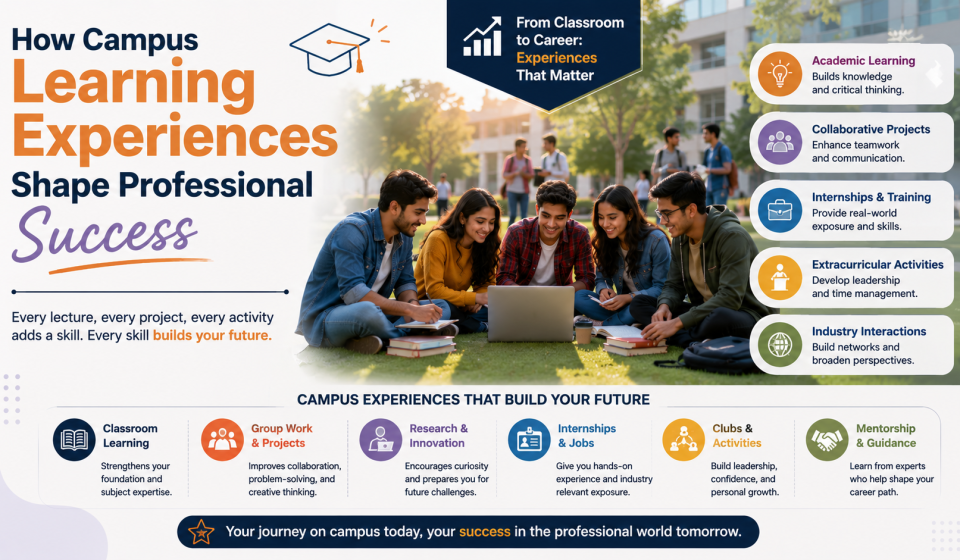
Classroom Learning Builds Strong Foundations
Classroom education develops:
- Subject knowledge
- Analytical thinking
- Problem-solving abilities
- Critical reasoning
- Academic discipline
Strong academic foundations remain essential for long-term success.
Practical Laboratory Experience
Laboratories allow students to:
- Apply theoretical concepts
- Conduct experiments
- Develop technical skills
- Improve observation
- Solve practical problems
Hands-on learning improves workplace readiness.
Internships Connect Education with Industry
Internships help students:
- Understand workplace expectations
- Build practical experience
- Improve communication
- Expand professional networks
- Increase employability
Real-world exposure bridges the gap between theory and practice.
Student Clubs Develop Leadership
Campus organizations encourage:
- Leadership
- Teamwork
- Event management
- Public speaking
- Decision-making
Leadership experiences prepare students for future management roles.
Group Projects Improve Collaboration
Collaborative projects strengthen:
- Communication
- Conflict resolution
- Responsibility
- Time management
- Team coordination
Teamwork is a highly valued workplace skill.
Workshops and Seminars Expand Knowledge
Students benefit from:
- Industry expert sessions
- Career workshops
- Technical seminars
- Professional development programs
- Innovation talks
Continuous learning broadens career perspectives.
Campus Competitions Build Confidence
Participating in:
- Hackathons
- Business competitions
- Debates
- Research presentations
- Cultural festivals
helps students develop confidence and resilience.
Career Guidance Services
Many colleges provide:
- Career counseling
- Resume workshops
- Interview preparation
- Placement training
- Internship support
These services improve professional readiness.
Networking Opportunities
Students can build valuable relationships with:
- Professors
- Alumni
- Recruiters
- Industry experts
- Visiting professionals
Networking often opens unexpected career opportunities.
Research and Innovation
Research projects encourage:
- Creativity
- Curiosity
- Data analysis
- Innovation
- Independent thinking
Research experience strengthens academic and professional profiles.
Entrepreneurship Opportunities
Many campuses now offer:
- Startup incubation centers
- Innovation labs
- Business mentoring
- Entrepreneurship clubs
- Funding competitions
Entrepreneurial learning promotes problem-solving and initiative.
Community Service and Volunteering
Volunteer experiences help students develop:
- Empathy
- Leadership
- Social responsibility
- Communication
- Teamwork
These qualities strengthen professional character.
Technology-Enhanced Learning
Modern campuses increasingly provide:
- Smart classrooms
- AI-powered learning tools
- Virtual laboratories
- Online learning platforms
- Digital collaboration systems
Technology prepares students for future workplaces.
Personal Growth Through Campus Life
Campus experiences also improve:
- Confidence
- Independence
- Adaptability
- Emotional intelligence
- Professional maturity
Personal development complements academic learning.
Making the Most of Campus Opportunities
Students should:
- Participate actively
- Seek internships early
- Join student organizations
- Build professional networks
- Attend workshops
- Take leadership roles
- Continue learning throughout college
Every experience contributes to long-term career success.
Source
https://www.education.gov.in
https://www.ugc.gov.in
https://www.aicte-india.org
https://www.ncs.gov.in
https://www.abc.gov.in
Conclusion
Campus learning experiences extend far beyond textbooks and examinations. They create opportunities for students to develop technical expertise, communication skills, leadership qualities, professional confidence, practical experience, and lifelong learning habits that employers highly value. By actively engaging in internships, student organizations, research projects, workshops, competitions, networking events, and community service, students build stronger professional profiles and become better prepared for modern workplace challenges. As higher education continues to evolve under NEP 2020 and changing industry expectations, students who maximize campus learning opportunities graduate not only with academic qualifications but also with the confidence, adaptability, and practical skills needed for long-term professional success.
FAQ
1. Why are campus learning experiences important for career success?
Campus learning experiences help students develop practical skills, leadership abilities, communication, teamwork, confidence, and industry exposure that complement classroom education and improve employability.
2. How do extracurricular activities benefit students professionally?
Extracurricular activities build leadership, organizational skills, teamwork, networking abilities, creativity, and confidence, all of which are highly valued by employers.
3. Why are internships considered essential during college?
Internships provide real workplace experience, strengthen technical knowledge, improve professional communication, expand networks, and prepare students for full-time employment.
4. How do student clubs contribute to professional development?
Student clubs encourage leadership, collaboration, event management, public speaking, decision-making, and problem-solving through practical participation and responsibility.
5. Does research experience improve career opportunities?
Yes. Research develops analytical thinking, innovation, independent learning, and problem-solving skills while strengthening resumes for employment and higher education.
6. How can networking during college help future careers?
Networking connects students with professors, alumni, recruiters, mentors, and industry experts who can provide career guidance, internships, referrals, and employment opportunities.
7. What role does technology play in modern campus learning?
Technology supports interactive learning through smart classrooms, AI-powered educational tools, virtual laboratories, digital libraries, and online collaboration platforms that prepare students for technology-driven workplaces.
8. How can students maximize their campus learning experiences?
Students should actively participate in internships, workshops, competitions, student organizations, research, leadership roles, networking events, and community service while continuously improving both technical and transferable skills.