How Campus Learning Communities Improve Student Success: The Complete Guide to Academic Excellence, Collaboration, and Career Readiness

Higher education is about much more than attending lectures and earning a degree. The college experience is enriched by meaningful interactions with peers, faculty members, mentors, and academic organizations that create opportunities for continuous learning and personal growth.
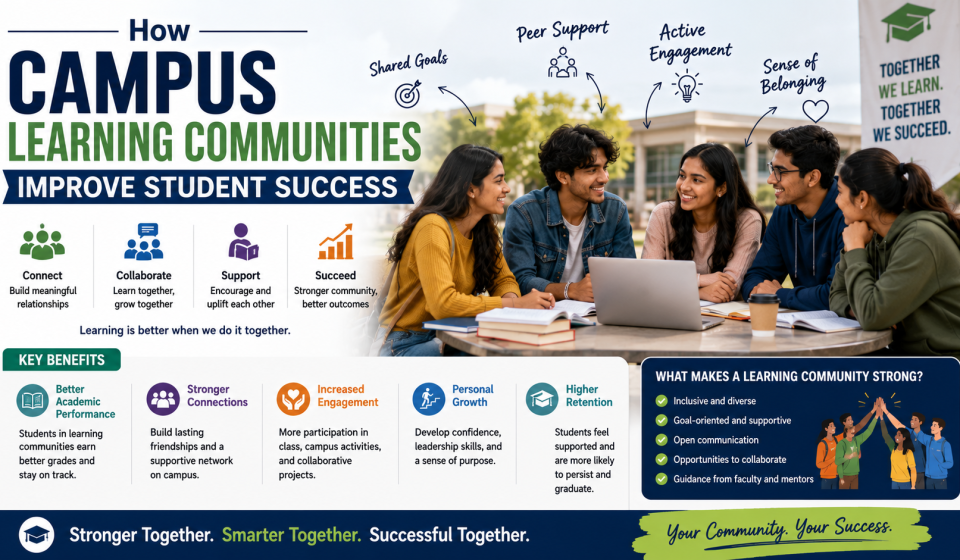
As colleges continue adopting student-centered learning models, campus learning communities have become an essential part of modern higher education. They create supportive environments where students can exchange ideas, participate in group discussions, solve real-world problems, engage in collaborative research, and develop valuable communication and leadership skills. Learning communities also improve student engagement, increase motivation, strengthen critical thinking, and encourage lifelong learning. Beyond academics, these communities foster belonging, improve mental well-being, and help students establish professional networks that benefit future careers. This comprehensive guide explores how campus learning communities improve student success and why they have become a cornerstone of quality higher education.
What Are Campus Learning Communities?
Campus learning communities are structured groups of students, faculty members, mentors, and academic professionals who collaborate to achieve shared educational objectives.
These communities may include:
- Academic cohorts
- Study groups
- Peer mentoring programs
- Research teams
- Honors communities
- Learning clubs
- Residential learning communities
- Innovation groups
- Professional societies
- Interdisciplinary programs
Their goal is to create collaborative learning experiences.
Why Learning Communities Matter
Learning is often more effective when students actively engage with others.
Learning communities help students:
- Improve academic performance
- Build confidence
- Develop communication skills
- Increase motivation
- Strengthen problem-solving abilities
- Enhance overall college experiences
Collaboration leads to deeper understanding.
Encouraging Collaborative Learning
Students learn from diverse perspectives through discussions and teamwork.
Collaborative learning encourages:
- Knowledge sharing
- Group problem-solving
- Critical thinking
- Active participation
- Respectful communication
Working together improves learning outcomes.
Improving Academic Achievement
Students participating in learning communities often experience:
- Better grades
- Higher class participation
- Improved study habits
- Increased course completion
- Stronger academic confidence
Supportive environments contribute to success.
Building Strong Relationships
Learning communities encourage meaningful interactions between:
- Students
- Faculty
- Academic advisors
- Alumni
- Industry mentors
These relationships provide guidance throughout college.
Strengthening Communication Skills
Regular collaboration develops important communication abilities.
Students improve:
- Public speaking
- Academic writing
- Active listening
- Professional discussions
- Presentation skills
Communication supports future career success.
Developing Leadership Skills
Many learning communities encourage students to organize activities and lead initiatives.
Leadership experiences include:
- Coordinating study sessions
- Managing student projects
- Mentoring peers
- Organizing workshops
- Leading academic events
Leadership improves employability.
Supporting Diversity and Inclusion
Learning communities bring together students from different backgrounds, cultures, and disciplines.
Benefits include:
- Cultural understanding
- Inclusive learning
- Respect for diverse perspectives
- Global awareness
- Stronger teamwork
Inclusive environments promote innovation.
Encouraging Research and Innovation
Many campus communities focus on research and creative problem-solving.
Students participate in:
- Faculty research
- Innovation challenges
- Startup incubation
- Case competitions
- Academic conferences
Research enhances academic and professional development.
Career Readiness Through Community Learning
Learning communities prepare students for professional environments by strengthening:
- Teamwork
- Leadership
- Communication
- Adaptability
- Critical thinking
- Networking
These competencies are highly valued by employers.
Technology and Digital Learning Communities
Technology has expanded opportunities for collaboration.
Students engage through:
- Virtual study groups
- Online discussion forums
- Learning management systems
- Video conferencing
- Collaborative cloud platforms
Digital learning communities improve accessibility.
Student Well-Being and Belonging
Students who feel connected to their campus community are more likely to remain motivated, seek academic support, participate in extracurricular activities, and successfully complete their education. Strong social connections also contribute to emotional well-being and resilience.
Common Challenges
Some students hesitate to join learning communities because of limited time, lack of awareness, or concerns about meeting new people. Colleges can address these challenges by promoting inclusive participation, offering flexible meeting schedules, integrating communities into academic programs, and encouraging faculty involvement.
The Future of Campus Learning Communities
Artificial intelligence, hybrid learning environments, virtual collaboration platforms, interdisciplinary education, global student networks, digital mentoring, personalized learning, and experiential education will continue expanding the impact of campus learning communities. These innovations will help students collaborate across disciplines, institutions, and countries while preparing for rapidly evolving careers.
Source
https://www.unesco.org
https://www.oecd.org
https://www.naceweb.org
https://www.weforum.org
Conclusion
Campus learning communities play a vital role in improving student success by creating supportive environments that encourage collaboration, academic excellence, leadership development, and personal growth. Through peer learning, faculty mentoring, research opportunities, inclusive engagement, and professional networking, students gain valuable knowledge and transferable skills that extend beyond the classroom. These communities strengthen confidence, improve academic performance, foster innovation, and prepare graduates for successful careers in an increasingly collaborative world. As higher education continues evolving, campus learning communities will remain an essential component of student-centered education, helping learners achieve both academic success and lifelong professional development.
FAQ
1. What are campus learning communities?
Campus learning communities are organized groups where students, faculty, and mentors collaborate through shared academic interests, study programs, research projects, or professional development activities.
2. How do learning communities improve student success?
They improve academic performance, increase engagement, encourage collaboration, strengthen communication skills, provide peer support, and help students develop leadership and problem-solving abilities.
3. What activities are included in learning communities?
Activities may include study groups, peer mentoring, collaborative research, workshops, seminars, innovation projects, academic competitions, networking events, and community service initiatives.
4. Do learning communities improve career readiness?
Yes. Students develop teamwork, leadership, communication, adaptability, networking, and critical thinking skills that employers highly value across industries.
5. How can students join campus learning communities?
Students can participate through academic departments, student organizations, honors programs, research centers, peer mentoring initiatives, residence hall programs, and faculty-led projects.
6. Why are learning communities important in modern higher education?
They create inclusive, collaborative, and supportive learning environments that enhance academic achievement, personal development, innovation, well-being, and long-term career success.