
Artificial intelligence is changing the way college students learn, revise, research, and manage academic work. In 2026, AI tools are no longer used only for advanced technology courses. Students from almost every field, including business, science, arts, engineering, medicine, law, and humanities, are using AI-powered platforms to study smarter and save time.
The Rise of AI in College Education
AI has become a major part of modern education because students need faster, smarter, and more flexible learning support. College life is busy, and students often manage lectures, assignments, exams, internships, part-time jobs, and personal responsibilities at the same time. AI tools help them handle these tasks more efficiently.
In 2026, many students use AI chatbots, writing assistants, note-taking apps, research tools, grammar checkers, flashcard generators, and productivity platforms. These tools make studying more interactive and less confusing.
Instead of waiting for office hours or depending only on textbooks, students can ask AI tools to explain a topic instantly. This quick support helps students continue learning without getting stuck for too long.
Personalized Learning for Every Student
One of the biggest benefits of AI tools is personalized learning. Every student has a different learning style. Some students understand better through examples, while others prefer summaries, diagrams, practice questions, or step-by-step explanations.
AI tools can adjust explanations based on the student’s needs. For example, if a student does not understand a complex economics theory, AI can explain it in simple language, provide real-life examples, and then create a short quiz for practice.
This type of personalized support helps students learn at their own pace. They can revise difficult topics multiple times without feeling embarrassed or pressured. AI makes learning more student-friendly and flexible.
Faster Note-Making and Summarization
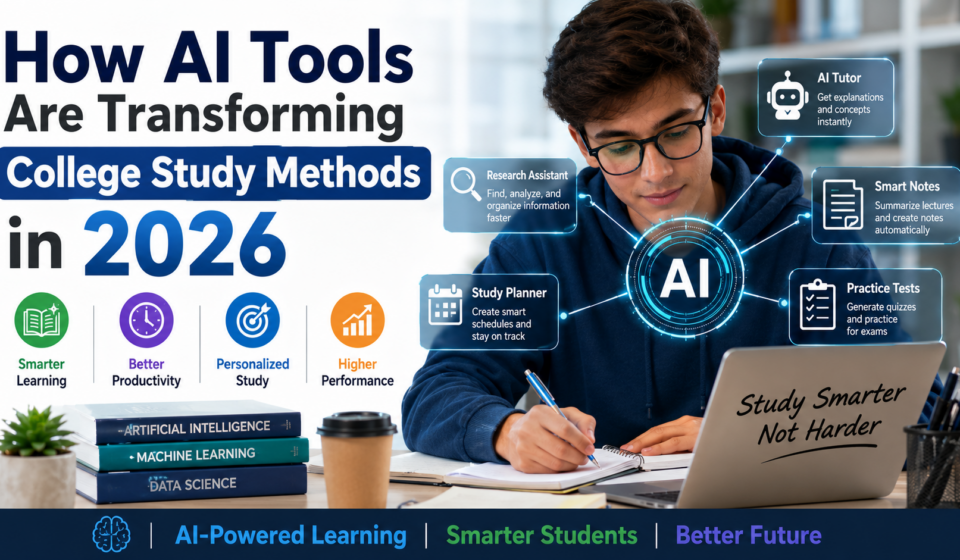
College students often deal with long lectures, research papers, textbooks, and PDF files. Reading and summarizing everything manually can take a lot of time. AI tools help students create short summaries, bullet points, key takeaways, and revision notes within minutes.
For example, students can use AI to summarize a 30-page chapter into important concepts, definitions, and exam-focused points. This makes revision easier and more organized.
However, students should not blindly copy AI-generated notes. They should check the information, compare it with textbooks, and add their own understanding. AI summaries are useful, but personal revision is still necessary for deep learning.
Smarter Research and Academic Writing
Research is an important part of college education. Students often need to write essays, reports, case studies, presentations, and research papers. AI tools can help them find topic ideas, create outlines, improve sentence structure, check grammar, and organize arguments.
AI writing tools can also help students understand how to structure an introduction, body paragraphs, and conclusion. This is especially useful for students who struggle with academic writing.
But ethical use is important. Students should not submit AI-generated content as their own work. AI should be used for guidance, brainstorming, editing, and improving clarity. Original thinking, proper citations, and academic honesty must always be followed.
AI-Powered Study Planning
Time management is one of the biggest challenges for college students. Many students feel stressed because they do not know how to divide their time between different subjects and deadlines.
AI tools can create customized study schedules based on exam dates, syllabus size, difficulty level, and available study hours. Students can ask AI to make a weekly plan, daily checklist, revision timetable, or exam preparation strategy.
A smart study plan helps students avoid last-minute cramming. It also improves consistency and reduces stress. When students know what to study each day, they feel more confident and organized.
Better Exam Preparation With AI Practice Tests
AI tools are transforming exam preparation by creating practice questions, mock tests, flashcards, and quizzes. Students can use these tools to test their knowledge after studying a chapter.
Practice tests help students identify weak areas. For example, if a student scores low in a quiz on biology diagrams or accounting formulas, they can revise that topic again. AI can also explain why an answer is wrong and how to solve it correctly.
This active learning method is better than passive reading. Students remember more when they practice, make mistakes, and correct them.
Improving Memory and Revision
Revision is essential for academic success. AI tools can help students revise smarter by creating flashcards, memory tricks, summaries, and spaced repetition plans.
Spaced repetition means reviewing information at regular intervals so that the brain remembers it for a longer time. AI-powered apps can remind students when to revise a topic again.
This is very useful for subjects that require memorization, such as medicine, law, history, biology, languages, and competitive exams. With AI-based revision, students can retain information more effectively.
AI Tools for Language and Communication Skills
Many college students struggle with language, grammar, pronunciation, or communication skills. AI tools can help improve writing, speaking, vocabulary, and presentation skills.
Students can use AI to correct grammar mistakes, rewrite unclear sentences, practice interview answers, prepare speeches, and improve email writing. Language translation tools can also help students understand study material in different languages.
This support is especially helpful for international students or students studying in a second language. AI makes learning more accessible and inclusive.
Reducing Study Stress and Academic Pressure
College students often feel pressure from exams, assignments, deadlines, and competition. AI tools can reduce stress by making study tasks easier to manage.
When students have a clear schedule, quick explanations, organized notes, and practice tests, they feel more prepared. AI can also help break large assignments into smaller tasks, making them less overwhelming.
However, students should not depend on AI for everything. Overuse of AI can reduce independent thinking. A balanced approach is best: use AI for support, but keep personal effort, focus, and discipline at the center.
The Importance of Ethical AI Use
As AI becomes more common in college education, ethical use is very important. Students must understand the difference between using AI as a study helper and using it to cheat.
Using AI to understand a concept, improve grammar, create a study plan, or practice questions is helpful. But copying AI-generated assignments without understanding or proper permission can lead to academic problems.
Students should always follow college rules about AI use. They should cite sources, write in their own words, and check facts before submitting work. Responsible AI use builds better learning habits and protects academic integrity.
Limitations of AI Tools in Studying
AI tools are powerful, but they are not perfect. Sometimes they may provide incorrect, outdated, or incomplete information. They may also misunderstand questions or give answers that sound correct but are not fully accurate.
That is why students should verify important information from textbooks, teachers, official websites, and academic sources. AI should not replace professors, classroom learning, or personal judgment.
Another limitation is overdependence. If students use AI for every answer, they may stop thinking deeply. The best students use AI as a support system, not as a shortcut.
Future of AI-Based College Learning
The future of college study methods will likely become more AI-powered, interactive, and personalized. Students may use AI tutors, smart classrooms, virtual labs, voice-based learning assistants, and advanced research tools.
AI may also help teachers understand student performance better and provide more personalized feedback. Colleges may introduce AI literacy as an important academic skill because students need to know how to use AI responsibly.
In 2026 and beyond, students who learn how to use AI wisely will have an advantage. They will be better prepared for academic success and future careers.
Source
https://sl1nk.com/fy5hqxo
https://l1nk.dev/d9x17j4
Conclusion
AI tools are transforming college study methods in 2026 by making learning faster, smarter, and more personalized. From note-making and research to exam preparation, writing support, time management, and revision, AI is helping students study more efficiently.
However, AI should be used responsibly. It is not a replacement for hard work, critical thinking, or academic honesty. Students should use AI as a learning assistant, verify information, and follow college guidelines.
The best study method is a combination of traditional learning and modern AI support. When students use AI wisely, they can improve productivity, reduce stress, and achieve better academic results.
FAQs
1. How are AI tools helping college students in 2026?
AI tools help college students summarize notes, explain difficult topics, create study plans, generate quizzes, improve writing, and manage time more effectively.
2. Can AI tools improve exam preparation?
Yes, AI tools can create practice tests, flashcards, mock questions, and revision plans. These features help students identify weak areas and prepare better for exams.
3. Are AI tools safe for academic writing?
AI tools are useful for brainstorming, grammar checking, editing, and outlining. However, students should not copy AI-generated content directly. They must follow academic honesty rules.
4. What are the best uses of AI for college study?
The best uses include note summarization, concept explanation, research support, study scheduling, quiz generation, flashcards, grammar checking, and revision planning.
5. Can AI replace teachers or professors?
No, AI cannot fully replace teachers. It can support learning, but professors provide guidance, feedback, real-world knowledge, and academic direction.